
Blog
creative agency business model revenue structure

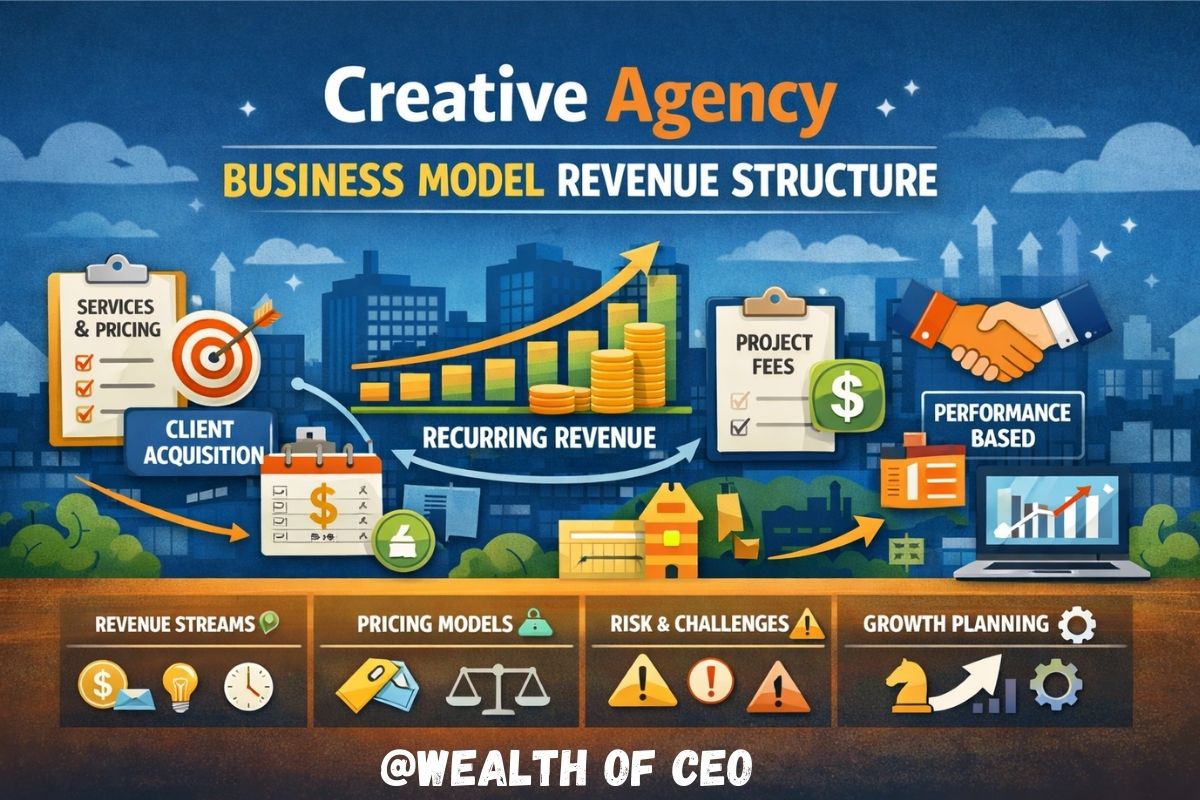
A creative agency business model revenue structure defines how an agency turns creative expertise into sustainable income. It goes beyond services and pricing to explain how value is created, delivered, billed, and retained over time. For agency leaders, operators, and decision-makers, this structure determines financial stability, growth potential, and how resilient the business is under market pressure.
Understanding revenue structure is not a theory exercise. It directly affects cash flow, hiring decisions, pricing confidence, client relationships, and long-term valuation. Agencies that clearly define how revenue is generated and protected are better positioned to scale responsibly, manage risk, and avoid common operational traps that limit profitability.
What Is a Creative Agency Business Model?
A creative agency business model explains how the agency creates value for clients and converts that value into predictable income.
It defines what the agency sells, who it serves, how work is delivered, and how money flows through the business.
-
Clarifies services, pricing logic, and target clients
-
Aligns operations, sales, and financial planning
-
Sets limits on what work the agency will and will not take
Business model vs revenue model explained
A business model describes the full operating logic, while a revenue model focuses only on how money is earned.
Both are connected, but they solve different problems.
-
Business model: services, positioning, delivery, costs, and value creation
-
Revenue model: pricing methods, billing cycles, and income sources
-
Strong agencies design the business model first, then choose revenue models that fit
How value creation connects to monetization
Agencies earn revenue by solving specific client problems, not by producing deliverables alone.
Monetization improves when value is clear, measurable, and tied to outcomes.
-
Strategic value supports higher pricing
-
Specialized expertise reduces price sensitivity
-
Clear outcomes justify retainers and long-term contracts
Core components of an agency business model
Every agency model is built on a small set of structural components.
Weakness in any one area usually shows up as margin or cash-flow issues.
-
Service offering and specialization
-
Target client profile and buying behavior
-
Pricing logic and cost structure
-
Delivery model and team utilization
How Creative Agency Revenue Structures Work
Revenue structures define how income is generated, billed, and collected over time.
They determine stability, risk exposure, and growth potential.
-
Mix of one-time and recurring revenue
-
Timing of invoices and payment terms
-
Relationship between delivery effort and income
Transactional vs recurring revenue flows
Transactional revenue is earned per project, while recurring revenue is earned on an ongoing basis.
Most agencies use a combination of both.
-
Transactional: higher short-term cash, less predictability
-
Recurring: steadier income, better planning
-
Mature agencies prioritize recurring revenue for stability
Client acquisition to revenue realization process
Revenue is realized only after a full chain of activities is completed.
Breakdowns anywhere in this chain delay or reduce income.
-
Lead generation and qualification
-
Proposal, pricing, and contract approval
-
Delivery, invoicing, and collections
How pricing, scope, and delivery affect cash flow
Cash flow depends on how tightly pricing and scope are controlled during delivery.
Loose scope management directly reduces realized revenue.
-
Fixed pricing requires strict scope definition
-
Delayed approvals slow invoicing
-
Over-servicing increases costs without increasing revenue
Common Revenue Streams Used by Creative Agencies
Agencies rely on multiple revenue streams to balance risk and opportunity.
Each stream comes with different margin profiles and management demands.
-
Short-term vs long-term income
-
Labor-intensive vs leverage-based revenue
-
Predictable vs variable demand
Project-based and fixed-fee engagements
Project-based work generates revenue for defined deliverables and timelines.
It is common for branding, campaigns, and website builds.
-
Easier to sell to new clients
-
Revenue ends when the project ends
-
Margins depend heavily on estimation accuracy
Monthly retainers and ongoing service contracts
Retainers provide recurring revenue for ongoing services.
They support better forecasting and operational stability.
-
Predictable monthly income
-
Stronger client relationships
-
Requires clear service boundaries to protect margins
Hourly billing and time-based pricing
Hourly billing charges clients based on time spent.
It is simple but limits scalability.
-
Transparent and flexible
-
Revenue capped by available hours
-
Often undervalues strategic thinking
Performance-based and outcome-driven revenue
Performance-based revenue ties payment to results achieved.
It shifts risk from the client to the agency.
-
Higher upside potential
-
Requires clear metrics and attribution
-
Risky without strong data control
Pricing Models That Shape Agency Revenue
Pricing models determine how value is translated into fees.
The wrong pricing model can undermine even strong demand.
-
Direct impact on margins
-
Influences client expectations
-
Shapes delivery behavior
Cost-plus and margin-based pricing
Cost-plus pricing adds a margin on top of delivery costs.
It is common in service-heavy agencies.
-
Easy to calculate
-
Encourages time-based thinking
-
Can lock agencies into low-margin work
Value-based pricing for strategic services
Value-based pricing charges based on client outcomes rather than effort.
It works best for high-impact, advisory-led services.
-
Decouples revenue from hours
-
Supports premium positioning
-
Requires confidence and clear value articulation
Hybrid pricing models used by growing agencies
Hybrid models combine multiple pricing approaches.
They balance risk and flexibility.
-
Fixed fees plus retainers
-
Base retainer with performance incentives
-
Allows gradual pricing evolution
Roles and Responsibilities in Revenue Generation
Revenue is not owned by sales alone.
Multiple roles influence how much revenue is earned and retained.
-
Strategic decisions
-
Client management
-
Delivery discipline
Leadership and revenue strategy ownership
Leadership sets pricing standards and revenue priorities.
Inconsistent leadership decisions often cause pricing erosion.
-
Approves pricing frameworks
-
Defines acceptable margins
-
Controls discounting behavior
Sales, account management, and upselling roles
Sales and account teams convert demand into structured revenue.
They protect revenue by managing expectations early.
-
Qualification and scoping
-
Contract terms and renewals
-
Identifying expansion opportunities
Delivery teams and revenue efficiency
Delivery teams determine whether revenue is profitable.
Efficiency directly affects realized margins.
-
Time management and estimation
-
Scope control during execution
-
Documentation and change requests
Why Revenue Structure Matters for Agency Growth
Revenue structure shapes how an agency grows and how resilient it is.
Poor structures amplify risk during market changes.
-
Cash flow stability
-
Hiring confidence
-
Long-term planning
Revenue predictability and financial stability
Predictable revenue allows agencies to plan staffing and investments.
It reduces reliance on constant new sales.
-
Stable monthly income
-
Lower stress on sales pipeline
-
Better decision-making
Scalability limitations of different models
Not all revenue models scale equally.
Some models increase workload faster than income.
-
Hourly billing scales linearly
-
Retainers scale with systems and process
-
Productized services scale best
Impact on valuation and long-term sustainability
Revenue quality affects how agencies are valued.
Recurring revenue increases perceived stability.
-
Higher valuation multiples
-
Easier succession or exit planning
-
Lower client concentration risk
Benefits of Different Revenue Models for Stakeholders
Each stakeholder benefits differently depending on the revenue model.
Alignment improves retention and performance.
-
Owners seek predictability
-
Clients seek clarity
-
Teams seek stability
Benefits for agency owners and partners
Owners benefit from revenue structures that reduce volatility.
Consistency supports long-term strategy.
-
Predictable income
-
Clear growth levers
-
Reduced operational surprises
Benefits for clients and long-term relationships
Clients benefit when pricing matches expectations.
Clear models reduce conflict.
-
Transparent costs
-
Consistent service levels
-
Long-term planning support
Benefits for teams and operational planning
Teams perform better with predictable workloads.
Revenue structure influences morale.
-
Stable capacity planning
-
Reduced burnout
-
Clear performance expectations
Best Practices for Building a Sustainable Revenue Structure
Sustainable revenue structures are intentional, not accidental.
They evolve as the agency matures.
-
Balance risk and reward
-
Protect margins
-
Support delivery quality
Balancing recurring and project-based income
A balanced mix reduces dependence on any single revenue type.
Most stable agencies prioritize recurring income.
-
Retainers for baseline revenue
-
Projects for growth and innovation
-
Regular review of revenue mix
Client concentration and revenue diversification
Over-reliance on a few clients increases risk.
Diversification improves resilience.
-
Revenue caps per client
-
Industry diversification
-
Multiple service lines
Aligning pricing with positioning and expertise
Pricing must reflect how the agency positions itself.
Misalignment causes friction and churn.
-
Specialist agencies charge premiums
-
Generalists compete on efficiency
-
Pricing signals market positioning
Financial and Operational Requirements to Support Revenue
Revenue structures fail without supporting systems.
Operations must match the revenue design.
-
Cost visibility
-
Forecasting discipline
-
Legal clarity
Cost structure and margin management
Understanding costs is essential for pricing decisions.
Hidden costs erode profitability.
-
Fixed vs variable costs
-
Utilization tracking
-
Margin targets per service
Revenue forecasting and capacity planning
Forecasting connects revenue to staffing decisions.
Poor forecasting leads to over- or under-hiring.
-
Pipeline weighting
-
Retainer renewal tracking
-
Capacity utilization forecasts
Legal and contractual considerations
Contracts define how revenue is protected.
Weak contracts expose agencies to unpaid work.
-
Clear scope definitions
-
Payment terms and timelines
-
Change order mechanisms
Common Revenue Mistakes and Risks in Creative Agencies
Many agencies struggle due to avoidable revenue errors.
These issues compound over time.
-
Pricing inconsistency
-
Poor scope control
-
Weak enforcement
Over-reliance on hourly billing
Hourly billing limits growth and pricing power.
It anchors value to time, not impact.
-
Caps revenue potential
-
Encourages inefficiency
-
Difficult to scale
Underpricing creative and strategic work
Creative work is often underpriced due to confidence gaps.
This leads to chronic margin pressure.
-
Fear of client pushback
-
Lack of value framing
-
Inconsistent pricing standards
Revenue leakage from scope creep
Uncontrolled scope directly reduces effective revenue.
It is one of the most common agency issues.
-
Informal client requests
-
Poor documentation
-
Weak change management
Tools and Systems That Support Agency Revenue Management
Systems help enforce discipline across revenue activities.
They reduce reliance on individual judgment.
-
Visibility
-
Consistency
-
Accountability
CRM and sales pipeline tools
CRMs track opportunities and conversion rates.
They support revenue forecasting.
-
Lead qualification
-
Deal stage visibility
-
Renewal tracking
Project management and time tracking systems
These systems connect delivery effort to revenue.
They reveal margin risks early.
-
Scope tracking
-
Time vs budget monitoring
-
Delivery accountability
Financial reporting and profitability tools
Financial tools show where money is made or lost.
They support strategic decisions.
-
Service-level profitability
-
Client margin analysis
-
Cash flow monitoring
Actionable Checklist for Designing an Agency Revenue Model
A structured checklist prevents reactive decisions.
It keeps revenue design aligned with strategy.
-
Clear inputs
-
Repeatable logic
-
Ongoing review
Defining your core services and pricing logic
Start by clarifying what you sell and why.
Pricing should follow service definition.
-
Core vs optional services
-
Standardized packages
-
Pricing rationale
Selecting the right revenue mix
Choose revenue streams that match maturity and risk tolerance.
Avoid copying competitors blindly.
-
Target recurring percentage
-
Project selectivity criteria
-
Performance-based limits
Monitoring performance and adjusting structure
Revenue models require regular review.
Markets and clients change.
-
Margin tracking
-
Client feedback
-
Annual pricing reviews
Comparing Creative Agency Revenue Models
Different models suit different agency types.
There is no single best structure.
-
Depends on services
-
Depends on market
-
Depends on goals
Retainer-first vs project-first agencies
Retainer-first agencies prioritize stability.
Project-first agencies prioritize flexibility.
-
Retainer-first: predictable, slower growth
-
Project-first: variable, higher risk
-
Many agencies blend both
Boutique vs full-service agency revenue structures
Boutique agencies focus on depth.
Full-service agencies focus on breadth.
-
Boutique: higher margins, fewer clients
-
Full-service: broader revenue base
-
Operational complexity varies
Traditional agencies vs productized service models
Productized models package services into repeatable offers.
They improve scalability.
-
Traditional: custom, relationship-driven
-
Productized: standardized, system-driven
-
Hybrid models are increasingly common
FAQs
1. What determines how a creative agency generates revenue?
A creative agency generates revenue based on its service mix, pricing model, delivery approach, and client contract structure. Factors like specialization, client size, and recurring service demand play a major role in shaping income consistency and margins.
2. How does a creative agency business model revenue structure impact profitability?
A creative agency business model revenue structure impacts profitability by controlling how predictable income is, how costs scale with delivery, and how much pricing power the agency retains. Agencies with recurring and value-based revenue typically maintain healthier margins than those relying only on hourly billing.
3. Are retainers better than project-based revenue for agencies?
Retainers are generally more stable than project-based revenue because they provide predictable monthly income. However, project-based work can support growth and experimentation when paired with clear scope control and accurate pricing.
4. Why do many creative agencies struggle with cash flow despite strong demand?
Many agencies struggle with cash flow due to delayed invoicing, weak payment terms, scope creep, and over-servicing. Revenue issues are often operational rather than demand-related.
5. How often should an agency review its revenue model?
Agencies should review their revenue model at least annually or whenever there are major changes in services, pricing, or client mix. Regular reviews help identify margin erosion and alignment issues early.


Kahjuabi is an essential service in Estonia that provides support and assistance when individuals or businesses face loss, damage, or unexpected incidents. Derived from the Estonian words kahju (damage or loss) and abi (help), this service is especially relevant in contexts such as insurance claims, accident management, and financial compensation. Whether it is after a car accident, property damage, or other unforeseen events, kahjuabi ensures that affected parties receive structured guidance, support, and resources to handle their situation efficiently.
With the rise of insurance coverage and formal support systems, kahjuabi has become a standard feature in many Estonian insurance plans. It not only helps clients understand the claims process but also assists in documenting losses and negotiating with insurance providers. The service can include on-site assistance, remote guidance, and administrative support, reducing stress during challenging circumstances.
For residents and businesses in Estonia, understanding kahjuabi can significantly improve their preparedness for accidents or losses. The service bridges the gap between the occurrence of damage and successful resolution, ensuring that all claims are handled promptly and accurately.
What Does Kahjuabi Include?
The scope of kahjuabi varies depending on the service provider and type of coverage. At its core, it includes assistance in reporting damage, preparing documentation, and liaising with insurance companies. Many providers offer 24/7 support, ensuring that individuals can get help immediately after incidents occur. This rapid response is crucial in minimizing further damage and speeding up the claims process.
Some insurance packages include specialized kahjuabi for car accidents, property damage, or home-related incidents. For example, after a car collision, kahjuabi can help with towing, arranging temporary transportation, and managing claim submissions. Similarly, property damage assistance can involve guidance on repairs, contacting contractors, and verifying costs.
Additionally, kahjuabi is often designed to reduce administrative burdens for policyholders. By providing templates, checklists, and direct communication with insurers, the service ensures that all claims are processed efficiently. This structured support not only saves time but also prevents errors that might lead to claim rejections or delays.
Importance of Kahjuabi in Insurance
Insurance is complex, and many claimants struggle with procedures and documentation. Kahjuabi acts as an intermediary between policyholders and insurance companies, ensuring clarity and compliance. It helps individuals understand the fine print of their policies, what losses are covered, and how compensation is calculated.
For businesses, kahjuabi is equally valuable. Commercial claims can involve multiple stakeholders, including employees, contractors, and regulatory authorities. By offering professional support, kahjuabi reduces confusion and streamlines the resolution process, preventing operational downtime.
Moreover, the service promotes confidence among clients. Knowing that expert assistance is available in case of accidents or damage encourages more individuals and businesses to invest in comprehensive insurance coverage. It transforms the insurance experience from stressful to manageable, highlighting its importance in modern financial planning.
How to Access Kahjuabi Services
Accessing kahjuabi is straightforward in Estonia. Many insurance companies automatically include the service in their coverage plans, while others offer it as an optional add-on. Policyholders should verify the terms and extent of assistance to ensure it meets their specific needs.
Most providers offer both phone-based and online access, allowing clients to request help anytime. Some platforms also provide mobile applications, where users can report incidents, upload documents, and track the progress of their claims. This digital integration enhances efficiency and accessibility.
Additionally, individuals can choose between basic and premium kahjuabi packages, depending on the complexity of their insurance and potential risk exposure. Premium packages often include more personalized services, such as dedicated claim managers, legal guidance, and emergency support.
Benefits of Kahjuabi
The benefits of kahjuabi extend beyond just assistance with claims. It ensures faster resolution of damage-related issues, minimizes the likelihood of errors in documentation, and provides professional advice during stressful situations. For individuals, this reduces personal stress and financial uncertainty.
Businesses also benefit from kahjuabi by maintaining operational continuity. Prompt damage assessment and repair recommendations help avoid prolonged downtime, keeping productivity stable. Additionally, by using kahjuabi, companies can demonstrate a commitment to employee safety and property management, enhancing reputation and trust.
Ultimately, kahjuabi provides peace of mind. Knowing that expert support is available whenever damage occurs allows people to focus on recovery rather than navigating complex procedures alone. It is a practical solution that integrates human expertise with insurance frameworks.
FAQs
What is kahjuabi and how does it work?
Kahjuabi is an Estonian service that provides assistance for damage, loss, or insurance claims. It helps individuals and businesses report incidents, manage documentation, and communicate with insurers, ensuring a smooth claims process. Services can include on-site support, legal guidance, and emergency help, making recovery faster and easier.
Who can use kahjuabi services?
Kahjuabi services are available to anyone with insurance coverage or access to professional damage assistance in Estonia. Both individuals and businesses can benefit, especially after accidents, property damage, or unexpected loss.
What types of incidents does kahjuabi cover?
Kahjuabi can cover car accidents, property damage, home emergencies, and other losses that require insurance or professional assistance. The exact coverage depends on your service package or insurance plan.
How do I access kahjuabi support?
Most providers include kahjuabi in their insurance plans or offer it as an optional add-on. Support can be accessed via phone, online platforms, or mobile apps, allowing users to report incidents and track claim progress easily.
What are the benefits of using kahjuabi?
Kahjuabi helps reduce stress, save time, and prevent mistakes during claims processing. It provides expert guidance, ensures faster resolution, and improves the chances of receiving full compensation after damage or loss.

In recent months, the term lyposingrass has been gaining attention across wellness blogs, social media, and online health communities. While it may sound like a new plant or herbal supplement, lyposingrass is largely a modern wellness keyword used in teas, dietary products, and lifestyle content. This article will explore what lyposingrass is, how it is being used, its potential benefits, and what you should know before trying products labeled with this term.
Understanding lyposingrass is important for anyone curious about natural health trends, as it blends marketing appeal with herbal concepts, creating both intrigue and confusion among consumers. This guide will provide clear insights, helping you separate fact from marketing hype while exploring the possibilities of lyposingrass in your wellness routine.
What Is Lyposingrass? Understanding the Term
At first glance, lyposingrass sounds like the name of a plant. The truth is more complex. The term appears to have emerged online rather than in scientific or botanical literature, and it does not currently correspond to a verified plant species recognized by botanical authorities. Many analysts believe it is a coined or branded word blending:
-
“Lypo” – reminiscent of lipos and used in words like lipolysis, which refers to the breakdown of fat
-
“Grass” – indicating a plant-based or herbal element
This makes lyposingrass appealing in contexts related to natural health, weight management, or plant-based wellness, even though there is no officially identified plant with that name. In other words, lyposingrass is a trending keyword or concept rather than an established herb or medical ingredient.
Origins and Context of Lyposingrass
Although lyposingrass does not appear in scientific databases, there are two main theories about how the term came into use.
-
Marketing Creation
Many experts think lyposingrass was coined as a market-friendly name that sounds like a plant with fat-related benefits. Because “lypo” evokes words associated with fat metabolism and “grass” evokes nature, the combination is ideal for wellness brands and trend content. -
Cultural and Conceptual Interpretation
Some content creators expand its meaning beyond physical products. To them, lyposingrass represents resilience, balance, and natural growth. It appears in essays, blogs, and motivational content as a metaphor for healthy living and personal development.
In either case, the rise of the term is closely tied to internet culture, social media, and the wellness industry’s tendency to create novel terminology rather than long-standing herbal knowledge.
What People Associate With Lyposingrass
Today, lyposingrass is mainly associated with several wellness-related ideas.
-
Natural Weight Management
Because of the “lypo” prefix, many online sources link lyposingrass with fat breakdown, metabolism support, and weight-related goals. Products labeled with this term are often marketed to people looking for natural assistance in slimming or metabolic health. -
Herbal Detox and Cleansing
Some influencers and blogs describe it as an ingredient in detox teas or cleansing supplements. These products often blend familiar herbs such as lemongrass, ginger, or green tea for perceived body-cleansing effects. -
Holistic Lifestyle Symbol
Beyond products, lyposingrass sometimes appears in essays, brand names, or motivational content as a symbol of growth, balance, and connection with nature.
Despite these associations, it is crucial to understand that none of these uses are backed by authoritative scientific research under the specific name lyposingrass.
Products and Formats Featuring Lyposingrass
Even though the term itself is not scientifically established, some products and discussions online use it in various ways. These include:
-
Herbal teas marketed for digestion, metabolism, or detox
-
Dietary supplements available in capsules or powders
-
Green juice blends and wellness tonics
In many cases, products labeled with lyposingrass include familiar herbs like lemongrass, green tea extract, or dandelion. These herbs have recognized properties, but the term itself may be a branding choice rather than a unique ingredient.
Do the Claimed Benefits Hold Up?
Because lyposingrass is not an official herb or compound, clinical evidence specifically on lyposingrass does not exist. Any benefits claimed in connection with this term, such as enhanced metabolism, detoxification, or fat loss, are not verified with rigorous scientific trials.
However, it is worth noting that some herbs that might be included in products marketed as lyposingrass blends, such as green tea extract, ginger, or dandelion, do have scientific research supporting certain health effects. These effects come from the individual herbs, not from a distinct entity named lyposingrass. People might experience certain digestive or metabolic effects from herbal blends, but those results should not be interpreted as evidence of a unique medical property of lyposingrass.
Risks, Safety, and Consumer Tips
If you encounter a product labeled with lyposingrass, consider the following points:
-
No Standard Definition: Since lyposingrass is not officially recognized, manufacturers might use it loosely to describe different mixtures. Always check the full ingredient list.
-
Skepticism With Bold Claims: Products promising rapid weight loss or detox should be approached cautiously, especially if not backed by research.
-
Safety First: Before starting any new herb or supplement, especially if you have a medical condition or are pregnant, consult with a healthcare professional.
Why the Buzz Exists
From a digital content perspective, lyposingrass is compelling because it is unique and distinctive, meaning there is less competition in search results. It combines terms familiar to wellness seekers, such as natural, fat, and grass. Its growing presence on social platforms has created curiosity and searches. For brands, bloggers, and creators, understanding both the marketing appeal and the lack of verified scientific backing is essential when writing responsibly about lyposingrass.
Final Takeaway
Lyposingrass is best viewed as a modern wellness keyword, coined term, and digital-age trend, rather than a scientifically recognized plant or ingredient. It reflects current internet culture, blending catchy language with lifestyle aspirations around health, detox, and natural living. While there may be real herbs and compounds within products labeled as lyposingrass blends, the term itself should be approached as branding and marketing language tied to plant-based ideas, not established medical fact. True wellness is built on balanced nutrition, consistent habits, and informed choices.
FAQs
What is lyposingrass and how is it used?
Lyposingrass is a trending wellness term rather than a scientifically recognized plant. It is often used in herbal teas, dietary supplements, and wellness products that claim to support digestion, metabolism, or detoxification. While it may contain familiar herbs like green tea or lemongrass, the term itself is largely a marketing creation.
Are there any proven health benefits of lyposingrass?
There is no clinical research specifically on lyposingrass. Any potential benefits come from the individual herbs it may contain, such as green tea for metabolism or ginger for digestion. Users should understand that lyposingrass as a term does not guarantee measurable health effects.
How is lyposingrass different from regular herbal supplements?
Lyposingrass is primarily a branded or coined term, whereas regular herbal supplements are defined by specific ingredients with established properties. The uniqueness of lyposingrass lies in its marketing appeal and trendiness, not in distinct scientific evidence.
Are there any risks associated with using lyposingrass products?
Because lyposingrass products vary widely in composition, there is no standard dosage or safety profile. People with medical conditions, allergies, or those who are pregnant should consult a healthcare professional before using such products.
Where can I find lyposingrass products?
Lyposingrass products are typically available online through wellness stores, e-commerce sites, and social media promotions. Always check the ingredient list to understand what herbs are included and avoid relying solely on the lyposingrass label.

In today’s competitive real estate market, having access to reliable information and efficient tools is crucial for making informed decisions. Sofoximmo is a modern real estate platform designed to simplify the property search, investment, and management process. By combining comprehensive property listings with data-driven insights and user-friendly tools, Sofoximmo empowers buyers, investors, and property owners to navigate the real estate landscape with confidence.
Whether you are a first-time homebuyer searching for your dream property, an investor looking for profitable opportunities, or a property owner managing rental assets, Sofoximmo provides the resources and guidance needed to make smart, strategic decisions. Its focus on transparency, convenience, and market insights makes it an essential platform for anyone involved in real estate today.
Understanding Sofoximmo
At its core, Sofoximmo is a platform focused on real estate services, potentially offering solutions ranging from property listings and brokerage support to investment advice and property management. While the exact scope may vary depending on regional availability, the platform is generally designed to cater to property buyers, sellers, and investors.
The name itself, “Sofoximmo,” appears to be derived from “sofo,” possibly indicating sophistication or solutions-focused services, and “immo,” a common shorthand for immobilier, the French word for real estate. This combination suggests a platform tailored to delivering smart, reliable real estate solutions.
Key Features of Sofoximmo
1. Property Listings and Search Tools
One of the primary functionalities of Sofoximmo is offering a comprehensive database of property listings. Users can search for residential, commercial, or investment properties using filters like location, price, property type, and size. Advanced search tools help users quickly identify properties that meet their specific requirements, reducing the time and effort needed to find the ideal real estate opportunity.
2. Real Estate Investment Guidance
For those looking to invest in real estate, Sofoximmo often provides insightful analysis, trends, and projections to help guide decisions. This can include information about property appreciation, rental yield estimates, and market hotspots. Such insights are crucial for investors who want to maximize returns and minimize risks.
3. Brokerage and Transaction Support
Sofoximmo may also facilitate brokerage services, connecting buyers and sellers with verified agents. These services can include property evaluation, negotiation support, and assistance with legal documentation. Streamlining these processes ensures smoother and safer transactions for all parties involved.
4. Property Management Solutions
For property owners and landlords, Sofoximmo can offer tools to manage rental properties efficiently. This can include tracking tenant payments, scheduling maintenance, and managing contracts digitally. Efficient property management improves tenant satisfaction and ensures owners maintain the value of their investments.
5. Market Insights and Analytics
A valuable aspect of Sofoximmo is the provision of market data and analytics. By offering insights into local real estate trends, pricing fluctuations, and demand patterns, the platform empowers users to make informed decisions. Access to accurate and timely information is critical in a competitive real estate market.
Benefits of Using Sofoximmo
Convenience and Accessibility
With Sofoximmo, users can access a wide range of real estate services from a single platform. Whether browsing property listings, seeking investment advice, or managing rentals, the platform centralizes these services, saving users time and effort.
Transparency and Reliability
Platforms like Sofoximmo aim to offer verified listings and accurate information. Transparency in property details, pricing, and legal requirements enhances trust among users and reduces the risk of fraudulent transactions.
Enhanced Decision-Making
Through data-driven insights, Sofoximmo supports better decision-making for buyers, sellers, and investors. Understanding market trends and property valuations allows users to negotiate effectively and make financially sound choices.
User-Friendly Interface
Modern real estate platforms prioritize ease of use, and Sofoximmo is designed to be intuitive. From simple search filters to clear property descriptions and visual content, the interface ensures that even novice users can navigate the platform confidently.
How to Get Started with Sofoximmo
Getting started with Sofoximmo typically involves creating an account on the platform, browsing available properties, and utilizing tools according to your needs. Buyers can search for properties, schedule viewings, and connect with agents, while investors can access market insights and evaluate potential investment opportunities. Property owners can leverage management tools to oversee their assets efficiently.
Who Can Benefit from Sofoximmo?
-
First-Time Homebuyers: The platform offers guidance and listings that simplify the buying process.
-
Investors: Market analytics and investment tools provide insights into profitable property opportunities.
-
Property Owners and Landlords: Management features help maintain properties and handle tenants efficiently.
-
Real Estate Professionals: Agents can utilize Sofoximmo to reach potential clients and streamline transactions.
Future Prospects of Sofoximmo
As digital tools continue to reshape real estate, platforms like Sofoximmo are poised to grow in functionality and reach. Integration with virtual tours, AI-driven property recommendations, and enhanced financial tools could further strengthen the platform’s value proposition. Its focus on convenience, transparency, and actionable insights positions it as a critical resource in the evolving real estate ecosystem.
Conclusion
In an era where real estate decisions require speed, accuracy, and reliable support, Sofoximmo offers a comprehensive solution. From property search and investment guidance to transaction support and property management, the platform consolidates multiple services under one roof. Whether you are a first-time buyer, an experienced investor, or a property owner, leveraging Sofoximmo can enhance your real estate experience and empower you to make informed, confident decisions.
FAQs
What is sofoximmo and how does it work?
Sofoximmo is a comprehensive real estate platform that offers property listings, investment insights, and management tools to help buyers, investors, and property owners navigate the real estate market efficiently. Users can search for properties, analyze market trends, and manage their assets all in one place.
Can I find both residential and commercial properties on Sofoximmo?
Yes, Sofoximmo provides listings for various property types, including residential homes, apartments, commercial spaces, and investment properties, making it suitable for diverse real estate needs.
Does Sofoximmo offer guidance for real estate investors?
Absolutely. The platform offers market insights, pricing trends, and investment analysis to help investors make informed decisions and identify profitable opportunities.
How does Sofoximmo assist property owners and landlords?
Sofoximmo provides tools for property management, including tenant tracking, rent collection, maintenance scheduling, and digital contract management, ensuring efficient oversight of rental properties.
Is Sofoximmo user-friendly for first-time property buyers?
Yes, the platform is designed to be intuitive and easy to navigate. First-time buyers can browse listings, connect with verified agents, and access guidance to simplify the property search and purchase process.

Kahjuabi: Complete Guide to Damage Assistance in Estonia

Lyposingrass: Benefits, Uses, and What Science Says About It

Sofoximmo: Comprehensive Real Estate Platform for Buyers and Investors

pedrovazpaulo: Complete Guide to Business Consulting and Executive Coaching

Senaven: Meaning, Origins, and Digital Relevance Explained

Zuyomernon System Basketball: Complete Guide to Modern Strategies

Private Freight Terminal: How It Works and Why Businesses Invest

Memorandum to Cabinet: Role in Parliamentary Government Systems

MySDMC SSO: Step-by-Step Login and Access Instructions

glaadvoice.com: A Complete Guide to News, Stories, and Culture

Marlo Thomas Net Worth: Comparing Her Earnings to Other Hollywood Icon

Dannielynn Birkhead Net Worth: Did She Inherit Any Money from J. Howard Marshall?

Billy Strings Net Worth: How Much Does He Make from Tours and Streaming?

Jimmy Carr Net Worth: The Impact of TV Hosting and Digital Media on His Wealth

Tommy Lee Net Worth: How His Reality TV Appearances Boosted His Income

Banflix: Complete Review of the App, Features, Safety & Alternatives

Frank Siller Net Worth: How the Tunnel to Towers Founder Built His Wealth

Kate Garraway New Partner: A Complete Look at Her Life and Journey

Myron Golden Net Worth: Passive Income Strategies That Made Him a Millionaire

Susan Andrews: Family, Marriage, and Life Away from the Spotlight
-
 Net Worth12 months ago
Marlo Thomas Net Worth: Comparing Her Earnings to Other Hollywood Icon
-
 Net Worth12 months ago
Dannielynn Birkhead Net Worth: Did She Inherit Any Money from J. Howard Marshall?
-
 Net Worth12 months ago
Billy Strings Net Worth: How Much Does He Make from Tours and Streaming?
-
 Net Worth12 months ago
Jimmy Carr Net Worth: The Impact of TV Hosting and Digital Media on His Wealth
-
 Net Worth12 months ago
Tommy Lee Net Worth: How His Reality TV Appearances Boosted His Income
-
 Blog2 months ago
Banflix: Complete Review of the App, Features, Safety & Alternatives
-
 Net Worth12 months ago
Frank Siller Net Worth: How the Tunnel to Towers Founder Built His Wealth
-
 Biography6 months ago
Kate Garraway New Partner: A Complete Look at Her Life and Journey