Blog
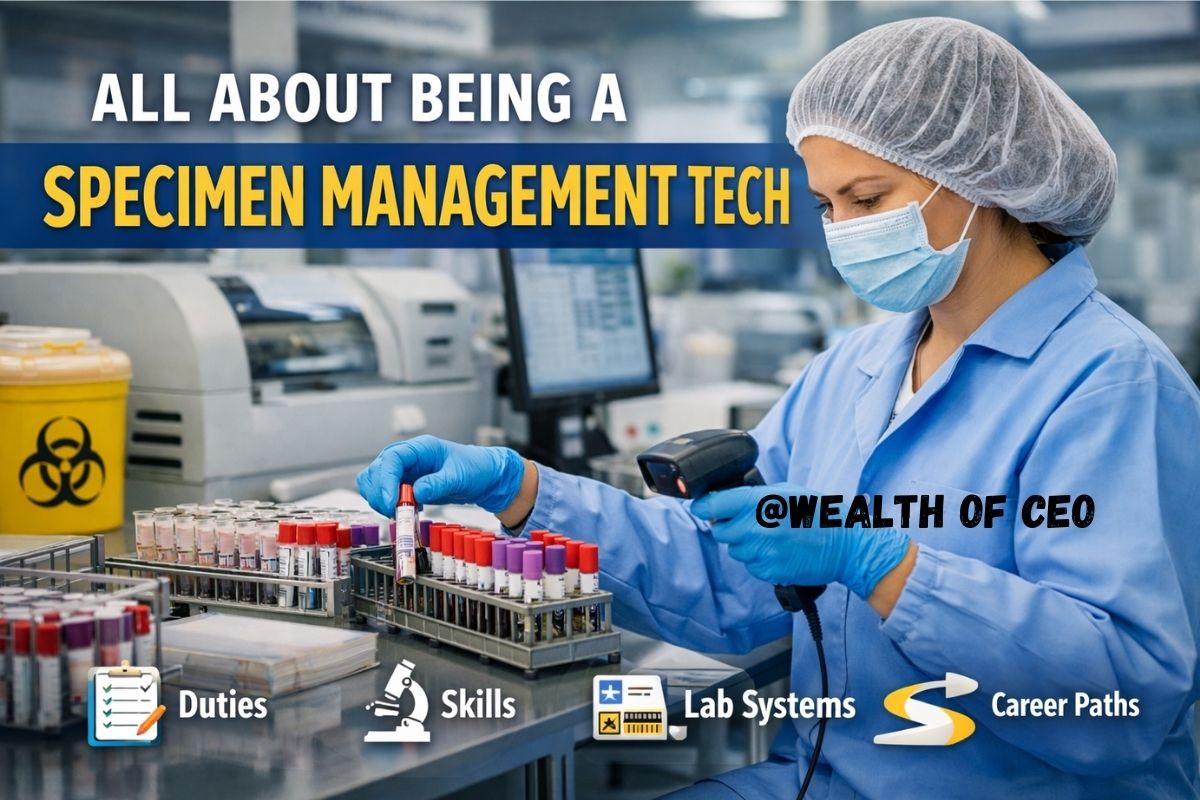
all about being a specimen management tech
All about being a specimen management tech means understanding a critical behind-the-scenes healthcare role that directly supports accurate testing and patient care. This position focuses on handling, tracking, and safeguarding biological specimens as they move through laboratory systems. While the role does not involve diagnosing patients, it plays a decisive part in ensuring test results are reliable, timely, and linked to the correct individual.
For anyone exploring laboratory or healthcare support careers, this role offers a clear view into how clinical operations actually function day to day. It sits at the intersection of compliance, operations, and patient safety, requiring precision, consistency, and strong process discipline. Understanding this role fully helps set realistic expectations about responsibilities, work environments, and long-term career potential within healthcare and laboratory systems.
What Is a Specimen Management Tech?
Definition of a specimen management technician
A specimen management technician is a healthcare laboratory support professional responsible for handling biological samples accurately from receipt to testing handoff.
The role focuses on specimen integrity, identification, and traceability rather than performing diagnostic tests.
Key responsibilities typically include:
-
Receiving and verifying specimens
-
Labeling and preparing samples
-
Maintaining documentation and tracking records
Where specimen management techs work
Specimen management techs work in controlled laboratory and clinical environments where testing accuracy matters.
Their role exists wherever patient samples move through diagnostic workflows.
Common workplaces include:
-
Hospital and health system laboratories
-
Reference and diagnostic labs
-
Clinical research and trial facilities
-
Specialty labs such as pathology or microbiology
How this role fits into healthcare and laboratory systems
This role acts as the operational bridge between specimen collection and laboratory testing.
Without proper specimen management, even advanced lab testing can fail.
The position supports:
-
Clinicians by ensuring correct samples reach testing
-
Laboratory staff by reducing rework and errors
-
Patients by protecting test accuracy and turnaround time
How Specimen Management Works in a Healthcare Setting
Specimen lifecycle from collection to testing
The specimen lifecycle follows a defined chain from collection to analysis.
Specimen management techs oversee the middle stages of this process.
Typical lifecycle steps include:
-
Collection at point of care
-
Receipt and verification in the lab
-
Preparation and storage
-
Transfer to testing departments
Accessioning and tracking processes
Accessioning is the formal intake and registration of specimens into the lab system.
This step ensures each specimen is uniquely identified and traceable.
Standard practices include:
-
Assigning accession numbers
-
Matching samples to orders
-
Verifying patient and test information
-
Logging specimens into tracking systems
Storage, transport, and handoff procedures
Specimens must be stored and moved according to strict requirements.
Improper handling at this stage can invalidate results.
Core procedures involve:
-
Temperature-controlled storage
-
Secure internal transport
-
Documented handoffs between departments
-
Monitoring time-sensitive samples
Core Roles and Responsibilities of a Specimen Management Tech
Receiving, labeling, and processing specimens
Specimen management techs confirm that each specimen arrives intact and properly identified.
They correct issues early to prevent downstream errors.
Daily tasks often include:
-
Inspecting containers for damage or leaks
-
Applying or verifying labels
-
Aliquoting or preparing samples when required
Data entry and laboratory information systems
Accurate data entry connects the physical specimen to digital lab records.
Errors here can lead to misdiagnosis or rejected tests.
Responsibilities include:
-
Entering orders into laboratory systems
-
Verifying demographic and test details
-
Updating specimen status throughout processing
Coordination with lab staff and clinical teams
This role requires constant coordination across departments.
Clear communication keeps workflows moving and prevents delays.
Coordination may involve:
-
Clarifying test orders
-
Notifying teams of specimen issues
-
Prioritizing urgent or stat samples
Why Specimen Management Is Critical to Patient Care
Impact on test accuracy and diagnosis
Specimen management directly affects diagnostic accuracy.
Even minor handling errors can alter test outcomes.
Proper management ensures:
-
Correct patient-to-specimen matching
-
Sample integrity from start to finish
-
Reliable test results for clinical decisions
Preventing specimen loss, contamination, or delays
Loss or contamination creates safety and care risks.
Specimen management techs act as the first line of prevention.
They reduce risk by:
-
Verifying labeling at intake
-
Using proper containment methods
-
Monitoring time and temperature limits
Role in maintaining laboratory workflow efficiency
Efficient specimen handling keeps labs operating on schedule.
Delays at intake can disrupt entire testing pipelines.
Strong specimen management supports:
-
Faster turnaround times
-
Balanced lab workloads
-
Fewer repeat collections
Skills and Qualities Needed to Be a Successful Specimen Management Tech
Technical and procedural skills
This role requires consistent application of lab procedures.
Technical accuracy matters more than speed alone.
Core skills include:
-
Understanding specimen requirements
-
Following standard operating procedures
-
Using lab equipment safely
Attention to detail and organizational skills
Precision is essential in specimen management work.
Small mistakes can have serious consequences.
Successful techs demonstrate:
-
Strong focus during repetitive tasks
-
Organized handling of high specimen volumes
-
Consistent verification habits
Communication and teamwork in lab environments
Specimen management is a team-based role.
Clear communication prevents errors and delays.
Effective communication involves:
-
Reporting discrepancies promptly
-
Coordinating with multiple departments
-
Documenting actions clearly
Education, Training, and Certification Requirements
Minimum education requirements
Most roles require a high school diploma or equivalent.
Some employers prefer coursework in science or healthcare.
Basic expectations often include:
-
Literacy in medical terminology
-
Comfort with data entry systems
-
Willingness to complete lab-specific training
On-the-job training vs formal programs
Many specimen management techs receive structured on-the-job training.
Formal programs are less common but can improve readiness.
Training usually covers:
-
Specimen handling protocols
-
Safety and compliance rules
-
Use of lab information systems
Certifications and compliance training expectations
Certification is not always required but can strengthen qualifications.
Compliance training is mandatory in most healthcare settings.
Common requirements include:
-
Biohazard safety training
-
Privacy and confidentiality training
-
Annual competency assessments
Work Environment and Daily Schedule Expectations
Hospital labs vs reference laboratories
Work environments vary by lab type.
Each setting has different pace and volume expectations.
Hospital labs often involve:
-
High specimen volume
-
Urgent turnaround demands
Reference labs typically offer:
-
More predictable workflows
-
Batch-based processing
Shift work, weekends, and physical demands
Specimen management often operates around the clock.
Shift flexibility is usually required.
Physical demands may include:
-
Standing for long periods
-
Lifting specimen containers
-
Repetitive motion tasks
Safety considerations and exposure risks
Handling biological specimens carries inherent risk.
Safety protocols reduce exposure and injury.
Key precautions include:
-
Use of personal protective equipment
-
Proper disposal procedures
-
Incident reporting processes
Salary Expectations and Career Outlook
Entry-level pay ranges
Compensation reflects entry-level healthcare support work.
Pay varies by location, employer, and shift type.
Typical factors influencing pay include:
-
Lab size and specialization
-
Shift differentials
-
Experience level
Factors that affect salary and advancement
Growth opportunities depend on skill development and reliability.
Specialized environments may offer higher pay.
Advancement factors include:
-
Experience with complex specimens
-
Strong compliance record
-
Cross-training in lab operations
Job demand and long-term outlook
Demand remains steady due to ongoing diagnostic needs.
Healthcare growth supports long-term stability for this role.
The role benefits from:
-
Expanding laboratory services
-
Increased testing volumes
-
Regulatory emphasis on accuracy
Benefits of Being a Specimen Management Tech
Benefits for entry-level healthcare professionals
This role provides early exposure to healthcare operations.
It serves as a practical entry point into laboratory careers.
Benefits include:
-
Hands-on experience
-
Stable employment
-
Clear procedural structure
Benefits for laboratories and healthcare systems
Specimen management techs support lab efficiency and compliance.
Their work reduces costly errors.
System-level benefits include:
-
Improved turnaround times
-
Lower specimen rejection rates
-
Stronger audit performance
Transferable skills for future roles
Skills gained apply across healthcare and laboratory settings.
Many techs use this role as a career foundation.
Transferable skills include:
-
Process control
-
Documentation accuracy
-
Regulatory awareness
Best Practices for Specimen Handling and Management
Proper labeling and documentation practices
Correct labeling ensures specimen traceability.
Documentation must match the physical sample exactly.
Best practices include:
-
Labeling at the point of receipt
-
Double-checking identifiers
-
Recording every status change
Chain-of-custody and traceability
Chain-of-custody tracks specimen movement and handling.
This is critical for quality control and compliance.
Effective traceability relies on:
-
Logged handoffs
-
Time-stamped records
-
Secure storage access
Maintaining accuracy under time pressure
High-volume labs create time pressure.
Accuracy must remain the priority.
Practical strategies include:
-
Standardized workflows
-
Checklists for intake steps
-
Escalation rules for discrepancies
Compliance, Safety, and Regulatory Requirements
Biohazard and infection control standards
Specimen handling must meet biohazard safety rules.
These standards protect staff and patients.
Compliance involves:
-
Proper PPE usage
-
Spill response procedures
-
Waste disposal protocols
Patient data privacy and confidentiality
Specimen data is protected health information.
Confidentiality is legally required.
Key obligations include:
-
Limited data access
-
Secure system use
-
Confidential communication practices
Laboratory audits and quality standards
Labs are subject to regular audits.
Specimen management records are often reviewed.
Audit readiness requires:
-
Complete documentation
-
Consistent procedures
-
Ongoing staff training
Common Mistakes and Risks in Specimen Management
Labeling and identification errors
Mislabeling is one of the most serious risks.
It can lead to incorrect diagnoses.
Common causes include:
-
Rushed intake
-
Incomplete verification
-
Poor handwriting or printing
Improper storage or handling
Storage errors can degrade specimens.
Temperature control is especially critical.
Risks arise from:
-
Incorrect storage locations
-
Missed time limits
-
Equipment failures
Documentation and communication failures
Unrecorded actions create gaps in traceability.
Communication breakdowns delay testing.
Typical issues include:
-
Missing entries
-
Unclear notes
-
Delayed escalation of problems
Tools, Systems, and Technology Used by Specimen Management Techs
Laboratory information systems and barcode tracking
Digital systems link specimens to patient records.
Barcode tracking reduces manual errors.
Common system features include:
-
Accession number assignment
-
Real-time status updates
-
Audit-ready logs
Storage equipment and monitoring tools
Proper equipment protects specimen integrity.
Monitoring tools alert staff to issues.
Tools often include:
-
Refrigerators and freezers
-
Temperature alarms
-
Secure storage units
Automation and digital tracking solutions
Automation improves speed and consistency.
Digital tracking enhances visibility.
Examples include:
-
Automated sorters
-
Integrated tracking dashboards
-
Electronic handoff confirmations
Specimen Management Tech vs Related Laboratory Roles
Specimen management tech vs lab assistant
Specimen management techs focus on specimen flow and integrity.
Lab assistants may perform broader support tasks.
Key differences involve:
-
Scope of specimen handling
-
Level of testing involvement
-
Workflow responsibility
Specimen management tech vs phlebotomist
Phlebotomists collect specimens directly from patients.
Specimen management techs handle samples after collection.
The roles differ in:
-
Patient interaction
-
Skill focus
-
Training requirements
Career progression comparisons
Specimen management can lead to advanced lab roles.
Progression depends on education and experience.
Common paths include:
-
Laboratory assistant roles
-
Phlebotomy training
-
Laboratory technician programs
FAQs
What does a specimen management tech do on a daily basis?
A specimen management tech handles incoming laboratory samples, verifies identification, enters data into lab systems, stores specimens correctly, and coordinates handoffs to testing departments.
Is all about being a specimen management tech suitable for entry-level healthcare workers?
Yes, all about being a specimen management tech often appeals to entry-level candidates because the role focuses on process accuracy, training is usually provided, and prior clinical experience is not always required.
Do specimen management techs work directly with patients?
No, this role typically does not involve patient interaction, as it focuses on specimens after collection rather than drawing or collecting samples.
What skills are most important for a specimen management tech?
Attention to detail, organization, basic computer skills, and the ability to follow strict procedures are essential for success in this role.
Can a specimen management tech advance to other healthcare roles?
Yes, many professionals use this position as a stepping stone to roles such as laboratory assistant, phlebotomist, or laboratory technician with additional training or education.

Blog
Fuelcell Energy Cumulative MW Deployed 2023
FuelCell Energy cumulative MW deployed 2023 reflects the total operational capacity and technology footprint achieved by the company in that year. This figure highlights the scope of FuelCell Energy’s stationary fuel cell installations, including both assets it directly operates and systems deployed under partner agreements. Understanding these numbers provides insight into the company’s market presence and its contribution to low‑emission, distributed energy generation.
Tracking cumulative MW deployed is critical for assessing growth, performance, and competitive positioning within the stationary fuel cell industry. In 2023, FuelCell Energy expanded its portfolio across the U.S. and international markets, including Korea, reinforcing its role in supporting renewable energy targets and providing reliable, on-site power solutions for industrial and utility applications.
Understanding FuelCell Energy and Its Technology
What is FuelCell Energy?
FuelCell Energy is a U.S.‑based company that designs, manufactures, installs, operates, and services stationary fuel cell power systems for distributed energy and hydrogen production. Its platforms produce electricity with low emissions and are used by utilities, industrial customers, and municipalities.
-
Provides utility‑scale and on‑site generation systems
-
Technologies support hydrogen production, carbon capture, and energy storage
-
Operates global fuel cell projects with recurring service revenue
Key Technologies and Platforms in Use
FuelCell Energy uses multiple fuel cell technologies with different use cases and power outputs.
-
SureSource Platforms: Series of carbonate fuel cell systems ranging from small kW to multi‑MW capacity
-
Tri‑Gen Systems: Produce electricity, heat, and hydrogen for industrial use
-
Solid Oxide Platforms: Higher‑efficiency, low‑rare‑earth material systems under development
-
Platforms can operate on natural gas, hydrogen, biogas, or blends depending on site requirements
Differentiation from Other Fuel Cell Manufacturers
FuelCell Energy differentiates based on scale, integration, and service model.
-
Focuses on stationary, grid‑connected, and industrial installations vs. automotive or portable use
-
Integrated project delivery (design through operations)
-
Long‑term service and maintenance agreements for installed projects
-
Technology designed for combined heat and power applications
Defining Cumulative MW Deployed
Operational Capacity vs. Technology Deployment
Operational capacity refers to megawatts recognized on the company’s balance sheet as functioning generating assets. Technology deployment includes systems installed by partners that use FuelCell Energy designs.
-
Operational MW: Systems owned/operated by the company
-
Technology deployed MW: Installations using FuelCell Energy technology but serviced or owned by partners
How Cumulative MW is Calculated in Energy Projects
Cumulative deployed MW is the sum of all operational capacity installed across projects up to a given date.
-
Add MW from all commissioned systems
-
Exclude projects pending commissioning or not yet recognized in operating portfolio
-
Include partner deployments only when under company service or revenue arrangements
FuelCell Energy’s 2023 Deployment Overview
Total MW Deployed Globally
FuelCell Energy reported its generation operating portfolio reached over 60 MW by the end of its fiscal year on October 31, 2023.
-
Reflects MW capacity of assets officially recognized as operating
-
Represents the core generation fleet contributing to recurring revenue
Regional Deployment Breakdown (U.S., Korea, Other Markets)
Deployments in 2023 included capacity in North America and technology platforms overseas.
-
U.S. deployments: Multiple utility‑scale projects including a new generation park in Connecticut
-
Korea: Fuel cell platforms deployed at six sites totaling more than 100 MW using company technology, though not all counted on FuelCell’s own operating books
-
Other markets may include pilot and service agreements in development
Project Highlights and Milestones
2023 saw key projects reach service milestones and new agreements.
-
New generation park opened in Derby, Connecticut
-
Long‑term service agreement executed for a 20 MW plant in Korea
-
University and municipality projects awarded to build additional small MW systems
How Fuel Cell Deployment Works
From Manufacturing to Site Installation
Deployment starts with manufacturing components and assembling fuel cell systems.
-
Components produced at Torrington, CT facility
-
Systems delivered to sites with civil and electrical infrastructure prepared
-
Installation includes connecting fuel supply and interfaces with grid or load systems
Grid Integration and Power Output Monitoring
Once installed, systems must interface with local distribution or generation networks.
-
Interconnection equipment ensures compatibility with grid codes
-
Output meters and telemetry track power production and system health
-
Contracts often include requirements for power quality and reliability
Maintenance and Performance Verification
Fuel cell systems require ongoing maintenance to sustain output and longevity.
-
Scheduled module replacements drive service economics
-
Performance data reviewed to anticipate issues and optimize operation
-
Extended service agreements can reduce outages and lifecycle costs
Key Roles and Stakeholders in Deployment
FuelCell Energy Project Teams
Internal teams coordinate deployment from design through commissioning.
-
Engineering and project management
-
Field installation and commissioning crews
-
Operations and maintenance specialists
-
Back office support for contracts and reporting
Partners, Contractors, and Technology Licensees
External stakeholders support installation and long‑term service.
-
System integrators and construction firms
-
Licensed technology operators in regions like Korea
-
Independent service providers under long‑term agreements
Regulatory and Utility Stakeholders
Regulators and utilities influence deployment timelines and interconnection.
-
Utility grid operators set standards for interconnection
-
Permitting authorities set environmental and safety requirements
-
Energy policy bodies support renewable or clean energy incentives
Why Cumulative MW Matters to the Industry
Market Share and Competitive Positioning
Cumulative deployed MW indicates a company’s footprint relative to peers.
-
Higher installed capacity can signal market traction
-
Investors use MW totals to benchmark growth potential
-
MW figures reflect adoption of specific fuel cell technologies
Impact on Renewable Energy Goals
Fuel cell deployments contribute low‑emission generation capacity.
-
Helps utilities and governments meet clean energy targets
-
Provides baseload solutions where intermittent renewables dominate
-
Supports decarbonization strategies in industrial sectors
Significance for Investors and Analysts
MW deployed is a quantitative measure used in financial and operational analysis.
-
Influences revenue forecasts for service and performance contracts
-
Used to assess manufacturing capacity utilization
-
Impacts long‑term valuation models in cleantech portfolios
Benefits of FuelCell Energy Deployments
Environmental and Sustainability Advantages
Fuel cell systems reduce emissions compared to combustion generators.
-
Low‑particulate and low‑NOx emissions
-
Can use biogas or hydrogen to further reduce carbon footprint
-
Quiet operations suitable for urban environments
Economic and Operational Benefits for Partners
Deployments deliver financial and reliability advantages.
-
Combined heat and power can reduce energy costs
-
Service contracts provide predictable maintenance expenses
-
Distributed generation reduces transmission losses
Reliability and Energy Security Contributions
Fuel cells offer resilient power delivery.
-
On‑site generation can provide backup power
-
Stable output supports critical infrastructure
-
Reduces dependence on central grid during outages
Best Practices for Tracking and Reporting MW Deployment
Standard Metrics and Reporting Methods
Use consistent measures to report deployed MW.
-
Distinguish between commissioned and planned capacity
-
Report operational output versus nameplate capacity
-
Use third‑party verification where available
Lessons from Successful Deployments
Track performance against expectations to improve accuracy.
-
Benchmark similar projects for expected output
-
Adjust forecasts based on real operation data
-
Document commissioning dates and service start dates
Avoiding Data Misrepresentation
Be clear on what constitutes deployed capacity.
-
Do not count uncommissioned systems
-
Separate partner‑installed technology from contracted operating assets
-
Clarify whether deployment includes observed or rated output
Compliance and Regulatory Considerations
Environmental Permitting and Safety Requirements
Deployments must comply with local and national regulations.
-
Air quality permits often required
-
Safety plans for hydrogen handling and fuel storage
-
Site‑specific environmental impact assessments
Grid and Utility Interconnection Standards
Generators must meet interconnection requirements.
-
Voltage, frequency, and protection criteria set by utilities
-
Certification of equipment may be required
-
Agreements define responsibilities for outages and faults
International Deployment Guidelines
Cross‑border projects require adherence to multiple regimes.
-
Import/export rules for power equipment
-
Local committee approvals for generation sources
-
International standards for safety and performance
Common Challenges and Risks in Deployment
Technical and Operational Challenges
Fuel cell deployments face complex integration issues.
-
Precision manufacturing to ensure system reliability
-
Site‑specific installation obstacles
-
Commissioning and tuning for optimal output
Financial and Market Risks
Economic factors can slow deployment.
-
Capital intensity and financing complexity
-
Policy changes affecting incentives
-
Market competition from other energy sources
Risk Mitigation Strategies
Mitigate risks with careful planning and partnerships.
-
Secure long‑term service agreements
-
Use phased deployment to manage cash flow
-
Engage experienced integrators and utilities
Tools, Systems, and Technologies Supporting Deployment
Monitoring Software and Performance Analytics
Digital tools track and optimize deployed systems.
-
Remote telemetry for power and temperature data
-
Alerts for maintenance needs
-
Analytics to predict performance trends
Manufacturing and Installation Tools
Specialized equipment ensures quality and efficiency.
-
Precision fabrication tools in manufacturing facilities
-
Rigging and installation tools for site assembly
-
Calibrated instruments for testing and commissioning
Industry Partnerships and Platforms
Collaborative tools extend deployment reach.
-
Partner networks for local installation and service
-
Platforms that share best practices and data
-
Standards bodies promoting interoperability
Actionable Deployment Checklist for Energy Professionals
Pre-Deployment Planning Steps
Start with clear objectives and compliance checks.
-
Define capacity targets and site requirements
-
Confirm permits and interconnection agreements
-
Line up contractors and logistics
Site Installation and Commissioning
Ensure installation is systematic and documented.
-
Verify civil and electrical infrastructure
-
Test fuel supply and safety systems
-
Perform commissioning tests for power stability
Post-Deployment Monitoring and Reporting
Track performance from day one.
-
Regular data collection on output and efficiency
-
Schedule maintenance based on performance trends
-
Report operational capacity to stakeholders
Comparison with Other Fuel Cell Manufacturers
MW Deployment Metrics Across Competitors
Fuel cell peers vary in scale and application.
-
Some specialize in smaller distributed systems
-
Others focus on heavy industrial hydrogen production
-
Comparisons should use consistent MW measures across markets
Technology and Market Differentiators
Different manufacturers have different strengths.
-
Some excel in mobile or transportation markets
-
Stationary fuel cells like FuelCell Energy focus on baseload power
-
Materials and stack design impact efficiency and cost
Regional Deployment Strategies
Deployment varies by region based on policy and infrastructure.
-
North America may focus on grid resilience
-
Asia and Europe may emphasize decarbonization goals
-
Incentives drive adoption in some markets more than others
FAQs
What is the total cumulative MW deployed by FuelCell Energy in 2023?
The total operational capacity reported by FuelCell Energy in 2023 reached over 60 MW, including both directly operated assets and partner-deployed systems in regions like Korea.
How does FuelCell Energy calculate deployed MW?
Deployed MW includes all commissioned and operational fuel cell systems recognized in the company’s portfolio. Systems installed by partners may be counted once under service or revenue agreements.
What regions saw the highest fuel cell deployments in 2023?
The United States led in utility-scale deployments, while Korea accounted for significant partner-deployed MW using FuelCell Energy technology. Other regions include pilot projects and smaller commercial installations.
What are the benefits of tracking cumulative MW deployed for energy projects?
Tracking deployed MW helps evaluate market share, operational efficiency, and environmental impact. It also informs investment decisions and supports compliance with renewable energy standards.
How does FuelCell Energy compare to other fuel cell manufacturers?
FuelCell Energy focuses on stationary, distributed power systems with multi-MW capacity, distinguishing it from competitors that may prioritize smaller systems, transport applications, or specialized industrial use.
Blog
ECG Components Lab NoteBook
Accurate ECG documentation is essential for both learning and clinical practice, and the ecg components lab notebook serves as a structured tool to record and analyze cardiac activity. It allows students and practitioners to track P waves, QRS complexes, T waves, intervals, and segments systematically, ensuring that every observation is clear, precise, and replicable. By organizing ECG data effectively, users can compare normal and abnormal patterns, making the lab notebook an indispensable part of physiology education and practical training.
Using an ecg components lab notebook also supports consistent measurement, annotation, and interpretation of heart signals. Whether in a classroom or clinical setting, it provides a reliable reference for understanding cardiac conduction, evaluating heart rhythms, and maintaining high standards of documentation. A well-maintained lab notebook not only enhances learning but also builds foundational skills necessary for professional practice in cardiology and related health sciences.
Understanding ECG: Basic Overview
What is an Electrocardiogram (ECG)?
An ECG is a test that records the heart’s electrical activity.
-
It captures the depolarization and repolarization of the heart muscle.
-
Each heartbeat produces a waveform that reflects cardiac conduction.
-
These waveforms help identify normal and abnormal heart rhythms.
Historical Development and Clinical Relevance
ECGs have been used clinically for over a century.
-
Early techniques involved string galvanometers and paper tracings.
-
Modern digital ECGs provide high-resolution signals for diagnosis.
-
ECGs are essential in cardiology, emergency medicine, and physiology education.
Core Components of an ECG
P Wave: Atrial Depolarization Explained
The P wave represents atrial depolarization.
-
Occurs as the atria contract to push blood into the ventricles.
-
Typically upright in most leads, small in amplitude, and short in duration.
-
Recording this wave helps assess atrial function and rhythm regularity.
QRS Complex: Ventricular Depolarization
The QRS complex shows ventricular depolarization.
-
It triggers ventricular contraction, producing the main heartbeat force.
-
Duration is brief, usually 0.06–0.12 seconds.
-
Its morphology can indicate conduction abnormalities or heart disease.
T Wave: Ventricular Repolarization
The T wave represents ventricular repolarization.
-
Ventricles return to their resting electrical state.
-
Usually upright and follows the QRS complex.
-
Changes in T-wave shape or amplitude may signal ischemia or electrolyte imbalance.
Other Key Elements: U Wave, PR Interval, ST Segment
-
U Wave: Small wave following T wave; may indicate late repolarization.
-
PR Interval: Time from the start of the P wave to the beginning of QRS; reflects AV node conduction.
-
ST Segment: Flat segment after QRS; deviations can indicate ischemia or infarction.
How an ECG Works
Electrical Conduction in the Heart
The heart generates electrical impulses that coordinate contraction.
-
SA node initiates depolarization, spreading through atria.
-
AV node delays impulse before ventricular conduction.
-
Bundle branches and Purkinje fibers distribute the signal throughout ventricles.
Recording Techniques: Leads and Electrodes
Electrodes detect electrical activity from different angles.
-
Standard 12-lead ECG provides multiple views of heart activity.
-
Limb and chest electrodes are placed in precise anatomical positions.
-
Proper electrode placement ensures accurate and reproducible tracings.
Reading and Interpreting Tracings
Interpreting ECGs involves analyzing waveforms, intervals, and segments.
-
Compare each wave’s amplitude and duration to normal ranges.
-
Identify rhythm, conduction, and possible abnormalities.
-
Document findings systematically in the lab notebook.
Documenting ECG in a Lab Notebook
Standard Lab Notebook Formats for ECG
Lab notebooks typically use tables and diagrams.
-
Columns for waves, intervals, and observations.
-
Space for measurement values and annotations.
-
Templates may follow standardized academic or clinical guidelines.
Organizing Waves, Intervals, and Segments
Structure documentation sequentially.
-
Record each P wave, QRS complex, and T wave.
-
Note intervals like PR, QT, and RR for each tracing.
-
Label abnormalities clearly for reference and discussion.
Including Measurements and Observations
Measurements should be precise and repeatable.
-
Use a ruler or digital software to determine durations.
-
Record heart rate calculated from RR intervals.
-
Include qualitative observations: waveform morphology and irregularities.
Roles and Responsibilities in ECG Recording
Student/Practitioner Responsibilities
Students or practitioners must record accurate tracings.
-
Follow standard electrode placement.
-
Maintain clean, functional equipment.
-
Document findings in a clear, consistent format.
Instructor or Supervisor Oversight
Supervisors ensure data quality and student adherence.
-
Verify correct technique and tracing quality.
-
Provide feedback on measurements and annotations.
-
Confirm safety protocols during ECG recording.
Ensuring Accurate Data Capture
Accuracy requires attention to detail.
-
Minimize artifacts from movement or electrical interference.
-
Calibrate machines regularly.
-
Review recordings before final documentation.
Importance of Proper ECG Documentation
Academic Significance in Physiology Labs
Correct documentation supports learning.
-
Helps students understand cardiac conduction in practice.
-
Facilitates grading and instructor evaluation.
-
Provides a reference for future experiments.
Clinical Relevance for Future Practice
Accurate records support clinical decision-making.
-
Enables comparison with patient ECGs.
-
Helps detect subtle changes over time.
-
Provides legal and professional documentation of findings.
Avoiding Misinterpretation and Errors
Clear documentation reduces mistakes.
-
Mislabeling or missing waves can lead to incorrect conclusions.
-
Systematic recording prevents data loss and miscommunication.
-
Observational notes clarify unusual patterns.
Benefits of a Well-Structured Lab Notebook
For Students: Improved Learning and Retention
A structured notebook enhances understanding.
-
Visual organization aids memory.
-
Stepwise measurements improve analytical skills.
-
Supports self-assessment and review.
For Educators: Easier Assessment and Feedback
Teachers can quickly evaluate progress.
-
Standardized tables simplify grading.
-
Annotations highlight strengths and errors.
-
Consistency allows comparison across students.
For Clinical Applications: Reliable Reference
Professional use benefits from detailed records.
-
Provides baseline data for patient monitoring.
-
Serves as a reference for research or case studies.
-
Facilitates collaboration with colleagues.
Best Practices for ECG Lab Notebooks
Standardized Notation and Labeling
Use consistent symbols and units.
-
Clearly mark wave peaks and intervals.
-
Include lead identification and tracing date.
-
Avoid ambiguous abbreviations.
Using Diagrams and Annotations Effectively
Visual aids complement written data.
-
Sketch representative ECGs with labeled components.
-
Highlight abnormalities with arrows or color codes.
-
Include notes on unusual findings or measurement tips.
Maintaining Consistency Across Experiments
Consistency ensures reliable comparisons.
-
Follow the same format for all recordings.
-
Use uniform scales for amplitude and timing.
-
Update templates as protocols evolve.
Common Mistakes and Risks
Mislabeling Waves and Intervals
Incorrect labeling can invalidate data.
-
Verify P, QRS, and T wave identification.
-
Double-check interval measurements.
-
Confirm electrode placement for accurate signals.
Incorrect Measurements or Calculations
Errors in timing or amplitude distort interpretation.
-
Use calibrated tools or software for precision.
-
Repeat measurements for verification.
-
Note any anomalies or artifacts observed.
Poor Recording Techniques
Artifacts can affect ECG quality.
-
Ensure electrodes have good skin contact.
-
Avoid movement during recording.
-
Monitor equipment performance before and during use.
Tools and Techniques for Accurate ECG Documentation
ECG Machines and Software Interfaces
Modern ECG machines provide reliable recordings.
-
Digital machines often include automatic measurements.
-
Software can annotate waves and generate reports.
-
Ensure familiarity with the interface to avoid errors.
Digital vs. Manual Recording Methods
Both methods are valid depending on context.
-
Manual: precise, low-tech, good for learning measurement skills.
-
Digital: faster, allows automated analysis and storage.
-
Hybrid approaches combine both for verification.
Annotation and Diagramming Tools
Tools support clear documentation.
-
Use colored pens or digital markers for labeling.
-
Include grids for accurate amplitude and time representation.
-
Maintain organized diagrams for each lead.
Actionable Checklists for Students
Pre-Recording Checklist
-
Verify electrode placement and skin prep.
-
Calibrate ECG machine and check leads.
-
Prepare lab notebook and templates.
During Recording Checklist
-
Monitor signal quality continuously.
-
Label each waveform as it occurs.
-
Measure intervals and note observations.
Post-Recording Verification Checklist
-
Review tracings for clarity and completeness.
-
Double-check measurements and labels.
-
Save or scan digital recordings for reference.
Comparing Lab Notebook Approaches
Digital vs. Paper Lab Notebooks
-
Digital allows easy storage, search, and sharing.
-
Paper supports tactile learning and immediate annotation.
-
Both can complement each other for verification and backup.
Standardized Templates vs. Freeform Notes
-
Templates ensure consistency and completeness.
-
Freeform notes allow flexibility for unusual cases.
-
Combining both approaches often works best.
Pros and Cons of Each Method
-
Digital: efficient but dependent on power/software.
-
Paper: reliable, portable, but harder to organize long-term.
-
Choice depends on lab environment and learning goals.
Additional Resources for ECG Study
Recommended Textbooks and Guides
-
“Rapid Interpretation of ECGs” by Dale Dubin
-
“ECG Made Simple” by John R. Hampton
-
Standard physiology lab manuals
Online ECG Simulators and Tools
-
Web-based ECG simulation software
-
Virtual labs for student practice
-
Measurement tools for interval calculation
Peer-Reviewed Articles and Lab Manuals
-
Journal of Electrocardiology
-
American Heart Association educational resources
-
University lab manuals for physiology courses
FAQs
How do I measure the PR, QRS, and QT intervals accurately?
Accurate measurement requires identifying the start and end points of each wave on the ECG tracing. Use calipers or digital tools to mark the beginning and end of the P wave, QRS complex, and T wave. Repeat measurements to ensure consistency.
What is the normal duration for each ECG component?
-
P wave: 0.08–0.11 seconds
-
PR interval: 0.12–0.20 seconds
-
QRS complex: 0.06–0.12 seconds
-
QT interval: 0.36–0.44 seconds
Comparing these durations to your recordings helps identify potential abnormalities.
How should I organize my ecg components lab notebook?
Use a consistent layout with sections for waves, intervals, segments, and observations. Include labeled diagrams, measurement tables, and notes on any irregularities. Standardized templates can improve clarity and make reviewing data easier.
Can lab notebooks be used for clinical reference?
Yes. When properly recorded and annotated, lab notebooks provide reliable baseline data and support analysis. Ensure measurements, dates, and lead placements are clearly documented.
What are common errors when documenting ECGs in a lab notebook?
Typical mistakes include mislabeling waves, inaccurate measurements, poor electrode placement, and incomplete observations. Systematic recording and double-checking data reduce these errors.
Blog
Experiment 38 Pre Laboratory Assignment
Pre-laboratory assignments are an essential part of laboratory courses, helping students prepare thoroughly before performing experiments. The Experiment 38 pre laboratory assignment specifically focuses on qualitative analysis of common cations, guiding students to understand chemical reactions, predict outcomes, and organize their observations systematically. Completing this assignment ensures students are ready to perform the experiment efficiently and safely, while also reinforcing the theoretical concepts behind each test.
The Experiment 38 pre laboratory assignment also teaches important laboratory skills such as identifying ions through precipitation, flame tests, and gas evolution. By working through this assignment in advance, students can anticipate challenges, plan their procedures, and maintain accurate documentation. This preparation not only improves lab performance but also enhances conceptual understanding, making it a critical step in achieving reliable and meaningful results.
What Is a Pre-Laboratory Assignment?
Definition and Purpose in Chemistry Labs
A pre-laboratory assignment is a task students complete before performing the lab experiment.
-
Ensures students understand the theory behind the experiment.
-
Helps identify reagents, procedures, and safety requirements.
-
Allows students to anticipate outcomes and plan observations.
-
Serves as a reference to reduce errors during actual lab work.
Difference Between Pre-Lab and Post-Lab Work
Pre-lab work is done before the experiment, while post-lab work is done after completion.
-
Pre-lab focuses on preparation, predictions, and understanding procedures.
-
Post-lab focuses on analyzing results, drawing conclusions, and documenting findings.
-
Pre-lab helps reduce mistakes; post-lab ensures learning from the results.
Overview of Experiment 38
Objectives of the Experiment
The main goal of Experiment 38 is to identify and analyze specific cations in a solution.
-
Confirm the presence of ions such as Na⁺, K⁺, NH₄⁺, Mg²⁺, Ca²⁺, and Cu²⁺.
-
Understand chemical reactions used for separation and identification.
-
Develop laboratory skills for observation, recording, and analysis.
Key Concepts and Chemistry Principles
This experiment is based on qualitative chemical analysis principles.
-
Precipitation reactions to separate cations.
-
Flame tests for characteristic colors of ions.
-
Formation of complex ions and gas evolution for identification.
-
Understanding solubility, reactivity, and selective separation techniques.
Core Reagents and Materials
List of Required Chemicals and Equipment
The experiment requires both chemicals and basic lab equipment.
-
Chemicals: Sodium chloride, potassium chloride, ammonium salts, magnesium salts, calcium salts, copper salts, acids, and bases.
-
Equipment: Test tubes, beakers, pipettes, centrifuge, Bunsen burner, flame test tools, and safety goggles.
Safety Considerations and Handling
Proper safety reduces risk of accidents and contamination.
-
Always wear protective gear including gloves and goggles.
-
Handle acids and bases with care; use fume hoods when needed.
-
Label all reagents clearly to prevent cross-contamination.
-
Follow disposal guidelines for chemical waste.
Step-by-Step Pre-Lab Process
How to Read the Lab Manual Effectively
Start by scanning the lab manual to identify key sections.
-
Highlight objectives, reagents, and safety notes.
-
Note procedural steps that require special attention.
-
Make margin notes on chemical reactions and expected results.
Preparing Your Assignment Before the Lab
Pre-lab preparation involves writing down expected observations and calculations.
-
List reagents and their roles.
-
Predict outcomes for each test or reaction.
-
Prepare diagrams or tables to organize data.
Recording Observations and Predictions
Documenting predictions allows comparison with actual results.
-
Use tables to note predicted colors, precipitates, or gas formation.
-
Include expected solubility and reaction sequences.
-
Leave space for actual observations during the lab.
Common Pre-Lab Questions
Understanding Ion Identification
Ion identification relies on characteristic reactions.
-
Precipitate formation separates ions based on solubility.
-
Flame tests indicate the presence of specific cations.
-
Gas evolution confirms ions like NH₄⁺.
Explaining Chemical Reactions and Equations
Accurate explanations require writing clear reaction equations.
-
Include reactants, products, and conditions for each reaction.
-
Highlight color changes, precipitate formation, or gas release.
-
Explain why certain reagents selectively react with specific ions.
Predicting Experiment Outcomes
Predictions help avoid errors and improve understanding.
-
Consider solubility rules and ion reactivity.
-
Anticipate order of precipitate formation in mixtures.
-
Predict flame colors and complex ion formations for reference.
Importance of Completing Pre-Lab Assignments
Academic Benefits for Students
Pre-lab work directly impacts performance and understanding.
-
Improves test scores and lab grades.
-
Enhances comprehension of theory and procedures.
-
Builds analytical and problem-solving skills.
Enhancing Lab Safety and Efficiency
Preparation reduces errors and hazards during the experiment.
-
Familiarity with reagents minimizes accidental spills.
-
Awareness of procedures prevents delays and confusion.
-
Proper documentation ensures faster, accurate analysis.
Best Practices for Pre-Lab Preparation
Organizing Notes and References
Structured notes improve clarity and retrieval during the lab.
-
Separate theory, reagents, and procedures.
-
Use bullet points or tables for quick reference.
-
Cross-reference with textbook examples.
Using Diagrams and Tables for Clarity
Visual tools make complex processes easier to follow.
-
Draw flowcharts for ion separation sequences.
-
Use tables for expected reactions, precipitates, and colors.
-
Include diagrams of test setups or flame test placements.
Time Management Tips
Effective planning avoids last-minute errors.
-
Allocate time for reading, note-taking, and prediction exercises.
-
Break tasks into smaller steps for accuracy.
-
Complete the pre-lab at least a day before the lab session.
Common Mistakes and How to Avoid Them
Misunderstanding the Experiment Objectives
Ignoring objectives leads to incorrect predictions.
-
Review the purpose of each step before writing.
-
Highlight key ions and reactions for focus.
Incomplete or Incorrect Reagent Lists
Missing reagents can halt the experiment or cause errors.
-
Double-check chemical names, formulas, and quantities.
-
Ensure all necessary equipment is noted.
Poor Documentation of Observations
Unclear notes lead to confusion during actual experiments.
-
Maintain organized tables for predictions and observations.
-
Write legibly and consistently for all data points.
Tools and Techniques to Support Pre-Lab Work
Laboratory Manuals and Online Resources
Reliable references ensure accurate preparation.
-
Use the official lab manual for experiment instructions.
-
Consult verified online chemistry guides and databases.
-
Reference safety sheets for chemical handling.
Digital Templates and Assignment Checklists
Templates streamline the pre-lab process.
-
Use standardized pre-lab forms for predictions and observations.
-
Check off steps to confirm all tasks are completed.
Visualization Tools for Reaction Processes
Visual aids clarify complex chemical interactions.
-
Diagram reaction sequences for ion separation.
-
Use color-coded charts for flame tests and precipitate identification.
-
Interactive simulations can reinforce understanding.
Sample Pre-Lab Assignment Template
Step-by-Step Example Completion
A template guides consistent pre-lab documentation.
-
Fill in experiment title, date, and student name.
-
List reagents, equipment, and safety notes.
-
Predict reactions, colors, and precipitate formation.
How to Answer Standard Questions Correctly
Accuracy comes from understanding the chemistry behind each question.
-
Explain reactions with chemical equations.
-
Justify predictions based on solubility and reactivity.
-
Include expected observations in structured tables.
Comparing Approaches
Individual vs Group Pre-Lab Assignments
Both approaches have advantages depending on learning style.
-
Individual: Encourages personal understanding and accountability.
-
Group: Facilitates discussion and clarifies difficult concepts.
-
Hybrid: Combines independent work with peer verification.
Manual vs Digital Pre-Lab Preparation
Preparation can be traditional or tech-assisted.
-
Manual: Paper notes, hand-drawn diagrams, physical tables.
-
Digital: Templates, online simulations, editable charts.
-
Choose method based on lab requirements and personal efficiency.
FAQs
How do I prepare for Experiment 38 pre-laboratory assignment?
Review the experiment objectives, list reagents, predict reactions, and organize observations clearly in tables.
What are the most common ions tested in Experiment 38?
Na⁺, K⁺, NH₄⁺, Mg²⁺, Ca²⁺, and Cu²⁺ are typically analyzed during this experiment.
How detailed should my pre-lab observations be?
Include predicted colors, precipitates, gas evolution, and reaction sequences in a structured format.
Can I work on the pre-lab assignment in groups?
Yes, group discussions can clarify difficult concepts, but each student should complete their own documentation.
Are there digital tools to help with Experiment 38 pre-laboratory assignments?
Templates, online simulations, and visualization charts can assist in predicting reactions and organizing data efficiently.
-
Net Worth11 months agoMarlo Thomas Net Worth: Comparing Her Earnings to Other Hollywood Icon
-
Net Worth11 months agoDannielynn Birkhead Net Worth: Did She Inherit Any Money from J. Howard Marshall?
-
Net Worth11 months agoJimmy Carr Net Worth: The Impact of TV Hosting and Digital Media on His Wealth
-
Net Worth11 months agoBilly Strings Net Worth: How Much Does He Make from Tours and Streaming?
-
Net Worth11 months agoTommy Lee Net Worth: How His Reality TV Appearances Boosted His Income
-
Biography5 months agoKate Garraway New Partner: A Complete Look at Her Life and Journey
-
Net Worth11 months agoCharleston White Net Worth: How He Built His Multi-Million Dollar Empire
-
Net Worth11 months agoMyron Golden Net Worth: Passive Income Strategies That Made Him a Millionaire