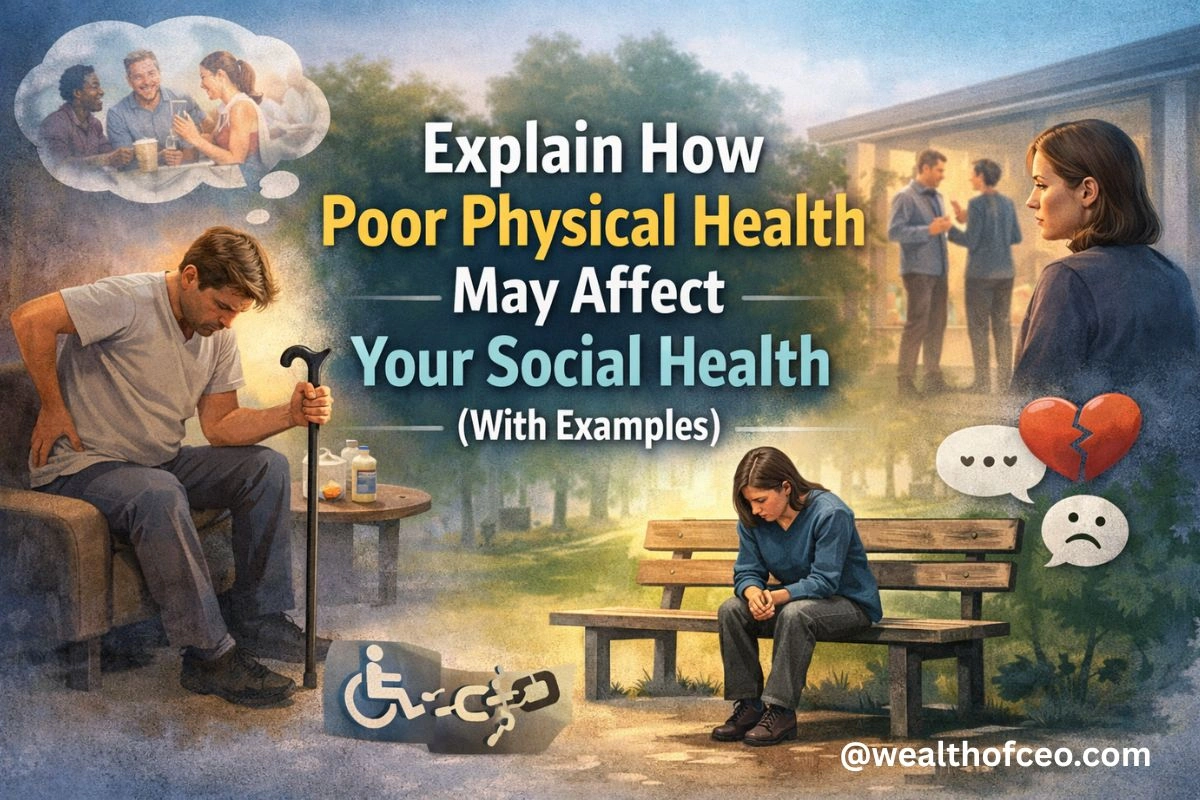
Poor physical health does not only affect the body; it often has a direct and lasting impact on how a person connects with others. When someone struggles with illness, pain, fatigue, or physical limitations, their ability to take part in social activities can change. Over time, this can influence relationships, communication, and overall social engagement in ways that are not always obvious at first.
To fully explain how poor physical health may affect your social health, it is important to look beyond medical symptoms and focus on daily life experiences. Physical challenges can shape confidence, limit participation, and alter how others respond, all of which play a role in social well-being. Understanding this connection helps individuals, families, and professionals recognize why physical health support is also essential for maintaining strong and healthy social relationships.
Understanding Physical Health and Social Health
What Is Physical Health?
Physical health refers to how well the body functions in daily life.
It reflects strength, mobility, energy levels, and the ability to manage illness or pain.
It includes:
-
Body systems working effectively
-
Freedom from chronic pain or unmanaged conditions
-
Capacity to perform routine and demanding tasks
-
Physical stamina to engage with others
What Is Social Health?
Social health describes how well a person connects, interacts, and maintains relationships.
It focuses on the quality of social networks, not the number of contacts.
Key elements include:
-
Healthy relationships with family, friends, and peers
-
Ability to communicate needs and boundaries
-
Participation in social, work, or community activities
-
Feeling supported and included
How Physical and Social Health Are Connected
Physical health directly shapes how people show up socially.
When the body struggles, social engagement often becomes harder to maintain.
The connection works through:
-
Energy levels affecting availability
-
Physical symptoms shaping confidence
-
Health limitations influencing participation choices
-
Others responding to visible or perceived health issues
How Poor Physical Health Influences Daily Social Functioning
Reduced Energy and Social Participation
Poor physical health often reduces stamina needed for social life.
Fatigue makes even simple interactions feel demanding.
Common effects include:
-
Cancelling plans due to exhaustion
-
Shortening social visits
-
Avoiding events that require sustained attention
-
Choosing rest over connection
Mobility Limitations and Accessibility Barriers
Limited mobility restricts access to many social spaces.
Physical barriers can quietly push people out of shared experiences.
This happens when:
-
Venues lack ramps or seating
-
Transportation becomes difficult
-
Standing or walking causes discomfort
-
Environments are not designed for health needs
Chronic Pain and Activity Avoidance
Ongoing pain changes how people plan their lives.
Social activities often feel risky or draining.
People may:
-
Avoid gatherings with long durations
-
Skip activities that trigger pain flare-ups
-
Withdraw from hobbies tied to movement
-
Limit spontaneity to control symptoms
Psychological Effects That Affect Social Health
Low Self-Esteem Linked to Physical Conditions
Physical health issues often affect how people view themselves.
Changes in appearance or ability can reduce confidence.
This can lead to:
-
Feeling less comfortable in group settings
-
Comparing oneself to healthier peers
-
Avoiding attention or visibility
-
Withdrawing from leadership or active roles
Anxiety and Fear of Social Judgment
Poor health can create fear of being judged or misunderstood.
Social situations may feel unpredictable or unsafe.
Typical concerns include:
-
Worry about symptoms appearing in public
-
Fear of being seen as weak or unreliable
-
Anxiety about explaining health limitations
-
Avoidance of unfamiliar social settings
Depression and Social Withdrawal
Depression often develops alongside long-term physical issues.
Social motivation tends to drop as mental health declines.
This shows up as:
-
Loss of interest in connection
-
Reduced communication with others
-
Difficulty responding to messages or invitations
-
Increased isolation over time
The Role of Long-Term Illness and Chronic Conditions
Living With Chronic Disease in Social Settings
Chronic illness requires constant adjustment in social life.
Energy and symptoms vary from day to day.
People often manage by:
-
Planning activities carefully
-
Limiting social commitments
-
Explaining health needs repeatedly
-
Choosing predictable environments
Fluctuating Symptoms and Social Reliability
Unpredictable symptoms affect reliability.
Others may misinterpret cancellations or changes.
This can result in:
-
Being labeled as inconsistent
-
Reduced invitations over time
-
Strained trust in relationships
-
Pressure to overcommit on good days
Invisible Illnesses and Social Misunderstanding
Invisible conditions are often misunderstood.
Without visible signs, support may be limited.
Common challenges include:
-
Skepticism from others
-
Pressure to perform normally
-
Feeling the need to justify limitations
-
Emotional fatigue from repeated explanations
Impact on Personal Relationships
Changes in Family Dynamics
Poor physical health shifts family roles.
Responsibilities often need to be redistributed.
This may involve:
-
Increased dependence on others
-
Role reversals within households
-
Emotional strain on caregivers
-
Reduced shared activities
Strain on Friendships and Peer Groups
Friendships can weaken when health limits availability.
Social circles often rely on shared routines.
Strain occurs when:
-
Plans are frequently changed
-
Friends lack understanding
-
Communication becomes inconsistent
-
Interests no longer align
Dependency, Caregiving, and Role Shifts
Needing care affects relationship balance.
Equality can feel disrupted.
This dynamic may include:
-
Loss of independence
-
Guilt about relying on others
-
Emotional stress for both sides
-
Changes in mutual expectations
Social Isolation as a Secondary Effect
How Physical Limitations Lead to Isolation
Physical limits often reduce exposure to social contact.
Isolation builds gradually, not suddenly.
It develops through:
-
Fewer outings
-
Reduced invitations
-
Limited spontaneous interaction
-
Increased time spent alone
Loneliness and Reduced Social Support
Isolation often leads to loneliness.
Support networks weaken without regular interaction.
This results in:
-
Feeling disconnected
-
Less emotional reassurance
-
Reduced practical help
-
Greater vulnerability during health setbacks
The Cycle Between Isolation and Health Decline
Isolation and poor health reinforce each other.
Each worsens the other over time.
The cycle typically follows:
-
Health issues reduce social contact
-
Isolation increases stress and low mood
-
Mental strain worsens physical symptoms
-
Further withdrawal occurs
Workplace and Educational Social Challenges
Missed Work or School and Social Disconnection
Absences disrupt social continuity.
Colleagues and classmates move forward without you.
Consequences include:
-
Missing informal interactions
-
Falling out of group routines
-
Feeling out of sync socially
-
Difficulty re-engaging
Stigma Around Physical Limitations
Health limitations can trigger stigma in professional settings.
Productivity is often wrongly equated with health.
This shows as:
-
Doubts about commitment
-
Fewer opportunities offered
-
Unspoken bias
-
Social distancing by peers
Communication Gaps With Colleagues or Classmates
Health issues can complicate communication.
People may avoid discussing limitations.
Gaps arise when:
-
Expectations are unclear
-
Accommodations are not discussed
-
Assumptions replace conversation
-
Needs go unmet
Social Stigma and Public Perception
Visible vs. Invisible Physical Health Conditions
Visibility shapes public response.
Visible conditions often attract attention, invisible ones doubt.
Both face challenges:
-
Visible: unwanted attention or pity
-
Invisible: disbelief or dismissal
-
Pressure to conform
-
Emotional strain in public spaces
Stereotypes and Assumptions
People often rely on stereotypes about health.
These assumptions shape behavior toward others.
Common examples include:
-
Equating illness with weakness
-
Assuming limited capability
-
Treating health issues as temporary
-
Ignoring individual differences
Impact of Stigma on Social Confidence
Stigma lowers willingness to engage socially.
Confidence erodes when judgment is expected.
This leads to:
-
Avoiding public interaction
-
Reduced self-expression
-
Limiting social roles
-
Increased isolation
Why Social Health Matters for Overall Well-Being
Social Connections and Emotional Resilience
Strong social ties improve coping.
They buffer stress and emotional strain.
Benefits include:
-
Emotional support during illness
-
Practical help when needed
-
Motivation to stay engaged
-
Sense of belonging
Social Health as a Protective Factor
Social health protects both mental and physical health.
Connection supports recovery and stability.
Protective effects include:
-
Lower stress levels
-
Better treatment adherence
-
Improved mood
-
Reduced isolation risk
Long-Term Consequences of Poor Social Health
Poor social health has lasting effects.
It impacts quality of life and outcomes.
Long-term risks include:
-
Chronic loneliness
-
Worsening mental health
-
Reduced life satisfaction
-
Increased health complications
Strategies to Protect Social Health While Managing Physical Health
Adapting Social Activities to Physical Limitations
Social life can be adjusted, not abandoned.
Flexibility keeps connections active.
Practical approaches:
-
Shorter meetups
-
Accessible locations
-
Virtual participation
-
Low-energy activities
Communicating Health Needs Effectively
Clear communication reduces misunderstanding.
It sets realistic expectations.
Effective communication includes:
-
Explaining limits early
-
Sharing what helps
-
Updating others when conditions change
-
Setting boundaries clearly
Building Supportive Social Networks
Supportive networks respect health needs.
Quality matters more than size.
Ways to build them:
-
Prioritize understanding relationships
-
Engage with peer support groups
-
Maintain regular check-ins
-
Accept help when offered
Common Mistakes That Worsen Social Health
Avoiding Social Interaction Completely
Complete withdrawal often backfires.
Isolation increases emotional strain.
Risks include:
-
Loss of support
-
Increased loneliness
-
Harder re-entry into social life
-
Declining mental health
Not Communicating Physical Limitations
Silence leads to false assumptions.
Others may misinterpret behavior.
This can cause:
-
Frustration on both sides
-
Unmet needs
-
Strained relationships
-
Reduced trust
Over-Isolation During Recovery or Illness
Temporary rest can turn into long-term isolation.
Reconnection becomes harder over time.
Common patterns include:
-
Delaying social return
-
Losing routine contact
-
Increased anxiety about rejoining
-
Shrinking social circles
Comparing Good vs. Poor Physical Health in Social Life
Social Engagement Levels
Physical health influences participation frequency.
Energy and comfort shape engagement.
Key differences:
-
Consistent attendance vs frequent cancellations
-
Spontaneity vs rigid planning
-
Broader participation vs selective involvement
Relationship Stability
Health affects relationship consistency.
Predictability supports stability.
Differences include:
-
Regular contact vs sporadic communication
-
Shared activities vs limited interaction
-
Mutual planning vs one-sided adjustment
Emotional and Community Support Differences
Support networks respond to health status.
Engagement strengthens community ties.
Contrasts include:
-
Strong reciprocal support vs limited help
-
Active community role vs passive presence
-
Emotional reassurance vs isolation
FAQs
1. How does poor physical health affect daily social interactions?
Poor physical health can reduce energy, limit mobility, and make social activities harder to maintain, leading to fewer interactions and less consistent communication.
2. Can long-term illness change relationships with friends and family?
Yes, long-term illness can shift roles, increase dependence, and create emotional strain, which may affect how relationships function over time.
3. Why do people with physical health issues often feel socially isolated?
Physical limitations, frequent cancellations, and reduced participation can gradually weaken social connections and increase feelings of isolation.
4. Explain how poor physical health may affect your social health.
Poor physical health may affect social health by limiting participation in social activities, lowering confidence, increasing isolation, and changing how others interact or offer support.
5. What steps can help protect social health while managing physical limitations?
Maintaining open communication, adapting social activities, and staying connected through flexible or accessible options can help preserve social relationships.