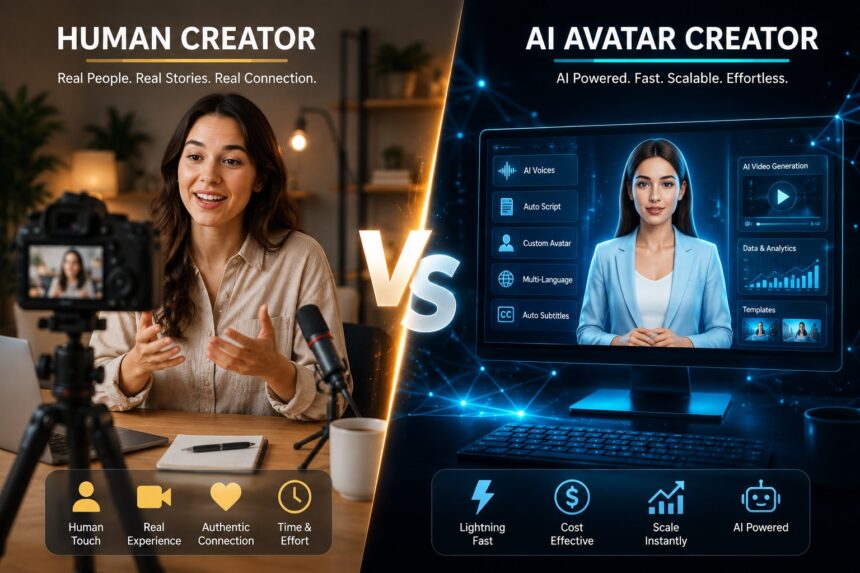
User-generated content, or UGC, has changed the way brands connect with people online. For years, this content came from real creators filming honest reviews, unboxings, and testimonials. Now, artificial intelligence has entered the picture, offering a faster and cheaper way to create UGC-style videos without a human ever picking up a camera.
This shift raises a real question for marketers, business owners, and content creators: should you stick with traditional UGC, move to AI-driven UGC, or use both? This guide breaks down everything you need to know, in plain and simple language.
What Is Traditional UGC Video Content?

Traditional UGC is content made by real people. A customer, influencer, or everyday user records themselves talking about a product, sharing an experience, or reacting to something they genuinely used.
Platforms like YouTube, TikTok, and Instagram Reels are built around this kind of content. The platform does not create the video. It simply hosts it, helps people discover it, and sometimes pays creators through ad revenue or brand deals.
Key traits of traditional UGC:
- Filmed and voiced by a real human
- Reflects genuine opinions and experiences
- Takes more time to plan, shoot, and edit
- Costs vary widely depending on the creator’s rate
- Builds trust because viewers see a real face and real emotion
What Is AI-Driven UGC Video Content?
AI-driven UGC uses tools that generate video content automatically. Instead of hiring a real person, brands use software to create realistic-looking presenters, often called AI avatars, who deliver a script in a natural, human-like tone.
Popular tools in this space include AI avatar generators and text-to-video platforms that let anyone turn a written script into a finished video within minutes. These tools use voice cloning, facial animation, and script automation to mimic the feel of authentic UGC.
Key traits of AI-driven UGC:
- Created using AI avatars or AI-assisted editing
- Produced in minutes instead of days
- Costs less per video, especially at scale
- Easy to translate into multiple languages instantly
- Can feel less personal if not done carefully
Side-by-Side Comparison

| Factor | Traditional UGC | AI-Driven UGC |
|---|---|---|
| Content creator | Real human | AI avatar or AI-assisted tool |
| Production time | Hours to several days | Minutes |
| Cost per video | Higher, depends on creator | Lower, often subscription-based |
| Scalability | Limited by human availability | Very high, easy to produce many versions |
| Authenticity | Naturally high | Improving, but can still feel synthetic |
| Personalization | Manual and slower | Fast and automated |
| Best for | Brand trust, storytelling, community building | Ad testing, quick campaigns, localization |
This table shows that neither option is automatically better. The right choice depends on your goal, budget, and how much authenticity matters for your audience.
Why Traditional UGC Still Matters
Even with all the new AI tools available, traditional UGC has not lost its value. People trust other people. When a viewer sees a real customer talking about a product with genuine excitement or honest criticism, it builds a level of trust that is hard to fake.
Traditional UGC also tends to perform well on social platforms where audiences are quick to notice anything that feels artificial. Many users today are becoming more aware of AI-generated content, and some platforms are even seeing pushback when videos feel too polished or robotic.
This is why traditional UGC continues to work best for:
- Long-term brand storytelling
- Building loyal communities
- Content shared on platforms where authenticity is closely watched
- Situations where emotional connection matters most
Why AI-Driven UGC Is Growing So Fast

At the same time, AI-driven UGC is becoming a favorite tool for performance marketers. Speed and cost are the biggest reasons.
A brand that wants to test twenty different ad scripts in one day simply cannot do that with human creators. With AI tools, it becomes possible to generate many versions of the same video, each with slightly different wording, tone, or call-to-action, and see which one performs best.
AI-driven UGC works especially well for:
- Fast advertising tests across multiple platforms
- Businesses with limited budgets for hiring creators
- Brands that need videos in several languages
- Quick product launches where speed matters more than deep storytelling
The Middle Ground: Using Both Together
Many successful brands are not choosing one over the other. Instead, they are blending both approaches based on the stage of their marketing funnel.
A common strategy looks like this:
- Use AI-driven UGC for early testing and quick ad variations
- Once a winning script or angle is found, recreate it with a real creator for scale and long-term trust
- Save traditional UGC for platforms and audiences that value authenticity the most
- Use AI tools for translations and quick localized versions of proven content
This blended approach saves time and money while still keeping a human touch where it matters most.
Things to Keep in Mind Before Choosing
Before deciding which type of UGC fits your brand, consider a few practical points.
- Disclosure matters. Some regions now require brands to disclose when content is AI-generated, so staying transparent protects trust and avoids legal issues.
- Audience awareness is growing. More viewers can now spot AI avatars, so quality and script writing matter more than ever.
- Platform rules keep changing. Some social platforms are updating their policies around synthetic media, so it helps to stay informed.
- Budget and goals should guide the decision, not trends alone.
Final Thoughts
AI-driven and traditional UGC video platforms are not really competitors. They serve different purposes and work best in different situations. Traditional UGC brings authenticity and emotional trust, while AI-driven UGC brings speed, scale, and cost savings.
The smartest approach for most brands in 2026 is to use both, letting each one do what it does best. This way, you get the trust of real human content along with the efficiency of AI-powered production.
Frequently Asked Questions (FAQs)
Is AI-generated UGC as effective as real UGC?
It can be effective, especially for ad testing and quick campaigns, but real UGC generally builds stronger long-term trust with audiences.
Do I need to tell viewers if a video is made with AI?
In many regions, yes. Disclosure rules are becoming more common, so it is a good habit to be transparent about AI-generated content.
Is AI-driven UGC cheaper than hiring real creators?
Usually, yes. Most AI UGC tools work on a subscription or credit system, which is often more affordable than paying multiple creators individually.
Can AI-driven UGC replace human creators completely?
Not entirely. AI is great for speed and testing, but human creators still offer emotional depth and authenticity that AI struggles to fully match.
Which platforms are best for traditional UGC?
YouTube, TikTok, and Instagram Reels remain the top platforms where real, human-made UGC performs strongly.
Should small businesses use AI UGC tools?
Yes, especially if budget is limited. AI UGC tools allow small businesses to test multiple ad ideas quickly without a large production budget.