Blog
Parallel Concurrent Processing: Benefits, Risks, and Best Practices
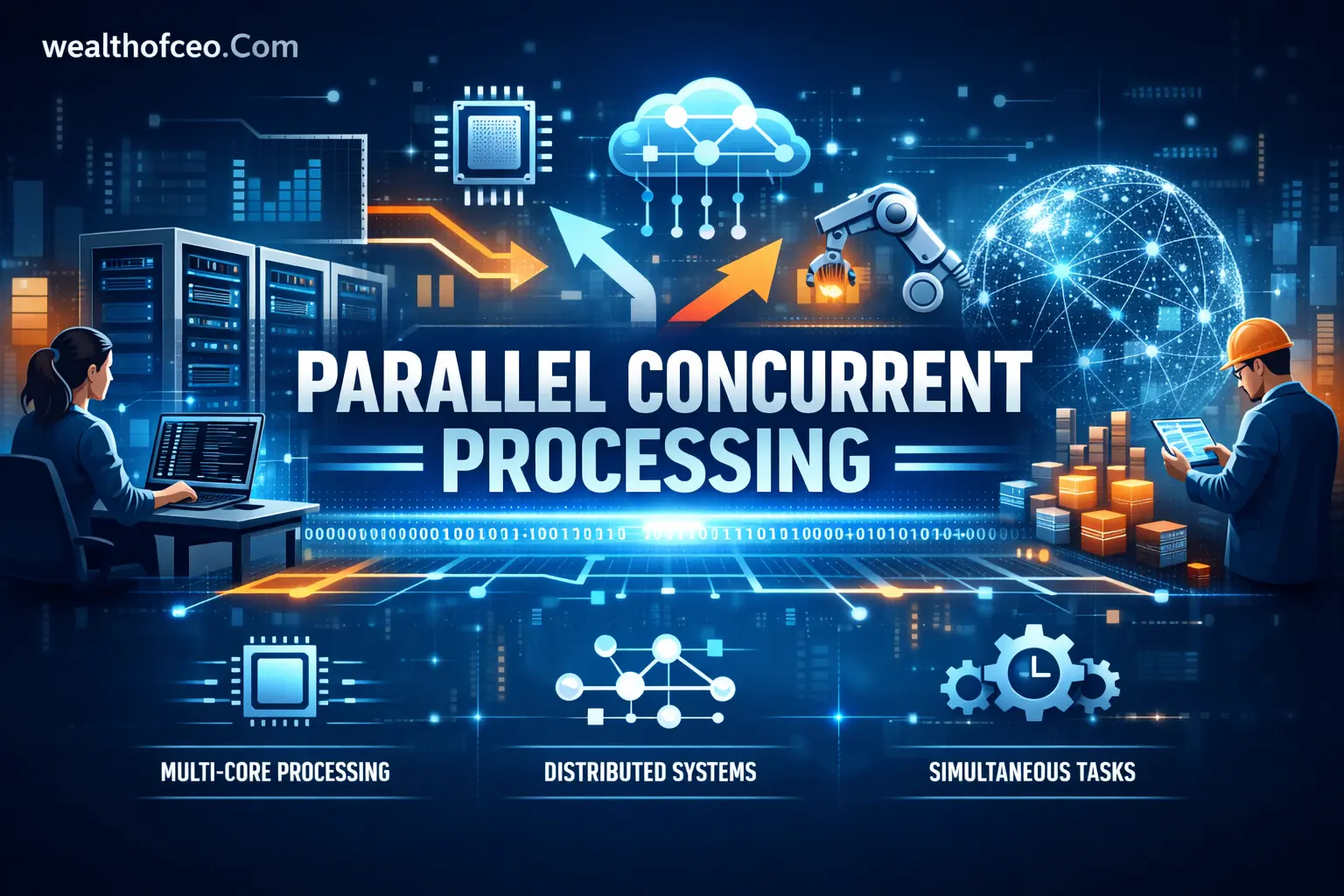
Parallel concurrent processing is a computing approach that allows multiple tasks to make progress at the same time while distributing execution across available hardware resources. It combines structured task management with true simultaneous execution on multi-core processors or distributed systems. This model is widely used in operating systems, enterprise platforms, cloud environments, and high-performance workloads where efficiency and responsiveness are critical.
In modern architectures, parallel concurrent processing enables systems to handle heavy computational tasks while still serving real-time user requests. By dividing work into smaller units and coordinating execution through threads, processes, or distributed nodes, organizations can improve throughput, scalability, and system stability. It has become a foundational design principle for scalable software and infrastructure built for large-scale demand.
What Is Parallel Concurrent Processing?
Parallel concurrent processing is a computing approach where multiple tasks make progress at the same time, and some of them may execute simultaneously on separate hardware resources.
-
Concurrency focuses on managing multiple tasks efficiently.
-
Parallelism focuses on executing tasks at the exact same time.
-
Modern systems combine both to maximize performance and responsiveness.
-
It is foundational in operating systems, cloud platforms, and large-scale applications.
Definition in Modern Computing Context
Parallel concurrent processing means structuring software so multiple tasks run independently, while the system distributes them across available processors or cores.
-
Tasks are divided into smaller units of work.
-
The runtime or OS schedules these units.
-
Multi-core CPUs or distributed nodes execute work simultaneously.
-
The design supports scalability and high throughput.
This model is standard in backend systems, data platforms, and AI workloads.
Difference Between Concurrency and Parallelism
Concurrency is about handling multiple tasks in overlapping time periods. Parallelism is about executing multiple tasks at the same time.
-
Concurrency can exist on a single-core CPU using time slicing.
-
Parallelism requires multiple cores or processors.
-
Concurrency improves responsiveness.
-
Parallelism improves computational speed.
All parallel systems are concurrent, but not all concurrent systems are parallel.
Why the Terms Are Often Confused
The terms are confused because both involve multiple tasks running “at once” from a user perspective.
-
On single-core systems, tasks appear simultaneous due to rapid context switching.
-
On multi-core systems, tasks may actually execute simultaneously.
-
Many frameworks implement both models together.
-
Documentation and marketing materials often use the terms interchangeably.
Clear architectural analysis is required to distinguish them properly.
How Parallel Concurrent Processing Works
Parallel concurrent processing works by dividing workloads into independent tasks and scheduling them across available computing resources.
-
Work is decomposed into smaller units.
-
A scheduler assigns tasks to threads or processes.
-
Execution happens across cores, CPUs, or nodes.
-
Synchronization ensures safe coordination.
The effectiveness depends on workload structure and hardware capacity.
Task Decomposition and Workload Distribution
Task decomposition means breaking a large job into smaller, independent parts.
-
Identify segments that can run independently.
-
Remove unnecessary task dependencies.
-
Define input and output boundaries.
-
Assign tasks to threads or worker processes.
Example: Splitting a large dataset into partitions for simultaneous processing.
Threading vs Multiprocessing Models
Threading uses multiple threads within the same process. Multiprocessing uses separate processes with independent memory spaces.
-
Threads share memory and are lightweight.
-
Processes have isolated memory and stronger fault isolation.
-
Threads are suitable for I/O-bound tasks.
-
Multiprocessing is often better for CPU-intensive tasks.
The choice depends on performance needs and safety requirements.
CPU Cores, Clusters, and Distributed Systems
Execution happens across hardware resources such as cores or distributed nodes.
-
Multi-core CPUs enable true parallel execution.
-
Clusters distribute work across multiple machines.
-
Distributed systems communicate over networks.
-
Cloud platforms dynamically scale compute capacity.
Infrastructure design directly affects scalability and fault tolerance.
Synchronization and Communication Mechanisms
Synchronization ensures tasks coordinate safely without corrupting shared data.
-
Mutexes and locks protect critical sections.
-
Semaphores manage access limits.
-
Message queues enable safe inter-process communication.
-
Atomic operations reduce locking overhead.
Poor synchronization design leads to instability and unpredictable results.
Core Components and Architecture
The architecture consists of execution units, memory structures, scheduling logic, and load balancing mechanisms.
-
Execution units: threads or processes.
-
Memory model: shared or distributed.
-
Scheduler: assigns CPU time.
-
Coordination layer: manages communication.
Each component must align with workload demands.
Process and Thread Management
Process and thread management controls creation, execution, and termination of tasks.
-
Define lifecycle policies.
-
Avoid uncontrolled thread spawning.
-
Set execution priorities.
-
Monitor resource consumption.
Controlled management prevents system overload.
Memory Models (Shared vs Distributed)
Shared memory allows multiple threads to access the same data. Distributed memory keeps data isolated across nodes.
-
Shared memory is faster but requires synchronization.
-
Distributed memory improves fault isolation.
-
Data consistency must be maintained.
-
Network latency impacts distributed performance.
Architecture selection impacts performance and complexity.
Scheduling and Context Switching
Scheduling determines which task runs and for how long.
-
Preemptive scheduling allows interruption.
-
Cooperative scheduling relies on task yielding.
-
Context switching introduces overhead.
-
Fairness policies prevent starvation.
Efficient scheduling improves system stability.
Load Balancing Mechanisms
Load balancing distributes work evenly across available resources.
-
Static balancing assigns tasks upfront.
-
Dynamic balancing adjusts during runtime.
-
Work-stealing improves utilization.
-
Monitoring tools detect imbalances.
Poor distribution leads to idle resources and bottlenecks.
Parallel vs Concurrent Processing: Key Differences
Parallel and concurrent processing differ in execution behavior and hardware reliance.
-
Concurrency manages task overlap.
-
Parallelism executes tasks simultaneously.
-
One improves responsiveness.
-
The other improves computational throughput.
Understanding the difference prevents design errors.
Execution Model Comparison
Execution models define how tasks progress.
-
Concurrent systems interleave tasks.
-
Parallel systems execute tasks at the same time.
-
Hybrid systems combine both.
-
Real-world systems usually adopt hybrid models.
Architectural clarity ensures correct implementation.
Hardware Requirements
Hardware requirements differ significantly.
-
Concurrency can run on single-core systems.
-
Parallelism requires multi-core or multi-CPU setups.
-
GPUs enable massive parallel workloads.
-
Distributed systems require networked infrastructure.
Capacity planning must consider workload type.
Performance Trade-offs
Performance depends on workload characteristics.
-
Parallel systems reduce computation time.
-
Concurrency improves system responsiveness.
-
Synchronization adds overhead.
-
Communication latency reduces efficiency.
Blind parallelization may degrade performance.
When to Use Each Approach
Use concurrency for responsiveness and multitasking. Use parallelism for heavy computation.
-
Web servers benefit from concurrency.
-
Scientific simulations require parallelism.
-
Data pipelines often combine both.
-
System design should match workload behavior.
Choose based on measurable performance needs.
Real-World Use Cases and Industry Applications
Parallel concurrent processing is used wherever scale and responsiveness are critical.
-
Enterprise systems
-
Cloud-native platforms
-
AI workloads
-
Financial transaction systems
It underpins modern digital infrastructure.
High-Performance Computing (HPC)
HPC uses large clusters to solve complex scientific problems.
-
Climate modeling
-
Genomic analysis
-
Physics simulations
-
Engineering computations
These workloads require massive parallel execution.
Cloud and Distributed Systems
Cloud platforms rely on distributed processing for elasticity.
-
Auto-scaling services
-
Distributed storage systems
-
Big data analytics
-
Event-driven architectures
Concurrency ensures responsiveness under load.
Artificial Intelligence and Machine Learning
AI training relies on parallel computation.
-
GPUs process tensors simultaneously.
-
Distributed training splits datasets.
-
Data preprocessing runs concurrently.
-
Inference systems handle multiple requests.
Performance directly impacts training time and cost.
Web Servers and Microservices Architectures
Modern web systems rely heavily on concurrency.
-
Handle thousands of requests simultaneously.
-
Separate services process tasks independently.
-
Asynchronous I/O improves throughput.
-
Container orchestration distributes load.
Reliability depends on correct concurrency design.
Benefits of Parallel Concurrent Processing
The main benefit is improved performance and scalability without sacrificing responsiveness.
-
Higher throughput
-
Better hardware utilization
-
Reduced processing time
-
Improved user experience
It enables large-scale system growth.
Improved Throughput and Performance
Throughput increases when tasks run simultaneously.
-
Divide heavy workloads.
-
Use multi-core processors.
-
Reduce blocking operations.
-
Optimize scheduling.
Performance gains must be measured, not assumed.
Better Resource Utilization
Systems avoid idle CPU cycles.
-
Distribute tasks evenly.
-
Balance memory usage.
-
Prevent resource starvation.
-
Monitor utilization metrics.
Efficiency lowers operational cost.
Scalability in Modern Systems
Scalability means handling growth without redesign.
-
Horizontal scaling adds nodes.
-
Vertical scaling adds CPU or memory.
-
Distributed coordination maintains consistency.
-
Load balancers manage traffic growth.
Scalability planning must be proactive.
Enhanced System Responsiveness
Responsive systems improve user experience.
-
Non-blocking operations reduce wait time.
-
Concurrent request handling avoids bottlenecks.
-
Background processing isolates heavy tasks.
-
Timeouts prevent system freeze.
Responsiveness is critical for service reliability.
Challenges and Technical Risks
Improper implementation introduces serious risks.
-
Data corruption
-
Deadlocks
-
Performance degradation
-
Debugging difficulty
Strong design discipline is required.
Race Conditions and Deadlocks
Race conditions occur when tasks access shared data unsafely. Deadlocks occur when tasks wait indefinitely.
-
Protect shared resources.
-
Use minimal locking.
-
Detect circular wait conditions.
-
Implement timeout safeguards.
These issues can halt production systems.
Synchronization Overhead
Synchronization adds computational cost.
-
Locking reduces parallel efficiency.
-
Excessive coordination slows execution.
-
Fine-grained locks reduce contention.
-
Lock-free designs improve throughput.
Balance safety with performance.
Debugging and Testing Complexity
Concurrent systems are harder to test.
-
Bugs may be intermittent.
-
Timing issues are unpredictable.
-
Reproducing errors is difficult.
-
Stress testing is required.
Comprehensive logging is essential.
Resource Contention Issues
Resource contention occurs when tasks compete for limited resources.
-
CPU contention reduces throughput.
-
Memory pressure increases latency.
-
Disk and network bottlenecks emerge.
-
Thread exhaustion crashes systems.
Capacity planning reduces risk.
Best Practices for Implementation
Effective implementation requires disciplined architecture and controlled execution management.
-
Plan concurrency early.
-
Minimize shared dependencies.
-
Measure performance continuously.
-
Test under realistic loads.
Reactive fixes are costly.
Designing for Scalability from the Start
Scalability must be built into architecture.
-
Design stateless services.
-
Use distributed queues.
-
Avoid centralized bottlenecks.
-
Separate compute and storage layers.
Retrofitting scalability is difficult.
Minimizing Shared State
Reducing shared data lowers synchronization risk.
-
Prefer immutable data structures.
-
Use message passing.
-
Isolate services.
-
Limit global variables.
Less sharing equals fewer conflicts.
Effective Thread and Process Management
Controlled management improves stability.
-
Set thread pool limits.
-
Avoid unbounded concurrency.
-
Monitor thread lifecycle.
-
Handle failures gracefully.
Excessive threads reduce performance.
Performance Monitoring and Optimization
Continuous monitoring ensures stability.
-
Track CPU utilization.
-
Measure latency and throughput.
-
Identify blocking calls.
-
Profile memory consumption.
Optimization must rely on metrics.
Tools, Frameworks, and Technologies
Modern ecosystems provide built-in concurrency support.
-
Languages
-
Runtime libraries
-
Containers
-
Monitoring systems
Tool choice affects maintainability.
Programming Languages with Native Support
Several languages support concurrency and parallelism natively.
-
Go uses goroutines.
-
Java provides thread pools and executors.
-
Python offers multiprocessing and async frameworks.
-
C++ supports multi-threading libraries.
Language selection should match workload demands.
Concurrency Libraries and APIs
Libraries simplify implementation.
-
Thread pools manage execution.
-
Futures and promises handle asynchronous results.
-
Reactive frameworks support event-driven systems.
-
Distributed task queues scale workloads.
Libraries reduce low-level complexity.
Containerization and Orchestration Platforms
Containers enable scalable deployment.
-
Docker isolates workloads.
-
Kubernetes manages scaling.
-
Auto-scaling adjusts resources dynamically.
-
Service meshes manage communication.
Infrastructure must align with concurrency models.
Monitoring and Profiling Tools
Monitoring tools detect bottlenecks.
-
CPU profilers measure hotspots.
-
Distributed tracing identifies latency sources.
-
Log aggregation tracks failures.
-
Performance dashboards provide visibility.
Visibility prevents hidden failures.
Compliance, Security, and Governance Considerations
Concurrency affects data safety and regulatory compliance.
-
Data consistency must be guaranteed.
-
Secure communication channels are required.
-
Audit trails must remain accurate.
-
Enterprise controls must be enforced.
Governance frameworks must reflect system complexity.
Data Integrity and Transaction Safety
Data integrity requires consistent updates.
-
Use atomic transactions.
-
Apply database isolation levels.
-
Implement rollback mechanisms.
-
Validate concurrent updates.
Financial and healthcare systems require strict controls.
Secure Inter-Process Communication
Communication between services must be protected.
-
Encrypt network traffic.
-
Authenticate service endpoints.
-
Validate message formats.
-
Apply least-privilege access policies.
Security failures can expose sensitive data.
Industry Standards and Enterprise Controls
Standards define acceptable practices.
-
Follow ISO security frameworks.
-
Implement access logging.
-
Maintain audit compliance.
-
Conduct periodic risk assessments.
Enterprise governance reduces operational risk.
Common Mistakes to Avoid
Common design errors reduce reliability and performance.
-
Overcomplicating architecture
-
Ignoring hardware constraints
-
Excessive locking
-
Misinterpreting metrics
Disciplined engineering prevents avoidable failures.
Over-Parallelization
More threads do not always mean better performance.
-
Excess context switching reduces efficiency.
-
Synchronization overhead increases.
-
CPU saturation causes instability.
-
Benchmark before scaling.
Parallelism must be measured.
Ignoring Hardware Constraints
Hardware limits define performance boundaries.
-
Core count limits true parallel execution.
-
Memory bandwidth affects speed.
-
Network latency impacts distributed systems.
-
Storage I/O can become a bottleneck.
Design within infrastructure limits.
Poor Synchronization Design
Incorrect synchronization creates instability.
-
Overuse of global locks.
-
Missing atomic operations.
-
Lack of timeout handling.
-
Uncontrolled shared resources.
Design minimal and precise coordination.
Misunderstanding Performance Metrics
Misreading metrics leads to wrong conclusions.
-
High CPU usage is not always bad.
-
Low latency may hide instability.
-
Throughput must be measured under load.
-
Benchmark results require consistent conditions.
Decisions must rely on accurate data.
Implementation Checklist for Engineers and Architects
A structured checklist reduces implementation risk.
-
Assess infrastructure readiness.
-
Define architectural model.
-
Validate through testing.
-
Monitor continuously after deployment.
Documentation must support long-term maintenance.
System Readiness Assessment
Assess whether infrastructure supports concurrent workloads.
-
Verify CPU core availability.
-
Check memory capacity.
-
Evaluate network throughput.
-
Review storage performance.
Gaps must be resolved before deployment.
Architecture Planning Steps
Planning prevents structural flaws.
-
Identify independent tasks.
-
Define communication mechanisms.
-
Select appropriate frameworks.
-
Establish monitoring standards.
Document decisions clearly.
Testing and Validation Criteria
Validation ensures stability.
-
Perform stress testing.
-
Conduct race condition analysis.
-
Validate failover mechanisms.
-
Simulate peak workloads.
Testing must mirror production conditions.
Deployment and Monitoring Checklist
Deployment must include ongoing oversight.
-
Configure auto-scaling.
-
Enable centralized logging.
-
Set performance alerts.
-
Define incident response procedures.
Monitoring continues after launch.
Frequently Asked Questions
What is parallel concurrent processing in simple terms?
Parallel concurrent processing is a computing method where multiple tasks are managed at the same time, and some are executed simultaneously across multiple CPU cores or systems.
Is parallel processing the same as concurrent processing?
No. Concurrent processing manages multiple tasks in overlapping time periods, while parallel processing executes tasks at the exact same time on separate hardware resources.
Where is parallel concurrent processing commonly used?
It is commonly used in cloud computing, high-performance computing (HPC), artificial intelligence workloads, large-scale web servers, and distributed enterprise systems.
What are the main risks of implementing parallel systems?
The main risks include race conditions, deadlocks, synchronization overhead, debugging complexity, and resource contention that can reduce performance or cause instability.
Do small applications need parallel concurrent processing?
Not always. Small or low-traffic applications may perform efficiently with basic concurrency alone, and adding parallelism can introduce unnecessary complexity.

Blog
HMS Photovoltaik: Complete Guide to Modern Solar Solutions
HMS Photovoltaik represents a modern approach to solar energy solutions, combining high-efficiency panels, advanced inverters, and intelligent monitoring systems. Designed for both residential and commercial applications, HMS Photovoltaik optimizes energy production while ensuring reliability and sustainability. The system integrates hardware and software components to provide real-time performance tracking, making it easier to manage energy consumption and maximize efficiency.
With growing interest in renewable energy and energy independence, HMS Photovoltaik offers a practical solution for homeowners and businesses seeking long-term savings and reduced environmental impact. By leveraging smart technologies such as microinverters and energy storage integration, HMS Photovoltaik ensures that every solar installation operates at peak performance under varying conditions. This approach not only lowers operational costs but also contributes to broader green energy goals.
What is HMS Photovoltaik?
Understanding the Brand and Technology
HMS Photovoltaik is a solar energy solutions provider focused on high-efficiency photovoltaic systems. It integrates panels, inverters, and monitoring tools to optimize energy production and reliability.
-
Offers residential, commercial, and industrial solutions
-
Combines hardware with smart monitoring for efficiency
-
Focuses on sustainability and long-term performance
Difference Between HMS Photovoltaik and Generic PV Systems
HMS systems differ from standard PV setups by integrating advanced monitoring, hybrid management, and microinverter technology.
-
Panel-level optimization rather than single-point conversion
-
Continuous performance tracking
-
Enhanced energy efficiency in variable conditions
Key Components of HMS Photovoltaik Solutions
The main components include solar panels, inverters, storage systems, and control software. Each part works together to maximize energy yield and system reliability.
-
Photovoltaic panels capture sunlight efficiently
-
Inverters convert DC to usable AC electricity
-
Monitoring systems track production and detect issues
How HMS Photovoltaik Works
Solar Panel Functionality in HMS Systems
Solar panels convert sunlight into direct current electricity. HMS panels are designed for higher conversion efficiency and durability.
-
Multi-layer cells improve energy capture
-
Anti-reflective coatings reduce energy loss
-
Modular design allows flexible installation
Role of Inverters and Microinverters
Inverters transform DC electricity into AC for household or commercial use. Microinverters optimize each panel individually.
-
Microinverters reduce power loss from shading or panel mismatch
-
Increases overall system reliability
-
Supports scalable expansion of solar arrays
Smart Monitoring and Energy Management
Smart monitoring tracks performance in real-time and allows remote control of energy distribution.
-
Detects faults or underperformance
-
Provides energy consumption analytics
-
Supports automated adjustments to improve efficiency
Core Components and Their Roles
Photovoltaic Panels
Panels are the primary energy capture component. They determine system efficiency and durability.
-
High-grade silicon or alternative materials
-
Weather-resistant and long-lasting
-
Designed for maximum sunlight absorption
Inverters and Converters
Convert and stabilize electricity for practical use. In HMS systems, these are optimized for panel-level control.
-
Ensure consistent AC output
-
Monitor voltage and current for safety
-
Enable integration with storage systems
Energy Storage Solutions
Batteries store excess energy for use during low sunlight periods.
-
Supports off-grid or backup power needs
-
Improves energy independence
-
Enhances grid stability for commercial setups
Monitoring and Control Systems
Software and control units allow system diagnostics and efficiency improvements.
-
Real-time energy tracking
-
Alerts for maintenance or performance issues
-
Data logging for regulatory compliance
Why HMS Photovoltaik Matters in 2026+
Energy Efficiency and Sustainability
HMS systems reduce energy waste and maximize renewable output.
-
Optimized panel performance under varied conditions
-
Reduces reliance on fossil fuels
-
Supports long-term sustainable energy goals
Reducing Operational Costs
By improving efficiency and minimizing downtime, operational costs are lowered.
-
Automated monitoring reduces labor costs
-
Lower maintenance requirements
-
Efficient energy conversion reduces electricity bills
Contribution to Green Energy Goals
HMS Photovoltaik supports renewable energy adoption and carbon footprint reduction.
-
Aligns with local and international energy targets
-
Promotes cleaner urban and commercial environments
-
Encourages investment in sustainable infrastructure
Benefits for Homeowners
Cost Savings and ROI
Homeowners can achieve significant savings over system lifetime.
-
Lower energy bills from efficient panels
-
Potential for government incentives
-
ROI achieved through reduced electricity consumption
Increased Energy Independence
Systems reduce dependency on the electrical grid.
-
Stored energy can be used during outages
-
Reduces exposure to utility price increases
-
Supports off-grid or hybrid living setups
System Longevity and Maintenance Ease
HMS solutions are designed for durability and easy upkeep.
-
Long-lasting panels and inverters
-
Predictive maintenance alerts
-
Minimal routine intervention needed
Benefits for Businesses and Installers
Scalability for Commercial Installations
Systems can be scaled for large roofs or multi-site deployments.
-
Modular design allows phased implementation
-
Supports diverse commercial energy needs
-
Easy integration with existing infrastructure
Real-Time Monitoring for Fleet Systems
Businesses benefit from continuous performance tracking across sites.
-
Detect issues early to avoid downtime
-
Monitor energy production per unit or site
-
Optimize operational costs with data-driven insights
Compliance with Energy Standards
HMS systems are designed to meet international regulations.
-
Meets European and global safety and performance standards
-
Simplifies audits and regulatory reporting
-
Ensures reliability for commercial energy projects
Best Practices for Installation and Use
Site Assessment and Panel Placement
Placement affects efficiency and output significantly.
-
Analyze sun exposure and shading patterns
-
Align panels for optimal angle and orientation
-
Evaluate roof strength and space constraints
Optimal System Sizing
Proper sizing ensures performance and cost efficiency.
-
Calculate household or business energy demand
-
Consider seasonal and peak consumption
-
Match storage and inverter capacity accordingly
Integration with Existing Energy Systems
HMS systems can integrate with grid or backup power setups.
-
Compatible with battery storage solutions
-
Supports hybrid grid and off-grid scenarios
-
Smooth integration reduces technical issues
Compliance, Standards, and Certifications
European and International PV Standards
HMS systems adhere to recognized standards for safety and performance.
-
IEC and EN standards for solar panels and inverters
-
Compliance ensures interoperability and reliability
-
Validates warranty and system longevity
Safety Guidelines and Installation Requirements
Proper installation reduces risk of faults or accidents.
-
Certified installers recommended
-
Grounding and surge protection in place
-
Regular inspection protocols
Warranty and Certification Considerations
HMS products come with warranties reflecting industry standards.
-
Coverage for panels, inverters, and storage units
-
Validated through certified performance testing
-
Documentation required for insurance and regulatory purposes
Common Mistakes and Risks
Incorrect Sizing or Placement
Oversized or undersized systems reduce efficiency.
-
Poor panel alignment lowers output
-
Inadequate inverter capacity causes energy loss
-
Mismatched storage limits energy utilization
Ignoring System Monitoring
Skipping monitoring leads to undetected faults.
-
Reduced system lifespan
-
Lower energy production
-
Increased maintenance costs
Overlooking Maintenance Schedules
Neglecting maintenance can degrade performance.
-
Panels may accumulate dirt or debris
-
Inverters and batteries require periodic checks
-
Unattended issues can lead to system downtime
Tools, Systems, and Techniques for Optimization
Energy Management Software
Optimizes energy flow and consumption.
-
Tracks production and usage in real-time
-
Predicts peak demand and load balancing
-
Integrates with smart home or business systems
Monitoring Platforms and Apps
Mobile and web applications simplify oversight.
-
Alerts for faults or inefficiency
-
Historical data for performance analysis
-
Remote control for hybrid setups
Maintenance Tools and Diagnostic Equipment
Ensure consistent system performance.
-
Multimeters and power analyzers
-
Cleaning and inspection kits
-
Remote diagnostic platforms
Actionable Checklists for Users
Pre-Installation Checklist
-
Evaluate energy needs
-
Inspect roof or site suitability
-
Confirm regulatory approvals
-
Select appropriate system components
Post-Installation Performance Checklist
-
Verify inverter and panel output
-
Test monitoring system functionality
-
Ensure battery and storage systems operate correctly
Regular Maintenance Checklist
-
Clean panels periodically
-
Inspect inverters and wiring
-
Check software updates for monitoring systems
-
Record performance metrics
Alternatives and Comparisons
HMS Photovoltaik vs Traditional PV Systems
HMS systems outperform traditional setups due to integrated monitoring and microinverters.
-
Higher efficiency under shading or panel mismatch
-
Real-time fault detection
-
Improved long-term energy output
Microinverters vs String Inverters
Microinverters optimize each panel individually, unlike string inverters that depend on the weakest panel.
-
Panel-level optimization
-
Reduces impact of partial shading
-
Simplifies system expansion
Hybrid vs Standard Solar Solutions
Hybrid systems combine grid connection, storage, and smart control.
-
Provides energy security during outages
-
Maximizes self-consumption
-
Supports dynamic energy management
Future Trends and Innovations in Photovoltaics
Smart Grids and AI Integration
AI and smart grids optimize energy production and distribution.
-
Predicts energy demand
-
Automates load balancing
-
Reduces wastage and maximizes efficiency
Advanced Microinverter Technologies
New microinverter models improve energy conversion and system monitoring.
-
Higher efficiency rates per panel
-
Enhanced diagnostic capabilities
-
Supports larger and more complex arrays
Predictive Maintenance and Performance Analytics
Analytics predict faults before they occur, reducing downtime.
-
Monitors trends and panel degradation
-
Schedules maintenance proactively
-
Improves overall system lifespan and ROI
FAQs
What is HMS Photovoltaik and how does it work?
HMS Photovoltaik is a solar energy solution that integrates high-efficiency panels, inverters, and monitoring systems. It converts sunlight into usable electricity while optimizing energy production with smart technologies.
How much energy can a solar panel system save on average?
Energy savings depend on system size, location, and energy consumption. On average, properly installed solar panels can reduce electricity bills by 20%–50%.
Can I integrate solar panels with battery storage?
Yes, integrating solar panels with batteries allows you to store excess energy for use during peak demand or outages, increasing energy independence.
What maintenance is required for a photovoltaic system?
Regular maintenance includes cleaning panels, inspecting inverters and wiring, and updating monitoring software to ensure optimal performance and longevity.
Are solar systems suitable for small residential setups?
Yes, solar systems can be scaled to fit small homes. Even compact arrays can provide significant energy savings while supporting household energy needs.
Blog
Gamer Challenger: Skills, Strategies, and Mindset Explained
Reaching the gamer challenger rank represents the pinnacle of competitive gaming, where skill, strategy, and consistency define success. Players at this level are recognized not only for their mechanical proficiency but also for their ability to adapt, lead, and make high-stakes decisions under pressure. The term encompasses both a formal ranking in top esports titles and a mindset focused on continuous improvement and mastery.
Achieving gamer challenger status requires more than just playtime; it demands structured training, analytical thinking, and disciplined practice routines. Understanding the progression, the skills involved, and the common pitfalls along the way is essential for any player aiming to reach the elite tier. This article breaks down everything you need to know to navigate the competitive ladder effectively and sustain top-level performance.
Understanding Gamer Challenger
What Does “Gamer Challenger” Mean in Competitive Gaming?
A gamer challenger is a player who has reached the highest competitive rank in a game, demonstrating elite skill and consistent performance.
-
Represents the top fraction of the player base.
-
Requires mastery of game mechanics, strategy, and adaptability.
-
Recognized in both solo and team competitive ladders.
Difference Between Rank, Status, and Mindset
Rank is a numerical or tier-based designation. Status reflects recognition or reputation. Mindset is the approach to continuous improvement and competition.
-
Rank: official ladder placement (Diamond, Master, Challenger).
-
Status: peer acknowledgment or esports presence.
-
Mindset: discipline, analysis, and learning from losses.
How the Challenger Rank Works
Ranking Systems in Popular Games (LoL, Valorant, Apex Legends)
Challenger ranks are used in top-tier competitive games to separate elite players.
-
League of Legends (LoL): Challenger sits above Grandmaster; only top 200–300 players per region.
-
Valorant: Points-based system with Challenger at the peak of ranked play.
-
Apex Legends: Apex Predator rank equivalent to Challenger in other games.
How Points, Tiers, and Matchmaking Affect Progression
Progression depends on winning, individual performance, and matchmaking metrics.
-
Each win awards points; losses subtract points.
-
Matchmaking pairs players of similar skill to maintain fair progression.
-
Consistency is key; streaks influence point gains more than isolated wins.
Climbing From High Diamond to Challenger
Advancing requires precise planning and focus on incremental improvement.
-
Track personal stats for weak points.
-
Target high-impact matches to maximize point gains.
-
Maintain win rate above 55–60% to progress steadily.
Key Roles and Responsibilities of a Challenger Player
In-Game Leadership and Strategy Execution
Challenger players lead through decision-making and positioning.
-
Initiate team fights at optimal times.
-
Adjust strategies dynamically based on opponents.
-
Communicate game plan clearly to teammates.
Team Collaboration and Communication
Effective teamwork is essential to sustain top-tier rank.
-
Share vision and tactical calls consistently.
-
Coordinate cooldowns, rotations, and objectives.
-
Manage conflicts and maintain morale under pressure.
Maintaining Performance Consistency
Consistency separates top players from transient high performers.
-
Regular practice routines focused on weak areas.
-
Monitor fatigue and avoid overplaying.
-
Use performance data to adjust daily goals.
Why Reaching Challenger Matters
Competitive Recognition and Esports Opportunities
Achieving Challenger opens doors to professional play and sponsorships.
-
Recognized by peers, teams, and tournament organizers.
-
Increases visibility for recruitment in esports leagues.
-
Grants eligibility for high-level competitions.
Personal Growth and Skill Mastery
Challenger status reflects mastery of both mechanics and strategic thinking.
-
Improves decision-making under pressure.
-
Strengthens mental resilience and adaptability.
-
Demonstrates commitment to continuous improvement.
Benefits of Being a Gamer Challenger
For Individual Players
-
Enhances personal reputation and credibility.
-
Opens pathways to coaching, streaming, and content creation.
-
Provides measurable benchmarks for self-improvement.
For Teams and Organizations
-
Strengthens team performance and competitive advantage.
-
Increases potential for sponsorships and tournament success.
-
Encourages a culture of accountability and growth.
For the Gaming Community
-
Sets high standards and role models for new players.
-
Promotes skill-based competition over casual play.
-
Encourages development of strategies and meta-awareness.
Essential Skills and Traits of a Challenger
Mechanical and Tactical Skills
High-level mechanics and tactics are non-negotiable.
-
Precision timing, reflexes, and input accuracy.
-
Map awareness and positioning for maximum impact.
-
Efficient use of resources and cooldowns.
Mental Resilience and Focus
Top players withstand stress without performance drops.
-
Ability to stay calm under high-stakes matches.
-
Recover quickly from losses or setbacks.
-
Maintain focus during long sessions.
Analytical and Adaptive Thinking
Adaptation and analysis separate average players from elite.
-
Read opponents and predict strategies.
-
Adjust builds or rotations mid-game.
-
Learn from each match with data-backed evaluation.
Best Practices for Climbing to Challenger
Effective Training Routines
Structured practice accelerates progression.
-
Focused drills on mechanics, aim, and positioning.
-
Schedule sessions for skill maintenance and improvement.
-
Alternate practice modes: solo, duo, and team-focused.
Reviewing Gameplay and Learning From Mistakes
Analysis ensures lessons are applied consistently.
-
Record matches and identify recurring errors.
-
Use replay tools to study decision-making.
-
Implement corrective measures in the next session.
Leveraging Coaching and Mentorship
Expert guidance shortens learning curves.
-
Seek feedback from higher-ranked or professional players.
-
Participate in workshops and strategy sessions.
-
Embrace constructive criticism without ego interference.
Common Mistakes and Risks
Plateauing and Burnout
Excessive play without reflection leads to stagnation.
-
Take breaks to prevent mental fatigue.
-
Rotate practice focus to avoid repetitive routines.
-
Monitor win-loss patterns to identify performance drops.
Mismanaging Competitive Pressure
High stakes can undermine performance if unmanaged.
-
Set realistic daily goals rather than obsessing over rank.
-
Practice mindfulness and stress management techniques.
-
Avoid toxic or reactive behaviors during matches.
Toxic Behaviors That Hinder Growth
Negative habits reduce potential to reach Challenger.
-
Blaming teammates or external factors.
-
Ignoring feedback and refusing to adapt.
-
Excessive tilt or emotional outbursts mid-game.
Tools, Systems, and Techniques
Software for Performance Tracking and Analysis
Tracking tools help quantify progress.
-
Use in-game stats dashboards for key metrics.
-
Employ third-party analytics software for advanced insights.
-
Monitor KPIs like kill/death ratio, objective control, and efficiency.
Popular Platforms for Competitive Ladders
Structured environments support high-level play.
-
Ranked ladders in LoL, Valorant, and Apex Legends.
-
Challenger-specific tournaments on platforms like Challengermode.
-
Online communities for skill-based matchmaking.
Techniques for Skill Improvement and Reflex Training
Practical methods accelerate skill acquisition.
-
Aim trainers and reaction drills.
-
Scenario-based training for decision-making under pressure.
-
Split attention exercises to improve multitasking efficiency.
Actionable Checklists to Reach Challenger
Daily Practice Checklist
-
Warm-up reflex and aim exercises.
-
Complete at least one focused strategy session.
-
Review past match highlights for immediate improvement.
Weekly Strategy Review
-
Analyze win/loss trends and adapt gameplay.
-
Experiment with new strategies or champions.
-
Track points and tier progression against set goals.
Mindset and Motivation Checklist
-
Set measurable, achievable targets.
-
Record mental and emotional performance after matches.
-
Schedule downtime to prevent burnout.
Comparisons and Alternatives
Challenger vs Grandmaster vs Professional Rank
-
Challenger: top-tier, often <0.1% of players.
-
Grandmaster: elite but below Challenger; requires high win rate.
-
Professional: may or may not hold high ladder rank; involves tournament participation.
Solo Climbing vs Team-Oriented Progression
-
Solo climbing tests individual skill and adaptability.
-
Team-oriented progression requires coordination, communication, and consistent practice.
-
Most top-tier players combine both to maintain rank and skill balance.
FAQs
What does it take to become a gamer challenger?
Becoming a gamer challenger requires a combination of mechanical skill, strategic thinking, and consistent practice. Players must analyze their gameplay, adapt to opponents, and maintain mental focus to climb the competitive ladder effectively.
How long does it typically take to reach challenger rank in popular games?
The timeline varies depending on the game, player experience, and dedication. For most competitive titles, reaching the top tier can take anywhere from several months to over a year of structured practice and consistent performance.
Can casual players realistically achieve gamer challenger status?
Casual players can reach gamer challenger rank, but it requires significant effort beyond normal play. Focused training, reviewing matches, and developing advanced strategies are essential to bridge the gap from casual to elite-level play.
Which games feature a challenger ranking system?
Many esports titles use a challenger or equivalent top-tier ranking system, including League of Legends, Valorant, and Apex Legends. Each game defines the requirements differently, but all reward elite performance and consistency.
What are the common mistakes that prevent players from reaching Challenger?
Frequent mistakes include inconsistent practice, poor teamwork, emotional tilt, ignoring feedback, and failing to analyze mistakes. Avoiding these pitfalls is crucial for progressing to and maintaining a top-tier rank.
Blog
Platform Event Trap: Risks and Common Mistakes
A platform event trap occurs when asynchronous events in a system behave unexpectedly due to misconfiguration, poor design, or governance gaps. These traps can lead to duplicate processing, missed events, and system bottlenecks, impacting both performance and data reliability. Understanding how they occur is essential for developers, administrators, and IT teams managing event-driven systems like Salesforce or enterprise integrations.
Effectively managing platform events reduces operational risks and ensures workflows run smoothly. By identifying common triggers, implementing best practices, and monitoring event flows, organizations can prevent these traps from causing disruptions. Proper event governance not only improves system performance but also enhances data integrity and the reliability of business processes.
Understanding Platform Event Traps
What is a Platform Event Trap?
A platform event trap is a situation where asynchronous events in a system behave unexpectedly due to misconfiguration, poor design, or governance gaps.
-
It typically results in duplicate events, missed processing, or system bottlenecks.
-
The term is most common in event-driven systems like Salesforce, microservices architectures, and enterprise integrations.
-
It is a functional issue, not a feature or error code.
Key Contexts Where Platform Event Traps Occur
Platform event traps appear primarily in:
-
Salesforce Platform Events where event handling exceeds system limits or is misordered.
-
Event-driven architectures where services rely on asynchronous messaging and event processing is uncoordinated.
-
Integration workflows involving multiple services that generate or consume events without proper idempotency checks.
How Platform Event Traps Work
Event-Driven Architecture Overview
Event-driven architecture (EDA) processes system events asynchronously instead of sequentially.
-
Components react to events independently, reducing tight coupling.
-
Events can be published to a queue or topic, and multiple subscribers may act on them.
-
Mismanagement of these events leads to traps that disrupt expected system behavior.
Common Triggers and System Behavior
Platform event traps are triggered by:
-
Overlapping subscriptions or event recursion.
-
Exceeding delivery limits defined by the platform.
-
Systems assuming synchronous behavior in an asynchronous design.
Consequences include delayed processing, duplicate notifications, and inconsistent application states.
Roles and Responsibilities
Developers’ Role in Preventing Traps
Developers must design event handling to be predictable and idempotent.
-
Validate event payloads before processing.
-
Avoid recursive triggers or circular dependencies.
-
Test event-driven workflows in production-like environments.
Administrators and Governance Responsibilities
Administrators maintain system health and ensure event policies are enforced.
-
Monitor subscription counts and delivery metrics.
-
Implement platform limits and alert thresholds.
-
Coordinate with development teams to adjust event design.
Stakeholders Affected by Event Traps
Multiple stakeholders can be impacted:
-
IT and development teams experience operational overhead.
-
Business users may encounter delayed or inaccurate data.
-
Customers or external systems may receive inconsistent information.
Why Platform Event Traps Matter
Impact on System Performance
Traps reduce efficiency and increase latency.
-
Events may queue excessively, consuming CPU and memory resources.
-
Overloaded systems slow down critical processes.
-
Unchecked recursion can lead to system outages.
Data Integrity and Reliability Concerns
Traps compromise trust in the system:
-
Duplicate or lost events lead to inconsistent data states.
-
Reports and analytics may produce inaccurate insights.
-
Downstream integrations may propagate errors further.
Benefits of Proper Event Management
Advantages for Developers and IT Teams
Structured event management reduces operational friction:
-
Predictable event behavior simplifies debugging.
-
Reduced system errors lower support workload.
-
Better observability enables proactive issue resolution.
Benefits for Business Operations and End-Users
End-users experience smoother interactions:
-
Data is delivered accurately and on time.
-
Automation and workflows execute reliably.
-
Business decisions are based on consistent information.
Best Practices to Avoid Platform Event Traps
Configuring Event Subscriptions Correctly
Proper subscription setup prevents overload:
-
Limit subscribers to relevant services only.
-
Avoid redundant subscriptions across similar endpoints.
-
Validate event filters to reduce unnecessary traffic.
Implementing Idempotent Event Handlers
Idempotency ensures safe repeated processing:
-
Event handlers produce the same result even if triggered multiple times.
-
Maintain unique identifiers for each event to track processing.
-
Use database constraints or checks to prevent duplicates.
Monitoring and Logging Strategies
Observability helps detect traps early:
-
Log all event deliveries and failures.
-
Monitor queue lengths, processing times, and retry counts.
-
Implement alerting for abnormal activity patterns.
Compliance and System Requirements
Platform Limits and Governance Guidelines
Platforms define limits to prevent abuse:
-
Maximum event delivery rates and queue sizes.
-
Maximum concurrent subscribers per event topic.
-
Governance policies for event creation and subscription approval.
Auditing and Reporting Considerations
Audits verify compliance and reliability:
-
Track event delivery success and failure rates.
-
Maintain history for troubleshooting and post-mortem analysis.
-
Generate reports for management review and regulatory compliance.
Common Mistakes and Risks
Misconfigurations That Trigger Traps
Common errors include:
-
Ignoring platform delivery limits.
-
Subscribing multiple services without filtering.
-
Processing events in a synchronous manner.
Over-Automation and Recursive Event Issues
Automation without control increases risk:
-
Recursive triggers can multiply events rapidly.
-
Complex workflows may create cycles between services.
-
Lack of safeguards against repeated processing.
Tools, Systems, and Techniques
Salesforce Platform Event Tools
Salesforce offers built-in tools for event management:
-
Event Monitoring API to track delivery and usage.
-
Platform Event Subscription Management for controlling subscribers.
-
Debug logs for tracing event flows.
Third-Party Monitoring and Alert Systems
External tools can complement native monitoring:
-
Application performance monitoring (APM) platforms.
-
Event queue monitoring dashboards.
-
Alerts and notification systems for failures or overloads.
Architectural Patterns to Minimize Risks
Design patterns help avoid traps:
-
Event sourcing with controlled replay.
-
Circuit breaker patterns for dependent services.
-
Dead-letter queues for failed or problematic events.
Actionable Checklists for Teams
Developer Checklist for Event Implementation
-
Validate event payloads and uniqueness.
-
Ensure handlers are idempotent.
-
Test event flows in production-like environments.
Admin Checklist for Event Governance
-
Monitor subscriptions and system limits.
-
Implement alerting for unusual activity.
-
Audit event delivery and failure logs regularly.
Testing and Validation Checklist
-
Simulate peak loads and failure scenarios.
-
Verify correct order of event processing.
-
Confirm idempotency across repeated triggers.
Comparisons and Alternatives
Platform Events vs. Traditional APIs
-
Platform events are asynchronous, while APIs are synchronous.
-
Events decouple producers and consumers; APIs require direct calls.
-
Event systems scale better under high message volume.
Event-Driven vs. Batch Processing Approaches
-
Event-driven reacts in real time; batch processes run on schedules.
-
Event-driven provides immediacy but requires monitoring and governance.
-
Batch processing reduces load but introduces latency.
FAQs
What is a platform event trap and how does it occur?
A platform event trap occurs when asynchronous events in a system are mismanaged, causing issues like duplicate processing, missed events, or performance bottlenecks.
How can I prevent duplicate events in an event-driven system?
Implement idempotent event handlers, track unique event IDs, and carefully manage subscriptions to avoid overlapping triggers.
What monitoring tools are best for detecting event processing issues?
Use platform-native monitoring tools, application performance monitoring (APM) systems, and logging dashboards to track event delivery, failures, and queue lengths.
Can platform event traps impact data integrity?
Yes. If events are lost, duplicated, or processed out of order, the resulting data inconsistencies can affect reporting, analytics, and downstream systems.
What are common mistakes that lead to platform event traps?
Misconfigurations, ignoring platform delivery limits, over-automation, and recursive event triggers are common causes of these traps.
-
Net Worth12 months agoMarlo Thomas Net Worth: Comparing Her Earnings to Other Hollywood Icon
-
Net Worth12 months agoDannielynn Birkhead Net Worth: Did She Inherit Any Money from J. Howard Marshall?
-
Net Worth12 months agoBilly Strings Net Worth: How Much Does He Make from Tours and Streaming?
-
Net Worth12 months agoJimmy Carr Net Worth: The Impact of TV Hosting and Digital Media on His Wealth
-
Net Worth12 months agoTommy Lee Net Worth: How His Reality TV Appearances Boosted His Income
-
Blog2 months agoBanflix: Complete Review of the App, Features, Safety & Alternatives
-
Net Worth12 months agoFrank Siller Net Worth: How the Tunnel to Towers Founder Built His Wealth
-
Biography5 months agoKate Garraway New Partner: A Complete Look at Her Life and Journey