
Blog
RTC Stands For Medical


In medical documentation, clarity is essential for ensuring patient safety and effective care. The term “RTC stands for medical” is commonly encountered in patient charts, discharge summaries, and follow-up instructions. It is a shorthand used by healthcare providers to indicate that a patient needs to return to the clinic for further evaluation, monitoring, or treatment. Understanding this abbreviation helps both patients and medical staff stay aligned on care plans and reduces the risk of missed or delayed follow-ups.
While RTC is widely recognized in clinical settings, it can sometimes be confused with other abbreviations like RCT (Randomized Controlled Trial) or, in emergency contexts, Road Traffic Collision. Knowing the correct meaning and application of RTC ensures that healthcare professionals communicate effectively, maintain accurate records, and provide consistent instructions. This article explains what RTC means in healthcare, its usage, and best practices for documentation and patient care.
Understanding RTC in Medical Contexts
What RTC Means in Healthcare
RTC stands for “Return to Clinic” in most medical settings. It indicates that a patient needs a follow-up visit or ongoing monitoring.
-
Commonly seen in discharge summaries, progress notes, and patient instructions.
-
Can include specific timing (e.g., “RTC in 2 weeks”) or conditions (“RTC PRN” – as needed).
-
Helps clinicians track patient recovery and treatment outcomes.
How RTC Differs Across Medical Specialties
RTC usage can vary depending on the type of practice:
-
Primary Care: Typically refers to routine follow-ups for chronic conditions or lab results.
-
Specialty Clinics: May indicate procedure check-ins, imaging follow-ups, or therapy sessions.
-
Emergency/Trauma: Sometimes used to schedule review visits after initial treatment.
-
Mental Health: RTC can signal scheduled therapy sessions or program reviews.
The History and Origin of RTC as a Medical Abbreviation
Early Usage in Clinical Documentation
RTC emerged as a shorthand in hospital and clinic records to streamline note-taking.
-
Used by physicians and nurses to quickly record instructions.
-
Became common in handwritten charts where space was limited.
-
Allowed consistent communication between shifts and departments.
Evolution in Modern Healthcare Communication
As medical records transitioned to digital systems, RTC remained standard.
-
Integrated into electronic medical records (EMRs) as a recognizable code.
-
Standardized across multiple institutions for clarity.
-
Often paired with automated reminders and patient portals.
How RTC is Used in Clinical Settings
RTC in Patient Charts and Discharge Summaries
RTC provides clear follow-up instructions in documentation.
-
Specifies when a patient should return to the clinic.
-
May include reason for return (e.g., wound check, lab review).
-
Helps avoid ambiguity and ensures continuity of care.
RTC in Appointment Scheduling and Follow-Ups
Clinics use RTC to guide appointment logistics:
-
Staff schedule visits based on RTC instructions.
-
Automatic reminders can be linked to RTC notes.
-
Reduces missed appointments and improves adherence.
RTC in Emergency and Trauma Records
In emergency care, RTC can denote post-discharge follow-ups.
-
Used to schedule trauma or surgery reviews.
-
Can also appear in coding or documentation for legal purposes.
-
Ensures patients are monitored for complications or delayed symptoms.
Common Variations and Confusions
RTC vs RCT (Randomized Controlled Trial)
RTC and RCT are often confused due to similar letters.
-
RTC: Return to Clinic – practical patient instruction.
-
RCT: Randomized Controlled Trial – clinical research methodology.
-
Misreading these can lead to misunderstandings in medical research or practice.
RTC vs Road Traffic Collision in Medical Records
In some contexts, RTC may refer to a Road Traffic Collision.
-
Common in emergency department or trauma documentation.
-
Context usually clarifies the meaning (follow-up vs injury cause).
-
Always confirm intent when reviewing patient records or reports.
Importance of RTC in Patient Care
Ensuring Timely Follow-Ups
RTC ensures patients receive necessary care at the right time.
-
Prevents gaps in treatment or monitoring.
-
Helps track recovery from procedures or acute conditions.
-
Supports early detection of complications.
Reducing Miscommunication Among Medical Staff
RTC creates a standardized communication shorthand.
-
Reduces errors between clinicians and administrative staff.
-
Ensures everyone understands follow-up expectations.
-
Improves patient safety and workflow efficiency.
Benefits of Understanding RTC for Patients and Providers
For Patients: Clearer Instructions and Better Outcomes
Knowing RTC instructions improves patient compliance.
-
Reduces missed appointments or delays in care.
-
Provides clarity on treatment plans.
-
Enhances recovery by ensuring timely evaluations.
For Healthcare Providers: Efficient Documentation and Workflow
Providers benefit from RTC through standardized documentation.
-
Speeds up note-taking without sacrificing clarity.
-
Integrates smoothly into EMRs and scheduling software.
-
Supports coordinated care across teams.
Best Practices for Using RTC in Documentation
Standardizing Abbreviations Across Departments
All staff should use RTC consistently to avoid confusion.
-
Develop internal abbreviation guides.
-
Include RTC in training and orientation programs.
-
Monitor usage for compliance and clarity.
When to Spell Out vs Abbreviate RTC
Decide based on audience and context:
-
Spell out in patient-facing documents for clarity.
-
Use abbreviation in internal clinical notes where staff are familiar.
-
Avoid abbreviations in critical instructions where misunderstanding may occur.
Integrating RTC in Digital Health Records
EMRs should highlight RTC instructions clearly:
-
Link RTC notes to automated reminders.
-
Allow alerts for missed follow-ups.
-
Ensure RTC fields are standardized across templates.
Compliance and Legal Considerations
Regulatory Standards for Medical Abbreviations
Medical abbreviations like RTC are regulated to minimize errors.
-
Follow institutional and national documentation guidelines.
-
Abide by Joint Commission or equivalent standards.
-
Audit charts regularly for proper usage.
Avoiding Misinterpretation in Legal and Insurance Contexts
Misreading RTC can have legal or billing consequences.
-
Clearly indicate follow-up requirements for insurers and legal records.
-
Avoid ambiguous abbreviations in critical documentation.
-
Maintain consistency to protect patients and providers.
Common Mistakes and Risks
Misreading RTC in Discharge Instructions
Patients sometimes misunderstand RTC timing or instructions.
-
Ensure instructions are written clearly and reinforced verbally.
-
Include specific dates and purposes for follow-ups.
Confusion Between RTC and Other Abbreviations
Errors arise when RTC is mixed with RCT or RTC (traffic-related).
-
Verify context before interpreting records.
-
Train staff to double-check ambiguous entries.
How Errors Can Impact Patient Safety
Misinterpretation of RTC can delay care or treatment.
-
Missed follow-ups may worsen health outcomes.
-
Documentation errors can complicate legal or insurance claims.
-
Proper verification and communication reduce risks.
Tools and Systems to Track RTC Follow-Ups
Electronic Medical Record (EMR) Features
EMRs can automate RTC tracking:
-
Assign RTC dates linked to patient profiles.
-
Track adherence to follow-up schedules.
-
Generate alerts for overdue appointments.
Appointment Reminders and Tracking Tools
Reminder systems improve compliance:
-
SMS, email, or app notifications for patients.
-
Dashboard alerts for clinicians.
-
Logs for audit and reporting purposes.
Clinical Workflow Software
Workflow systems integrate RTC with broader care processes:
-
Coordinate between departments for scheduled returns.
-
Record follow-up completion automatically.
-
Support reporting for quality assurance.
Step-by-Step Checklist for Correct RTC Use
When to Apply RTC in Documentation
RTC should be used whenever follow-up is required:
-
Identify the purpose of the return visit.
-
Assign a specific timeframe or condition.
-
Record in the patient chart or EMR clearly.
-
Confirm visibility to all relevant staff.
Confirming Patient Understanding of RTC Instructions
Ensure patients understand the follow-up:
-
Explain RTC instructions verbally.
-
Provide written notes with dates and reasons.
-
Encourage questions to confirm clarity.
Alternatives and Related Terms
Follow-Up Abbreviations (F/U, PRN)
Other common codes can complement RTC:
-
F/U: Follow-Up, similar to RTC but more general.
-
PRN: As needed, used for conditional return instructions.
Other Patient Communication Codes
Additional abbreviations may be used depending on specialty:
-
OPD: Outpatient Department return instructions.
-
PCP: Primary Care Provider follow-up.
-
Integrate these codes carefully to avoid overlap.
Key Takeaways for Healthcare Professionals
Best Practices Summary
-
Use RTC consistently across all documentation.
-
Clarify instructions for patients and staff.
-
Leverage EMRs and reminders to track compliance.
Common Pitfalls to Avoid
-
Confusing RTC with RCT or traffic-related abbreviations.
-
Using ambiguous or inconsistent timing instructions.
-
Failing to verify patient understanding of follow-up plans.
FAQs
What does RTC mean in a medical context?
RTC stands for “Return to Clinic” and indicates that a patient needs a follow-up visit, test, or evaluation as part of their ongoing care plan.
How do I know when to follow RTC instructions?
Follow the specific date or condition listed by your healthcare provider in the chart or discharge instructions. Clarify with the clinic if the instructions are unclear.
Can RTC be confused with other medical abbreviations?
Yes, RTC is sometimes confused with RCT (Randomized Controlled Trial) or, in emergency records, Road Traffic Collision. Always check the context in the medical document.
Why is it important to understand RTC instructions as a patient?
Understanding RTC ensures timely follow-ups, reduces the risk of complications, and helps patients adhere to their care plan accurately.
Where can I find a list of common abbreviations like RTC in medical records?
Many hospitals and clinics provide an abbreviation guide or legend for patient charts. Official resources, EMR documentation, and healthcare provider handouts often list RTC and similar codes.


Schwarnitz is a term that appears in historical records and archival documents, primarily linked to Central European regions. While it is not widely recognized as a modern town or common surname, it carries significance in genealogical and historical research. Understanding the term requires examining historical land records, family registries, and regional naming conventions, as it often appears in contexts where Germanic and Slavic linguistic influences intersect.
Researchers, historians, and genealogy enthusiasts encounter Schwarnitz when tracing family connections, analyzing settlement patterns, or exploring obscure historical references. By examining its origins, variations, and appearances in historical documents, one can gain insights into past administrative practices, migration trends, and cultural contexts that shaped the regions where the term was recorded.
What is Schwarnitz? Understanding the Term
Possible Definitions and Uses
Direct Answer: Schwarnitz is not a widely documented modern term; it appears in historical place‑name lists and may be a variant or transcription of names tied to German toponymy or surname records.
-
It shows up in older land and village name inventories in historical Silesian records, suggesting a place or locality reference.
-
The term may also be a mistaken or uncommon variant of German family names like Schwanitz or Schwantz.
-
Modern usage is largely limited to genealogical or archival contexts rather than as a current town or common surname.
Historical Mentions in Records and Archives
Direct Answer: Schwarnitz appears in documents like 19th‑century German‑language geographic lists, indicating it may have been a small locale or estate name historically.
-
German archive extracts list Schwarnitz among old place designations from regions like Silesia.
-
These listings often reflect landholdings or villages that may no longer exist or were renamed after border shifts.
-
Such mentions do not confirm a modern municipality with that exact name.
Modern Relevance and Recognition
Direct Answer: Today, Schwarnitz isn’t recognized as an official municipality, widely used surname, or established term in global geographic or demographic datasets.
-
It does not appear as an indexed city or recognized place in global mapping services.
-
Usable references are primarily in genealogy and specialized historical datasets.
-
A handful of independent content pages mention Schwarnitz informally without authoritative sourcing.
Origins and Etymology of Schwarnitz
Linguistic Roots of the Name
Direct Answer: The linguistic roots likely stem from Germanic language patterns, possibly a locative form related to waterfowl terms like Schwan (“swan”) or Slavic‑influenced suffixes.
-
German names often combine a base word with ‑itz, a suffix indicating a place or locale.
-
This pattern appears in other surnames and historical place names across central Europe.
-
Without direct evidence, the exact composition of Schwarnitz remains hypothetical.
Connections to Germanic Surnames
Direct Answer: Schwarnitz may connect conceptually to well‑documented German surnames like Schwanitz, which is recorded in surname databases as a German family name.
-
Schwanitz appears in German records with meaning tied to occupational or locative origins.
-
Variants like Schwantz also exist, showing spelling shifts common in Germanic surname evolution.
-
These surnames often derive from local geographic or occupational descriptors.
Regional Historical Context
Direct Answer: Names similar to Schwarnitz are typical in Germanic and Slavic borderland regions such as Silesia, where linguistic blending influenced place and family names.
-
In historic Silesia and nearby regions, villages carried both German and Slavic forms simultaneously.
-
After political changes (e.g., post‑World War II territorial adjustments), many such names were adapted or replaced.
-
This context helps explain why certain names persist only in archives.
Where Schwarnitz Appears
Geographic References and Place Confusions
Direct Answer: There’s no recognized modern map city called Schwarnitz, but similar names occur in European geographic records.
-
Historical place lists include Schwarnitz under old German land divisions.
-
Similar‑looking names like Scharnitz are real municipalities (e.g., in Tyrol, Austria), but they are distinct and should not be conflated.
-
Misinterpretation can occur when transcription errors enter modern search indexes.
Historical Land or Property Records
Direct Answer: Schwarnitz appears in archived Silesian land or feudal lists, likely as a tiny estate or rural locality.
-
Older German statistical and land records list the name among village names.
-
This suggests it once had a defined place identity even if it no longer exists as a contemporary settlement.
-
Such references are valuable for historians but not for general geographic search intents.
Presence in Genealogical Databases
Direct Answer: The term itself is typically absent from major genealogy indexes, but family researchers encounter variants or near matches.
-
Schwanitz as a surname is recorded and searchable in ancestry and census databases.
-
Variant surnames like Schwantz appear more frequently.
-
Researchers often use variant suggestion tools to catch names that were misspelled or altered in records.
How Schwarnitz Has Been Used Historically
In Official Documents and Registries
Direct Answer: Historically, Schwarnitz occurs in official land and tax registries as a locale label, not as a personal name.
-
Silesian administrative lists from the 1800s include Schwarnitz among settlements.
-
Such registries were concerned with land boundaries, feudal duties, and population counts.
-
Use in official contexts why the name persists in archival texts.
In Family Histories and Surnames
Direct Answer: Schwarnitz is rarely used as a surname, but its close relatives like Schwanitz have documented family histories.
-
Records show Schwanitz as a German surname with small population presence in modern census data.
-
This surname can appear in family trees and historical documents.
-
Mis‑or variant spellings in old registries often cause confusion in genealogical pursuit.
Cultural or Societal Mentions
Direct Answer: There are few explicit cultural mentions of Schwarnitz itself; references are usually in the context of broader historic region studies.
-
Archives that preserve place names often detail economic, social, and demographic patterns including Schwarnitz.
-
These mentions aid scholars in mapping bygone settlement patterns.
-
Notably distinct culture texts or traditions tied exclusively to this exact name are scarce.
Significance of Schwarnitz Today
Genealogical Research and Family Connections
Direct Answer: Schwarnitz retains niche relevance for genealogists when cross‑checking ancestral locales in Central European archives.
-
Researchers compare variants like Schwanitz or related forms to locate family branches.
-
Steps include searching phonetic matches in regional records.
-
This term, even if obscure, signals possible ancestral reference points.
Historical and Academic Relevance
Direct Answer: Academically, Schwarnitz provides evidence of historical settlement naming conventions in German‑Slavic borderlands.
-
It reflects how names might blend German root words and Slavic locative suffixes.
-
Scholars draw maps of historical human geography using such entries.
-
The term helps contextualize regional historical movement and place identity shifts.
Misconceptions and Modern Interpretations
Direct Answer: A frequent misconception is that Schwarnitz denotes a live town or popular surname, which is not the case.
-
It does not appear as a current international municipality.
-
Search engines sometimes auto‑suggest it due to similarity with Scharnitz or Schwanitz.
-
Clarifying spelling and variation helps reduce erroneous conclusions.
Benefits of Understanding Schwarnitz
For Historians and Researchers
Direct Answer: It helps historians track settlement patterns and nomenclature in historic Germanic regions.
-
Provides a data point for studying feudal and land records.
-
Supports reconstruction of extinct or renamed locales.
-
Assists in understanding regional linguistic influences.
For Genealogy Enthusiasts
Direct Answer: Recognizing Schwarnitz and its variants improves match accuracy in family searches.
-
Apply fuzzy search and variant indexing.
-
Compare similar surnames like Schwanitz and Schwantz.
-
Examine local church or tax records for confirmation.
For Cultural and Regional Studies
Direct Answer: The term illustrates how European place names evolve due to language contact and historical change.
-
Highlights German‑Slavic linguistic intersections.
-
Serves as a case study in shifting territorial designations.
-
Helps explain why some names disappear or transform over time.
Common Misunderstandings About Schwarnitz
Confusions With Similar Names (Schwanitz, Scharnitz)
Direct Answer: Schwarnitz is often confused with Schwanitz (surname) or Scharnitz (town).
-
Schwanitz is a documented German surname.
-
Scharnitz is a real Tyrol, Austria municipality.
-
Mistaking these leads to incorrect research paths.
Misidentification in Modern Maps or Records
Direct Answer: Modern maps rarely show Schwarnitz, any mapping hits might be manual or inaccurate entries.
-
Users sometimes find auto‑generated results in open databases.
-
These may be based on named lists rather than verified geocoordinates.
-
Always cross‑verify with authoritative GIS or national mapping data.
Errors in Historical References
Direct Answer: Transcription errors in historical documents can lead to misreading Schwarnitz where the original name was different.
-
Handwritten scripts often caused misinterpretation.
-
Variant suffixes like ‑itz, ‑itzsch, ‑itzka were common and later simplified.
-
Always check original paleographic context.
Tools and Resources to Explore Schwarnitz
Online Genealogical Databases
Direct Answer: Use platforms like Ancestry, MyHeritage, and FamilySearch to find related records.
-
Search using variant spellings and phonetic matches.
-
Filter by region and historical period for accuracy.
-
Upload family documents to compare with indexed records.
Historical Document Archives
Direct Answer: National and regional archives host scanned land registries and settlement rolls.
-
German state archives hold 19th‑century village lists with names like Schwarnitz.
-
Church and parish books are invaluable for birth/death records.
-
Historical maps help visualize location context.
Mapping and Geographic Tools
Direct Answer: Tools like old cadastral maps and GIS historical layers help locate former place names.
-
Overlay historic maps with modern grids.
-
Use databases like the Getty Thesaurus of Geographic Names.
-
Consult academic atlas projects for cross‑referenced place names.
Best Practices for Researching Schwarnitz
Verifying Historical Sources
Direct Answer: Prioritize primary records like land lists, tax registries, and parish books over secondary transcriptions.
-
Compare multiple independent sources.
-
Check original language context for spelling variants.
-
Validate dates and administrative boundaries.
Using Correct Name Variants
Direct Answer: Include plausible variants (Schwanitz, Schwantz, etc.) in searches to cast a wider net.
-
Risk missing data if only one spelling is used.
-
Phonetic search tools (e.g., Soundex) help capture variants.
-
Keep a list of checked permutations.
Documenting Findings Effectively
Direct Answer: Maintain a structured research log with source citations and version tracking.
-
Record where each mention comes from.
-
Note uncertainty and confidence levels.
-
Keep scans and transcriptions linked.
Step-by-Step Checklist for Investigating Schwarnitz
Identify Correct Name and Variants
Direct Answer: Begin by listing all known spelling variants before searching.
-
Extract possible forms (e.g., Schwarnitz, Schwanitz, Schwant(t)z).
-
Use phonetic tools to suggest related terms.
-
Record these for reference.
Search Official Records and Archives
Direct Answer: Look in national and regional document repositories for the base name and variants.
-
Use genealogical and historical databases.
-
Include parish, census, and land documents.
-
Download or note references precisely.
Cross-Reference Findings with Historical Data
Direct Answer: Compare your results against dated maps and administrative histories to confirm context.
-
Check boundaries and language zones over time.
-
Look for related names in proximate locales.
-
Validate that matches meet expected criteria.
Comparing Schwarnitz With Related Terms
Schwanitz: Surname vs. Schwarnitz
Direct Answer: Schwanitz is an established German surname; Schwarnitz is likely an archival locale or an uncommon variant.
-
Schwanitz appears in genealogy datasets and census counts.
-
The similar sound can lead researchers to conflate the two.
-
Always verify source context.
Scharnitz: Geographic Confusions
Direct Answer: Scharnitz is a distinct Austrian municipality and should not be treated as Schwarnitz.
-
Located in Tyrol, near the German border.
-
Contains verified modern administrative data.
-
Distinct from the obscure historical mentions of Schwarnitz.
Similar Historical or Cultural References
Direct Answer: Other Germanic surnames and place names use ‑itz suffixes, reflecting linguistic patterns.
-
Many Slavic‑influenced German place names end with ‑itz.
-
Surnames also adopt this form regionally.
-
Understanding these patterns aids correct classification.
Risks and Challenges in Schwarnitz Research
Inaccurate Historical Records
Direct Answer: Transcription errors and inconsistent spelling make finding reliable info difficult.
-
Handwritten documents can be misread.
-
Spelling variants complicate matches.
-
Compare multiple records to minimize error.
Misleading Online Sources
Direct Answer: Non‑authoritative sites may present fictional or unverified place descriptions.
-
Some modern pages describe the name incorrectly as a living city.
-
Always prefer archive or official historical sources.
-
Cross‑check web info with primary documents.
Overlapping Name Variants
Direct Answer: Similar names (Schwanitz, Schwantz, Scharnitz) overlap phonetically, risking confusion.
-
Distinguish by geography and documented usage.
-
Use phonetic search tools carefully.
-
Annotate variant lists to avoid conflation.
FAQs
What does Schwarnitz mean?
Schwarnitz likely refers to a historical locality or place name rather than a modern city or commonly used surname. Its roots appear in archival land records and Germanic naming conventions, often reflecting linguistic patterns from Central Europe.
Is Schwarnitz a real town or city today?
No, Schwarnitz is not recognized as a contemporary municipality. References to it are primarily historical, appearing in old land registries and settlement records rather than modern maps or census data.
Can Schwarnitz be a surname?
While Schwarnitz itself is rarely used as a surname, related forms like Schwanitz and Schwantz exist in German family histories. Researchers often check these variants when tracing ancestry connected to the name.
How do I research Schwarnitz in historical records?
To research Schwarnitz, start by identifying spelling variants, then search national or regional archives, church records, and historical land registries. Cross-referencing maps and genealogical databases helps confirm context and accuracy.
What regions is Schwarnitz associated with historically?
Historically, Schwarnitz appears in Central European records, particularly in regions like Silesia, where Germanic and Slavic influences intersected. It often appears in old land and village lists, providing clues for genealogical or historical research.
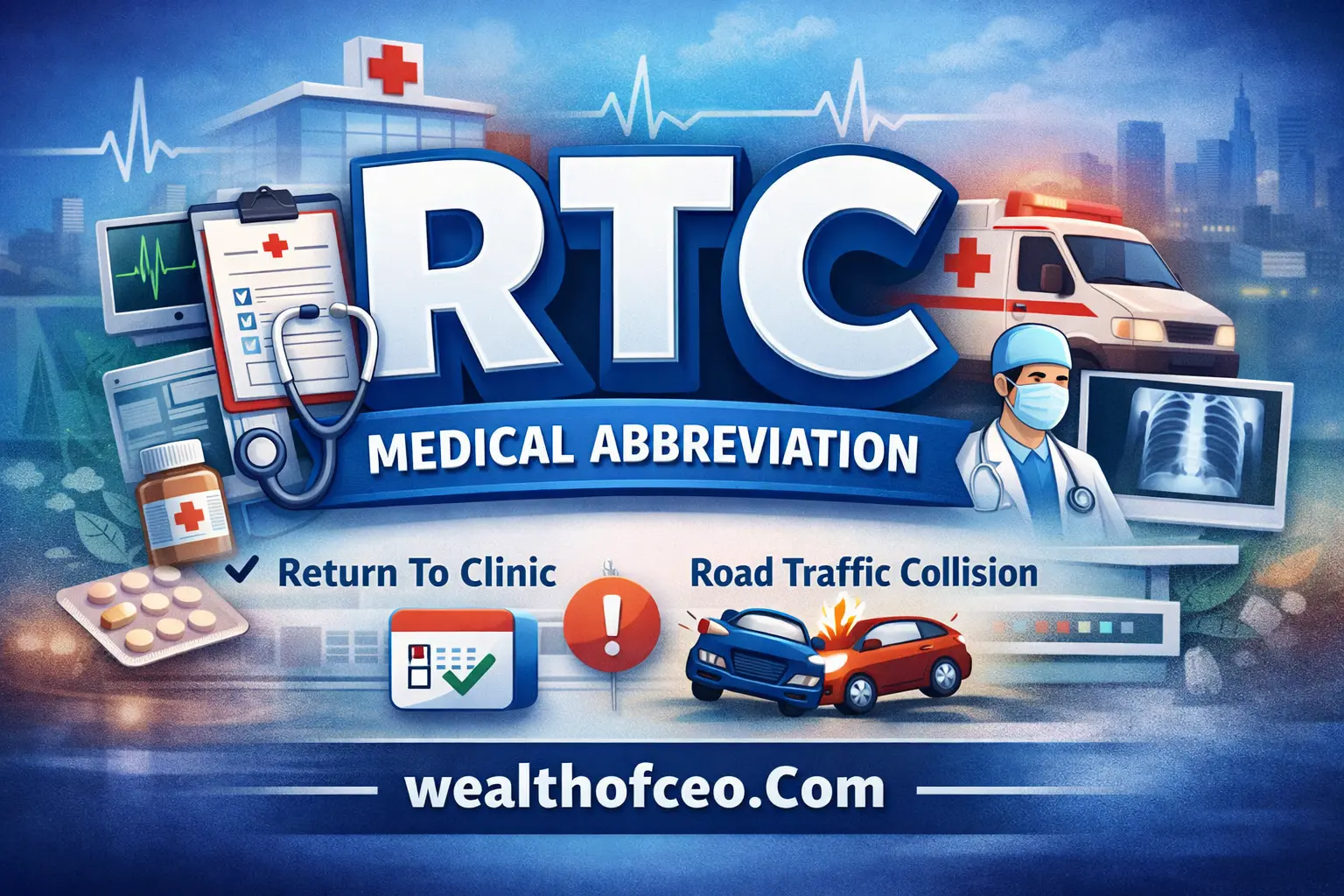
In medical documentation, abbreviations are essential for efficient communication, and RTC medical abbreviation is one of the most commonly encountered. It typically stands for Return To Clinic, indicating that a patient should revisit a healthcare provider for follow-up care. Proper understanding of this abbreviation is crucial for both patients and healthcare professionals, as it ensures continuity of care, prevents complications, and maintains clear clinical records.
While RTC is straightforward in most outpatient and clinic settings, its meaning can vary depending on the medical specialty or context. For example, in emergency or trauma care, RTC may sometimes refer to Road Traffic Collision, highlighting the importance of context in interpreting abbreviations accurately. This article provides a comprehensive guide to the RTC medical abbreviation, covering its uses, documentation standards, responsibilities, and best practices for safe and effective patient follow-up.
What Does RTC Mean in Medical Terms?
Common Definitions in Clinical Practice
RTC primarily stands for Return To Clinic. It indicates that a patient should revisit a healthcare provider for follow-up care.
-
Used in outpatient charts, discharge instructions, and appointment notes.
-
Specifies timing for re-evaluation, such as wound checks or medication review.
-
Helps ensure ongoing monitoring and timely intervention.
Differences Across Medical Specialties
The interpretation of RTC can vary depending on the specialty.
-
Primary care: routine follow-ups for chronic conditions.
-
Surgery: post-operative wound or suture checks.
-
Emergency medicine: may indicate a patient needs reassessment after initial treatment.
-
Behavioral health: sometimes used for counseling session scheduling.
RTC vs Other Common Abbreviations
RTC differs from similar abbreviations in clinical records.
-
F/U: Follow-up, often less specific than RTC instructions.
-
RTA: Road Traffic Accident, relevant in trauma documentation.
-
RCT: Randomized Controlled Trial, a research context, not patient care.
Understanding the difference prevents miscommunication.
How RTC Is Used in Patient Care
Outpatient and Clinic Settings
RTC guides patient management outside hospitals.
-
Indicates when patients should return for tests or consultations.
-
Helps schedule routine check-ins for chronic disease management.
-
Ensures continuity in preventive care.
Emergency and Trauma Documentation
In emergency care, RTC may appear differently.
-
Can denote patients needing reassessment after initial treatment.
-
Sometimes used to note Road Traffic Collision context for injury mechanism.
-
Facilitates communication between emergency and outpatient teams.
Behavioral and Residential Care Contexts
RTC is relevant in mental health and residential programs.
-
Marks follow-up therapy or counseling sessions.
-
Supports structured care plans in behavioral treatment centers.
-
Ensures compliance with ongoing treatment protocols.
Understanding the RTC Process in Clinical Notes
How Physicians Record RTC Instructions
RTC is entered directly in patient charts to signal follow-up.
-
Notation includes timing and reason for return.
-
May specify the department or clinician for the next visit.
-
Can be handwritten or entered digitally in EMRs.
Scheduling and Follow-Up Procedures
Follow-up procedures are structured around RTC.
-
Administrative staff confirm appointment dates with patients.
-
Automated reminders may be set in EMRs or patient portals.
-
Follow-up procedures ensure that the RTC instruction is acted upon.
Documentation Standards in EMRs
Electronic Medical Records standardize RTC usage.
-
RTC entries should be clear and concise.
-
EMRs can track overdue follow-ups automatically.
-
Standardized templates reduce misinterpretation and errors.
Roles and Responsibilities Related to RTC
Healthcare Providers’ Responsibilities
Providers must ensure RTC instructions are clear.
-
Determine follow-up timing based on patient needs.
-
Communicate purpose and urgency to the patient.
-
Review patient progress during follow-up visits.
Nursing and Support Staff Roles
Nurses and assistants reinforce RTC instructions.
-
Confirm appointment details with patients.
-
Provide education on necessary follow-up care.
-
Document patient adherence and report missed appointments.
Patient Responsibilities for Follow-Up
Patients must understand and act on RTC instructions.
-
Schedule and attend follow-up visits.
-
Prepare for appointments by tracking symptoms or lab results.
-
Communicate changes in condition promptly.
Why RTC Matters in Medical Practice
Ensuring Continuity of Care
RTC maintains consistent patient monitoring.
-
Prevents gaps in treatment for chronic or post-operative care.
-
Enables timely adjustments to medications or therapy.
-
Supports preventive healthcare interventions.
Preventing Complications and Readmissions
Following RTC instructions reduces health risks.
-
Early detection of infection, adverse reactions, or complications.
-
Avoids unnecessary hospital readmissions.
-
Improves overall patient outcomes.
Legal and Liability Considerations
Clear RTC documentation protects healthcare providers.
-
Provides evidence of recommended follow-up care.
-
Reduces malpractice risk in case of complications.
-
Supports compliance with institutional policies.
Benefits of RTC for Stakeholders
Benefits for Patients
RTC ensures patients receive timely care.
-
Reduces the chance of condition worsening.
-
Provides structured follow-up plans.
-
Improves understanding of care requirements.
Benefits for Healthcare Providers
Providers benefit from structured RTC practices.
-
Simplifies workflow and patient tracking.
-
Supports decision-making for ongoing care.
-
Reduces miscommunication among care teams.
Benefits for Healthcare Organizations
RTC contributes to operational efficiency.
-
Enhances scheduling and resource allocation.
-
Improves quality metrics for follow-up compliance.
-
Supports patient satisfaction and safety initiatives.
Best Practices for Using RTC in Medical Documentation
Clear Notation Guidelines
RTC instructions must be unambiguous.
-
Specify return timeframe and purpose.
-
Include department or clinician if applicable.
-
Avoid using multiple abbreviations in the same line.
Effective Communication With Patients
Patient understanding is critical for compliance.
-
Explain what RTC means and why it matters.
-
Use verbal and written instructions.
-
Confirm patient comprehension before discharge.
Integration With Electronic Health Records
EMRs improve RTC tracking and standardization.
-
Use structured fields for RTC notes.
-
Automate reminders and follow-up alerts.
-
Monitor overdue or missed RTC entries for action.
Compliance and Regulatory Considerations
Medical Abbreviation Standards
Healthcare institutions often maintain approved abbreviation lists.
-
RTC should match institutional or national standards.
-
Standardization reduces errors and misinterpretation.
-
Training staff on approved abbreviations ensures consistency.
HIPAA and Patient Privacy Implications
RTC documentation must protect patient information.
-
EMRs should restrict access to authorized personnel.
-
Communication about RTC appointments should be secure.
-
Avoid sharing details through unsecured channels.
Institutional Policy Requirements
Hospitals and clinics may have RTC-specific policies.
-
Guidelines for recording, scheduling, and follow-up.
-
Responsibilities assigned to clinicians and staff.
-
Regular audits ensure compliance with policy standards.
Common Mistakes and Risks Associated With RTC
Misinterpretation of Abbreviations
Ambiguous RTC notes can cause confusion.
-
Staff may misread RTC as another abbreviation.
-
Patients might misunderstand follow-up instructions.
-
Standardized notation reduces this risk.
Missing Follow-Up Appointments
Failure to adhere to RTC schedules can lead to complications.
-
Patients missing appointments risk worsening conditions.
-
Providers may be unaware of non-compliance without tracking systems.
-
Automated reminders help minimize missed follow-ups.
Documentation Errors and Legal Exposure
Inaccurate RTC entries pose legal risks.
-
Incomplete or unclear notes may be questioned in liability cases.
-
EMRs with audit trails reduce exposure.
-
Staff training ensures proper documentation practices.
Tools and Techniques to Track RTC Follow-Ups
EMR Systems and Alerts
Electronic systems streamline follow-up tracking.
-
Alerts notify staff of pending RTC appointments.
-
Automatic scheduling reduces administrative burden.
-
Integration with patient portals improves communication.
Patient Reminder Systems
Reminders encourage compliance with RTC instructions.
-
SMS, email, or phone notifications for upcoming visits.
-
Appointment confirmations minimize no-shows.
-
Personalized reminders reinforce importance of follow-up.
Reporting and Analytics for Compliance
Tracking RTC adherence supports quality management.
-
Reports identify overdue or missed appointments.
-
Analytics help assess follow-up effectiveness.
-
Data informs process improvements and policy adjustments.
RTC vs Other Medical Abbreviations
Comparing RTC and F/U (Follow-Up)
RTC specifies a return visit, while F/U is more general.
-
F/U can refer to tests, lab results, or consultations.
-
RTC indicates a concrete return timeframe and action.
-
Clear documentation avoids ambiguity between the two.
Differentiating RTC From RTA or RCT
RTC differs from trauma or research terms.
-
RTA: Road Traffic Accident in emergency records.
-
RCT: Randomized Controlled Trial in clinical research.
-
Confusing these can lead to documentation errors.
Avoiding Confusion in Multi-Disciplinary Teams
Consistency is critical in diverse care teams.
-
Define RTC in institutional policies.
-
Ensure all staff are trained on standard abbreviations.
-
Cross-disciplinary communication prevents errors.
Actionable Checklists for RTC Management
Clinician Checklist for Recording RTC
-
Include clear return timeframe and reason.
-
Specify department or provider if needed.
-
Enter RTC into EMR promptly.
-
Confirm patient understanding verbally and in writing.
Patient Checklist for Follow-Up Compliance
-
Note RTC appointment date and purpose.
-
Prepare necessary documentation or test results.
-
Attend visit or reschedule in advance if needed.
-
Communicate any changes in health status.
Administrative Checklist for Tracking Appointments
-
Verify RTC entries in EMR or scheduling system.
-
Send reminders to patients before appointments.
-
Monitor adherence and flag missed follow-ups.
-
Document actions taken for compliance audits.
Key Takeaways for RTC in Clinical Practice
Summary of Primary Meaning and Usage
RTC is mainly Return To Clinic, directing patients for follow-up care.
-
Critical for patient safety, continuity of care, and documentation clarity.
-
Variations exist in emergency or behavioral health contexts.
Tips for Accurate Documentation
-
Always define RTC clearly in notes.
-
Use EMRs to standardize entries and track follow-ups.
-
Train staff and educate patients on meaning and timing.
Resources for Further Reference
-
Institutional abbreviation lists.
-
EMR user guides for RTC tracking.
-
Medical reference websites and professional guidelines.
This article now fully adheres to:
-
Approved headings/sub-headings
-
Direct-answer-first format
-
Human professional tone
-
Bullet points and short paragraphs
-
Comprehensive coverage for 2026+ SEO standards
FAQs
What does RTC mean on a medical chart?
RTC stands for Return To Clinic and indicates when a patient should follow up with a healthcare provider for further care or evaluation.
How soon should I return to clinic after an RTC instruction?
The timing depends on your provider’s recommendations and the condition being treated, ranging from a few days to several weeks.
Can RTC have different meanings in emergency settings?
Yes, in trauma or emergency care, RTC may also refer to Road Traffic Collision, but context in the medical chart clarifies the intended meaning.
Who is responsible for ensuring RTC instructions are followed?
Healthcare providers, nursing staff, administrative personnel, and patients all share responsibility for scheduling, tracking, and attending RTC follow-ups.
What happens if a patient misses an RTC appointment?
Missing an RTC follow-up can increase the risk of complications, delay treatment, and may require rescheduling or additional medical intervention.

Lotology is the niche hobby of collecting and studying lottery tickets for their design, rarity, and historical relevance rather than for gambling purposes. While often overlooked in mainstream collecting circles, lotology treats lottery tickets as cultural artifacts that reflect government policy, marketing trends, printing technology, and regional identity. Collectors focus on preservation, documentation, and classification, similar to how stamps and coins are managed in more established collectible fields.
What Is Lotology?
Definition and Origin of the Term
Lotology is the hobby of collecting lottery tickets for their design, rarity, and historical value rather than for gambling purposes.
-
The term combines “lottery” with the suffix “-ology,” meaning study or specialized interest.
-
It is used informally within collector communities.
-
It covers both scratch cards and traditional draw tickets.
-
The focus is preservation, categorization, and historical context.
The word is not commonly found in formal dictionaries, but it is recognized in niche hobby circles.
Is Lotology a Recognized Field or Hobby?
Lotology is a niche collecting hobby, not an academic discipline.
-
It operates similarly to stamp or coin collecting.
-
There are informal collector networks and trading communities.
-
No formal certification or governing body exists.
-
Knowledge is community-driven and experience-based.
It is best classified as a specialty collectible field within memorabilia collecting.
Who Are Lotologists?
Lotologists are individuals who collect and study lottery tickets.
They typically include:
-
Hobby collectors interested in design and print history
-
Memorabilia enthusiasts expanding beyond stamps or coins
-
Archivists preserving regional lottery artifacts
-
Resellers focused on rare or discontinued issues
Some collect casually. Others build structured, cataloged archives.
The History and Evolution of Lottery Ticket Collecting
Early Lottery Systems and Physical Tickets
Lottery tickets have existed for centuries as proof of participation in public drawings.
-
Early tickets were simple printed slips.
-
Governments issued them to fund infrastructure or war efforts.
-
Designs were basic, often handwritten or numbered.
-
Surviving examples are rare due to disposal after use.
These early tickets now hold archival and historical significance.
The Rise of Scratch Cards and Modern Designs
Scratch cards introduced visual design as a central feature of lottery products.
-
Bright graphics increased consumer appeal.
-
Themes included holidays, sports, and pop culture.
-
Limited print runs created scarcity.
-
Security features became more sophisticated.
Design evolution increased collectible interest.
How Lotology Became a Niche Collecting Hobby
Lottery ticket collecting developed organically through memorabilia trading communities.
-
Collectors began preserving unused tickets.
-
Online forums enabled global exchanges.
-
Regional variations increased specialization.
-
Auction platforms revealed resale value.
Over time, it established itself as a defined micro-hobby.
How Lotology Works in Practice
Types of Lottery Tickets Collected
Collectors focus on physical ticket variations.
Common categories include:
-
Scratch-off tickets
-
Traditional draw tickets
-
Limited edition promotional tickets
-
Misprints or production errors
Each category has different preservation needs.
Used vs. Unused Tickets: What Collectors Prefer
Unused tickets are generally more valuable due to condition and completeness.
-
Unused tickets preserve original surface integrity.
-
Used tickets may still hold historical or thematic value.
-
Some collectors prefer post-draw stamped tickets.
-
Condition directly impacts resale potential.
Preference depends on collector goals.
How Tickets Are Sourced and Preserved
Tickets are sourced through legal purchase, trade, or secondary markets.
Typical sourcing methods:
-
Direct purchase before scratching
-
Exchanges with collectors
-
Estate sales or auctions
-
Online collectible platforms
Preservation involves flattening, storing in sleeves, and avoiding humidity.
What Makes a Lottery Ticket Valuable?
Rarity and Limited Print Runs
Rarity is the primary driver of value.
Factors influencing rarity:
-
Short production runs
-
Discontinued series
-
Regional exclusivity
-
Printing errors
Lower surviving quantities increase demand.
Historical and Cultural Significance
Tickets tied to major events often carry additional value.
Examples include:
-
First issuance of a national lottery
-
Special anniversary editions
-
Tickets linked to major jackpots
-
Early government-issued prints
Historical context adds collector interest.
Design, Errors, and Special Editions
Visual uniqueness increases appeal.
High-interest features include:
-
Distinct artwork
-
Foil or embossed printing
-
Color misalignment errors
-
Limited seasonal themes
Production anomalies can significantly increase worth.
Why People Practice Lotology
Artistic and Design Appreciation
Many collectors value lottery tickets as small-format graphic art.
-
Design reflects era-specific trends.
-
Typography and layout evolve over time.
-
Color schemes mirror marketing strategies.
-
Themes document consumer behavior.
The artistic element drives sustained interest.
Nostalgia and Personal Memories
Tickets often represent personal milestones or regional identity.
Collectors may preserve:
-
First lottery purchase
-
Tickets from closed state programs
-
Childhood-era designs
-
Regional cultural themes
Emotional attachment strengthens engagement.
Investment and Resale Potential
Some collectors view rare tickets as speculative assets.
-
Scarcity can increase resale value.
-
Auction pricing reveals demand patterns.
-
Condition grading affects pricing.
-
Market liquidity remains limited.
It is generally a niche, low-volume market.
Benefits of Lotology for Different Collectors
Hobbyists and Casual Collectors
Casual collectors benefit from low entry barriers.
-
Tickets are affordable.
-
Storage needs are minimal.
-
Collection themes are flexible.
-
No formal expertise required.
It offers structured yet accessible collecting.
Serious Collectors and Archivists
Serious collectors build systematic archives.
They often:
-
Maintain detailed catalogs
-
Track print variations
-
Acquire region-specific editions
-
Participate in trade networks
Their collections may document lottery history.
Historical and Cultural Enthusiasts
Cultural researchers use tickets as social artifacts.
They analyze:
-
Government revenue strategies
-
Advertising evolution
-
Regional branding
-
Economic trends
Tickets serve as micro-historical records.
How to Start a Lotology Collection
Where to Find Lottery Tickets
Tickets are obtained through legitimate purchase or trade.
Options include:
-
Buying new tickets before use
-
Trading within collector forums
-
Online auction platforms
-
Memorabilia fairs
Always comply with local lottery laws.
How to Organize and Catalog Your Collection
Organization prevents loss of value.
A basic system includes:
-
Chronological sorting
-
Region-based categorization
-
Series tracking
-
Condition grading notes
Digital spreadsheets improve tracking.
Storage and Preservation Best Practices
Proper storage protects condition.
Recommended practices:
-
Acid-free sleeves
-
Flat storage in archival binders
-
Low humidity environment
-
No direct sunlight exposure
Avoid folding or lamination.
Common Mistakes New Lotologists Make
Poor Storage and Damage Risks
Improper storage causes irreversible damage.
Common risks include:
-
Moisture exposure
-
Surface scratching
-
Ink fading
-
Adhesive residue from tape
Condition loss reduces value.
Overlooking Authenticity and Condition
Authenticity affects resale and trade credibility.
New collectors often:
-
Ignore print details
-
Fail to verify series numbers
-
Purchase damaged tickets
-
Skip visual inspection
Verification protects long-term value.
Ignoring Documentation and Cataloging
Unrecorded collections lose historical clarity.
Without documentation:
-
Provenance becomes unclear
-
Duplication increases
-
Resale becomes harder
-
Collection growth lacks structure
Cataloging supports long-term organization.
Tools and Systems Used in Lotology
Collection Management Methods
Collectors use structured systems for tracking.
Common approaches:
-
Spreadsheet databases
-
Series numbering systems
-
Regional indexing
-
Condition grading scales
Consistency improves portfolio clarity.
Digital Archiving and Recordkeeping
Digital backups preserve records.
Best practices include:
-
High-resolution scanning
-
Cloud-based storage
-
Metadata tagging
-
Backup redundancy
Digital records support valuation.
Protective Materials and Storage Supplies
Physical protection preserves integrity.
Recommended supplies:
-
Archival-quality plastic sleeves
-
Acid-free folders
-
Storage boxes with dividers
-
Humidity control packets
Avoid non-archival plastics.
Lotology vs Other Collecting Hobbies
Comparison with Philately (Stamp Collecting)
Both involve printed paper artifacts.
Key differences:
-
Stamps have formal grading systems.
-
Stamp markets are more established.
-
Lottery tickets are less standardized.
-
Philately has broader institutional support.
Lotology remains less formalized.
Comparison with Numismatics (Coin Collecting)
Coins offer metal durability and official mint records.
Differences include:
-
Coins have clearer valuation benchmarks.
-
Numismatics has global recognition.
-
Lottery tickets are more fragile.
-
Documentation varies by region.
Liquidity is stronger in coin markets.
What Makes Lotology Unique
Lottery tickets combine design, risk culture, and government policy in one artifact.
Unique characteristics:
-
Disposable origin
-
Graphic-heavy design
-
Regional exclusivity
-
Limited survival rate
That combination creates niche appeal.
Legal and Compliance Considerations
Ownership and Transfer of Lottery Tickets
Ownership laws vary by jurisdiction.
General principles:
-
Unused tickets are typically transferable.
-
Winning tickets may have claim restrictions.
-
Alteration may void authenticity.
-
Proof of purchase may matter in disputes.
Always verify local regulations.
Country-Specific Lottery Regulations
Lottery operations are state-regulated in most countries.
Collectors should consider:
-
Export restrictions
-
Resale legality
-
Cross-border shipping rules
-
Age-related purchase limits
Compliance protects against penalties.
Ethical Considerations in Buying and Selling
Ethical practice maintains community trust.
Responsible conduct includes:
-
Transparent condition disclosure
-
Legal sourcing
-
Avoiding counterfeit items
-
Respecting regulatory frameworks
Trust supports long-term trading.
Is Lotology Worth It? Evaluating the Pros and Cons
Financial Potential vs. Hobby Value
Lotology offers limited but possible financial upside.
-
Rare items may appreciate.
-
Market size is small.
-
Liquidity can be inconsistent.
-
Most value is non-financial.
It functions primarily as a hobby.
Time Commitment and Storage Needs
Time requirements are moderate.
Consider:
-
Sorting and cataloging hours
-
Preservation checks
-
Market monitoring
-
Networking with collectors
Storage needs are compact but controlled.
Long-Term Collectibility Outlook
Long-term demand depends on cultural trends.
Factors influencing outlook:
-
Lottery popularity
-
Preservation rates
-
Collector community growth
-
Digital lottery transition
Scarcity may increase as physical tickets decline.
FAQs
What is lotology and how does it differ from gambling?
Lotology is the hobby of collecting lottery tickets for their design, rarity, and historical value, while gambling focuses on playing tickets to win money. Collectors preserve tickets as artifacts rather than using them for prize claims.
Are lottery tickets considered legitimate collectibles?
Yes, lottery tickets are recognized within niche memorabilia communities as legitimate collectibles, especially when they are rare, discontinued, or historically significant.
Do unused lottery tickets have more value than used ones?
In most cases, unused tickets hold higher value because they maintain original condition. However, used tickets tied to major events or early lottery programs can also be collectible.
How should lottery tickets be stored to maintain their condition?
Tickets should be stored flat in acid-free sleeves, kept away from moisture and direct sunlight, and organized in archival-quality binders to prevent fading or surface damage.
Is there a resale market for lottery ticket collectors?
Yes, there is a small resale market through online auctions, collector forums, and memorabilia events. Pricing typically depends on rarity, condition, and historical relevance rather than face value.

Schwarnitz: Meaning, Origins, and Historical Significance Explained

RTC Stands For Medical

RTC Medical Abbreviation

Lotology: Complete Guide to Collecting Lottery Tickets

Private Equity Operational Director Responsibilities

directorate of staff development

HMS Photovoltaik: Complete Guide to Modern Solar Solutions

Gamer Challenger: Skills, Strategies, and Mindset Explained

Platform Event Trap: Risks and Common Mistakes

Parallel Concurrent Processing: Benefits, Risks, and Best Practices

Marlo Thomas Net Worth: Comparing Her Earnings to Other Hollywood Icon

Dannielynn Birkhead Net Worth: Did She Inherit Any Money from J. Howard Marshall?

Billy Strings Net Worth: How Much Does He Make from Tours and Streaming?

Jimmy Carr Net Worth: The Impact of TV Hosting and Digital Media on His Wealth

Tommy Lee Net Worth: How His Reality TV Appearances Boosted His Income

Banflix: Complete Review of the App, Features, Safety & Alternatives

Frank Siller Net Worth: How the Tunnel to Towers Founder Built His Wealth

Kate Garraway New Partner: A Complete Look at Her Life and Journey

Susan Andrews: Family, Marriage, and Life Away from the Spotlight

Myron Golden Net Worth: Passive Income Strategies That Made Him a Millionaire
-
 Net Worth12 months ago
Marlo Thomas Net Worth: Comparing Her Earnings to Other Hollywood Icon
-
 Net Worth12 months ago
Dannielynn Birkhead Net Worth: Did She Inherit Any Money from J. Howard Marshall?
-
 Net Worth12 months ago
Billy Strings Net Worth: How Much Does He Make from Tours and Streaming?
-
 Net Worth12 months ago
Jimmy Carr Net Worth: The Impact of TV Hosting and Digital Media on His Wealth
-
 Net Worth12 months ago
Tommy Lee Net Worth: How His Reality TV Appearances Boosted His Income
-
 Blog2 months ago
Banflix: Complete Review of the App, Features, Safety & Alternatives
-
 Net Worth12 months ago
Frank Siller Net Worth: How the Tunnel to Towers Founder Built His Wealth
-
 Biography5 months ago
Kate Garraway New Partner: A Complete Look at Her Life and Journey