
Blog
directorate of staff development

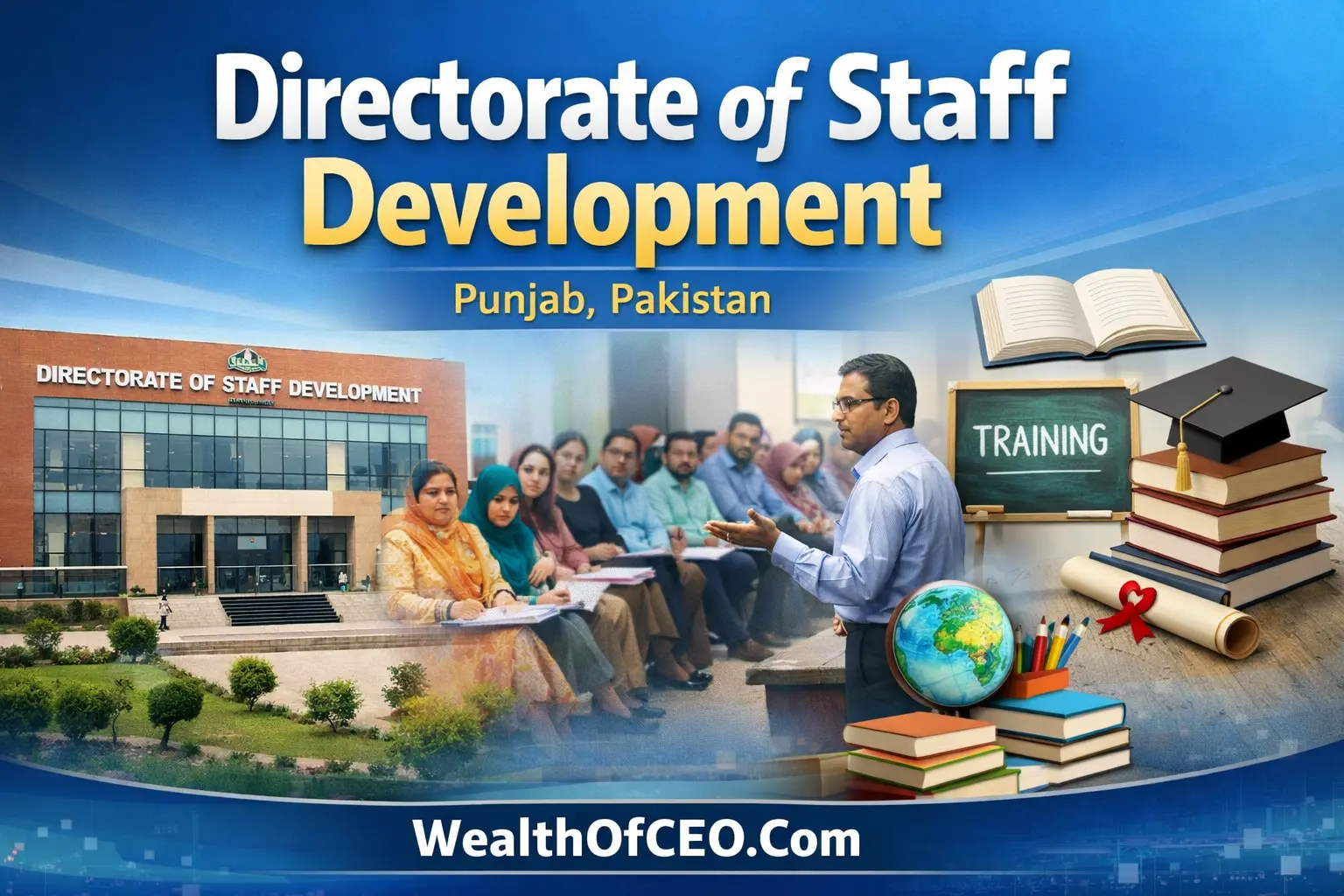
The Directorate of Staff Development was established as a central institutional body responsible for improving the quality of teaching in Punjab’s public education system. It played a structured role in designing and delivering professional development programs for teachers, head teachers, and education administrators. Its primary focus was to standardize instructional practices and align teacher performance with provincial education reforms.
Through organized training frameworks, monitoring systems, and curriculum support initiatives, the Directorate of Staff Development helped strengthen classroom instruction across districts. Although its functions were later transitioned to a successor institution, its framework laid the foundation for structured teacher development, accountability mechanisms, and continuous professional growth within the public sector education system.
What Is the Directorate of Staff Development?
The Directorate of Staff Development (DSD) was a provincial government body responsible for structured teacher training and professional development in Punjab’s public education system.
It operated as a centralized institution to:
-
Design teacher training frameworks
-
Standardize instructional practices
-
Improve classroom delivery across districts
-
Support school reform initiatives
Its core focus was improving teacher competency at scale.
Definition and Institutional Mandate
The Directorate of Staff Development was mandated to design, implement, and monitor professional development programs for public school teachers.
Its institutional mandate included:
-
Developing teacher training curricula
-
Delivering in-service and induction training
-
Establishing quality benchmarks for teaching standards
-
Supporting education reform policies
It functioned as a technical and operational arm for workforce development in schools.
Governing Authority and Administrative Placement
DSD operated under the Government of Punjab and worked closely with the provincial School Education Department.
Its administrative placement involved:
-
Reporting to provincial education authorities
-
Coordinating with district education offices
-
Aligning with provincial education policy directives
Budgetary and policy oversight came from the provincial government structure.
Evolution and Institutional Background
DSD evolved as part of broader public education reform efforts aimed at improving teaching quality.
Its development included:
-
Expansion of structured in-service training
-
Introduction of cluster-based support systems
-
Standardization of monitoring mechanisms
It was later restructured and integrated into a successor institution focused on broader educational development.
Organizational Structure and Governance Model
The organizational structure was centralized at the provincial level with operational linkages across districts.
It relied on:
-
A head office for policy and planning
-
Regional or district-level coordination units
-
Program managers and training specialists
This structure ensured both policy control and local implementation.
Leadership and Key Administrative Roles
Leadership was responsible for strategic planning, policy alignment, and operational oversight.
Key roles typically included:
-
Director General or equivalent head
-
Program directors for training and curriculum
-
Monitoring and evaluation officers
-
Administrative and finance managers
Each role supported execution of large-scale teacher development programs.
Provincial and District-Level Coordination
Coordination worked through district education authorities and cluster-based systems.
Operational coordination included:
-
Scheduling training sessions at district centers
-
Assigning master trainers
-
Tracking attendance and completion rates
-
Sharing performance reports with provincial offices
This allowed province-wide implementation with local adaptation.
Relationship with the School Education Department
DSD functioned as a technical support body for the School Education Department.
Its relationship involved:
-
Translating policy into training modules
-
Supporting curriculum implementation
-
Aligning teacher development with reform targets
The department set policy direction; DSD executed professional training components.
Core Functions and Responsibilities
The core responsibility was to raise teaching standards through structured and measurable professional development systems.
Primary functions included:
-
Designing training programs
-
Delivering capacity-building sessions
-
Monitoring training outcomes
-
Supporting institutional reforms
All activities were tied to classroom improvement.
Teacher Professional Development Programs
Teacher development programs aimed to upgrade subject knowledge and instructional skills.
These programs typically included:
-
Short-term in-service workshops
-
Multi-phase training cycles
-
Practical classroom strategies
-
Peer collaboration exercises
Programs were structured to address specific grade levels and subjects.
Curriculum Support and Pedagogical Training
Curriculum support focused on helping teachers implement revised syllabi effectively.
This involved:
-
Explaining curriculum standards
-
Demonstrating lesson planning methods
-
Introducing student-centered techniques
-
Providing instructional resource materials
Training translated policy documents into classroom practice.
Monitoring, Evaluation, and Quality Assurance
Monitoring ensured training translated into improved teaching performance.
Key mechanisms included:
-
Classroom observations
-
Teacher performance tracking
-
Feedback forms and assessments
-
Data reporting to provincial authorities
Quality assurance was linked to measurable teaching outcomes.
Policy Implementation Support
DSD supported implementation of major education reforms.
Its role included:
-
Training teachers on new initiatives
-
Orienting school heads on compliance expectations
-
Aligning professional development with reform timelines
This ensured consistency between policy decisions and field execution.
How Teacher Training Programs Work
Teacher training programs follow a structured cycle from needs assessment to evaluation.
The process generally includes:
-
Identifying skill gaps
-
Designing targeted modules
-
Delivering training sessions
-
Monitoring classroom application
-
Evaluating impact
Each stage is documented and reported.
In-Service Training Framework
In-service training is designed for teachers already working in public schools.
It typically involves:
-
Periodic workshops during academic terms
-
Cluster-based training sessions
-
Practical demonstrations
-
Post-training classroom follow-ups
The goal is continuous skill upgrading.
Induction and Pre-Service Development
Induction training prepares newly recruited teachers before or shortly after classroom placement.
Core components include:
-
Orientation to public education policies
-
Classroom management basics
-
Assessment methods
-
Professional conduct standards
This reduces early-stage teaching errors.
Continuous Professional Development (CPD) Model
The CPD model supports long-term skill improvement rather than one-time training.
Its structure includes:
-
Regular refresher courses
-
Mentorship systems
-
Peer learning groups
-
Ongoing performance review
CPD treats teacher growth as an ongoing process.
Certification and Assessment Process
Certification confirms successful participation and competence.
The process often includes:
-
Attendance verification
-
Knowledge assessments
-
Practical classroom evaluation
-
Official certification records
Certification may influence career progression.
Why Staff Development Is Critical in Public Education
Staff development directly affects instructional quality and student performance.
Without structured training:
-
Teaching practices become outdated
-
Curriculum reforms fail at implementation
-
Performance gaps widen across districts
Professional development maintains system-wide standards.
Impact on Classroom Performance
Training improves daily classroom execution.
It supports:
-
Better lesson planning
-
Effective questioning techniques
-
Improved classroom discipline
-
Clear learning objectives
Teachers apply structured methods rather than ad-hoc approaches.
Improving Student Learning Outcomes
Improved teaching leads to measurable gains in student results.
Outcomes may include:
-
Higher assessment scores
-
Reduced dropout rates
-
Stronger conceptual understanding
-
Better engagement levels
Teacher quality is one of the strongest predictors of student success.
Strengthening Institutional Accountability
Structured development creates accountability across the system.
It enables:
-
Standardized teaching benchmarks
-
Transparent performance reporting
-
Alignment between training and outcomes
Accountability improves policy credibility.
Key Programs and Initiatives Offered
Programs were designed around subject needs, leadership capacity, and systemic reform goals.
They addressed both instructional and administrative competencies.
Subject-Specific Training Modules
Subject modules focus on strengthening content knowledge and teaching techniques.
Examples include:
-
Mathematics concept clarity
-
Science practical instruction
-
Language literacy improvement
-
Early childhood education strategies
Modules are aligned with grade-level standards.
Leadership Development for School Heads
School head training improves institutional management.
Core areas include:
-
Academic supervision
-
Data-driven decision-making
-
Teacher performance evaluation
-
Resource planning
Leadership quality influences school performance.
Digital and Blended Learning Initiatives
Digital initiatives introduce technology into teacher training and classrooms.
These include:
-
Online learning platforms
-
Virtual workshops
-
Digital content repositories
-
Blended training formats
Technology expands access and scalability.
Special Education and Inclusive Training Programs
Inclusive programs support diverse learner needs.
They address:
-
Differentiated instruction
-
Special education awareness
-
Classroom adaptation strategies
-
Equity-focused practices
This promotes inclusive public schooling.
Who Benefits from the Directorate’s Services?
Multiple stakeholders benefit from structured professional development systems.
The impact extends beyond teachers.
Public School Teachers
Teachers gain practical skills and career development opportunities.
Benefits include:
-
Improved subject mastery
-
Recognized certification
-
Enhanced classroom confidence
-
Better career progression prospects
Training reduces professional isolation.
School Administrators and Head Teachers
Administrators benefit from structured management training.
They gain:
-
Supervision tools
-
Performance monitoring systems
-
Leadership competencies
-
Compliance awareness
This strengthens school governance.
District Education Authorities
District officials use training systems to standardize performance.
Advantages include:
-
Centralized reporting
-
Clear accountability metrics
-
Policy implementation support
-
Data-driven oversight
It improves district-level coordination.
Students and Local Communities
Students benefit from better teaching practices.
Communities gain:
-
Improved learning outcomes
-
Greater trust in public schools
-
More consistent academic standards
Staff development indirectly supports community development.
Compliance, Standards, and Regulatory Alignment
Professional development systems must align with provincial and national regulations.
Compliance ensures legitimacy and sustainability.
Alignment with National Education Policies
Training programs reflect national education reform objectives.
Alignment includes:
-
Curriculum standards
-
Assessment frameworks
-
Teacher competency benchmarks
Policy alignment avoids fragmentation.
Provincial Regulatory Requirements
Provincial rules define training expectations.
Requirements may include:
-
Mandatory induction training
-
Minimum CPD hours
-
Certification documentation
-
Reporting obligations
Compliance is monitored through audits and inspections.
Performance Evaluation and Accountability Standards
Performance standards link training to measurable results.
These standards involve:
-
Teacher evaluation metrics
-
Classroom observation protocols
-
Data submission requirements
Evaluation supports continuous improvement.
Common Challenges in Staff Development Implementation
Implementation often faces operational and systemic barriers.
Identifying these helps improve outcomes.
Resource Constraints and Infrastructure Gaps
Limited funding and facilities restrict training quality.
Common issues include:
-
Inadequate training centers
-
Shortage of qualified trainers
-
Limited materials and technology
These gaps affect consistency.
Training Accessibility in Rural Areas
Rural teachers may face access barriers.
Challenges include:
-
Travel distance to training sites
-
Limited internet connectivity
-
Fewer local trainers
This creates uneven development across districts.
Monitoring and Follow-Up Limitations
Follow-up mechanisms are not always consistent.
Problems may include:
-
Irregular classroom observations
-
Weak data analysis
-
Limited coaching support
Without follow-up, training impact declines.
Best Practices for Effective Teacher Development
Effective staff development follows structured and evidence-based models.
Consistency and measurement are key.
Evidence-Based Training Approaches
Training should rely on proven instructional research.
Best practices include:
-
Demonstration-based teaching
-
Practice with feedback
-
Peer collaboration
-
Structured lesson modeling
Theory alone does not change behavior.
Continuous Feedback and Coaching Models
Coaching strengthens training outcomes.
Effective models involve:
-
Classroom observation cycles
-
Constructive feedback sessions
-
Mentor-teacher pairing
-
Performance review meetings
Ongoing support improves retention of skills.
Data-Driven Performance Improvement
Data should guide training priorities.
This includes:
-
Analyzing student performance trends
-
Identifying teacher skill gaps
-
Tracking post-training outcomes
-
Adjusting modules based on evidence
Data prevents generic training.
Directorate of Staff Development vs. Quaid-e-Azam Academy for Educational Development (QAED)
The Directorate of Staff Development was restructured and integrated into the Quaid-e-Azam Academy for Educational Development (QAED).
The transition expanded scope and updated institutional frameworks.
Institutional Transition and Rebranding
The transition replaced DSD with QAED as the formal training authority.
Changes included:
-
Broader academic mandate
-
Expanded research functions
-
Updated governance structures
Rebranding reflected structural reform.
Differences in Mandate and Operational Scope
QAED operates with a wider institutional role.
Differences include:
-
Expanded academic research functions
-
Greater integration with higher education institutions
-
Modernized training delivery systems
The scope shifted from operational training to broader educational development.
Current Official Authority and Structure
QAED now serves as the primary provincial training academy.
Its authority includes:
-
Designing province-wide development programs
-
Setting competency standards
-
Coordinating with education authorities
It replaced DSD as the official institutional body.
How to Access Programs, Notifications, and Official Resources
Official information is accessed through designated provincial platforms.
Access depends on teacher status and district assignment.
Official Website and Online Portals
The official academy website provides program updates and resources.
Users can:
-
View training schedules
-
Download circulars
-
Access digital materials
-
Check announcements
Online access supports transparency.
Contact Channels and Regional Offices
Regional offices coordinate district-level communication.
Teachers may:
-
Contact district education offices
-
Refer to official circulars
-
Consult school heads for updates
Formal channels ensure accurate information.
Application and Participation Process
Participation typically requires official nomination or registration.
The process may involve:
-
Receiving notification from district authorities
-
Confirming attendance
-
Completing required documentation
-
Attending scheduled sessions
Procedures vary by program type.
FAQs
What was the main purpose of the Directorate of Staff Development?
The main purpose was to improve teacher quality in Punjab’s public schools through structured training, professional development programs, and standardized instructional frameworks.
Is the Directorate of Staff Development still operating today?
No, the Directorate of Staff Development was restructured and its responsibilities were transferred to the Quaid-e-Azam Academy for Educational Development (QAED).
How were teachers selected for training programs?
Teachers were typically nominated by district education authorities based on policy requirements, subject needs, or reform initiatives.
What types of training programs were offered?
Programs included in-service training, induction training for newly recruited teachers, leadership development for school heads, and subject-specific instructional modules.
Where was the Directorate of Staff Development headquartered?
It was headquartered in Lahore, Punjab, and coordinated training activities across provincial districts through structured administrative channels.

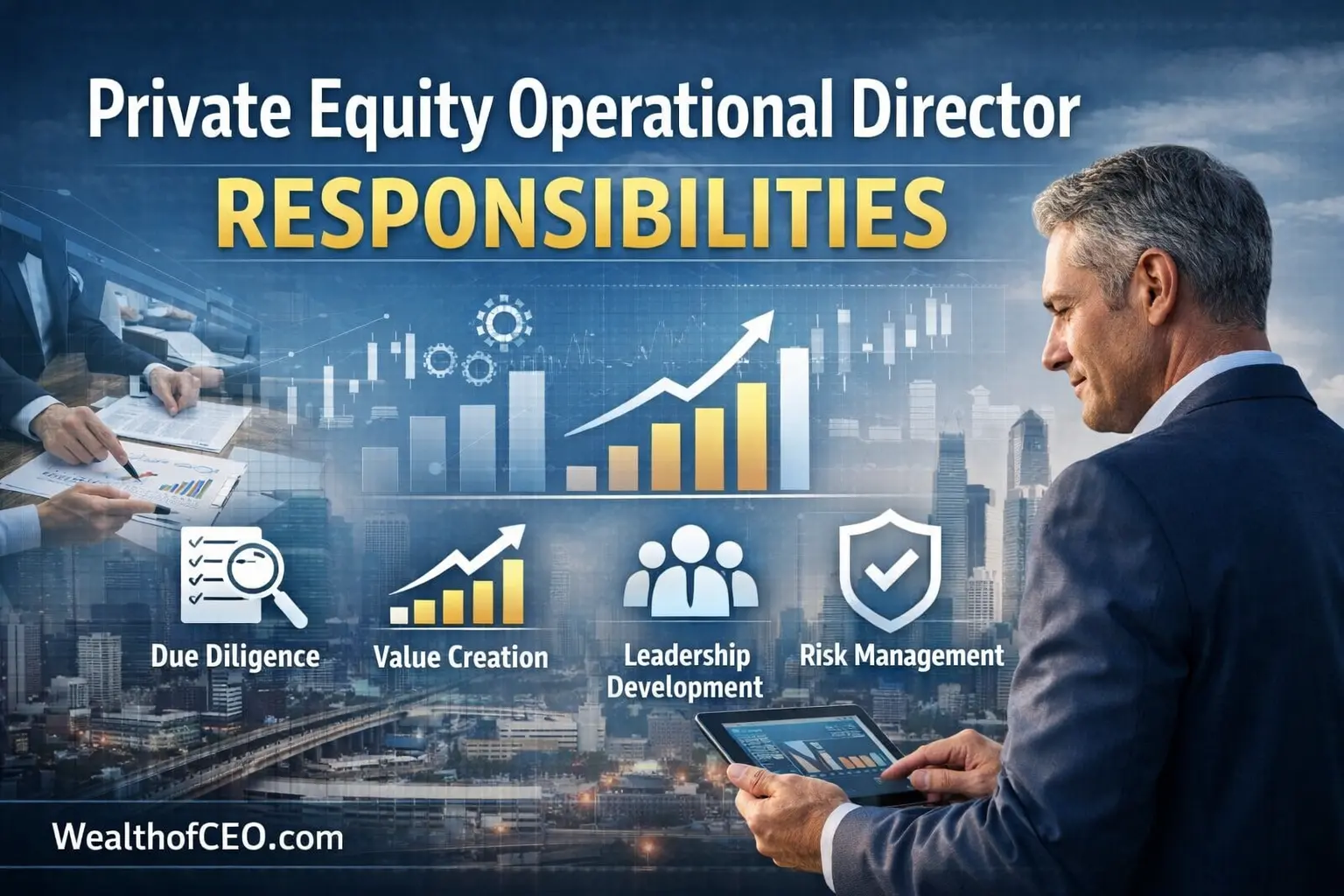
In private equity, operational excellence is a key driver of portfolio value, and understanding private equity operational director responsibilities is essential for both investors and company executives. This role is focused on bridging strategic objectives with practical execution, ensuring that portfolio companies achieve measurable growth and efficiency. From pre-acquisition assessments to post-acquisition value creation, operational directors play a critical role in aligning operations with investment goals.
The responsibilities of a private equity operational director extend beyond traditional operations management. They involve overseeing multiple companies, guiding executive teams, implementing standardized processes, and monitoring key performance metrics. By effectively executing these duties, operational directors not only optimize company performance but also directly influence the overall success of investment outcomes, making their role pivotal in the private equity landscape.
Understanding the Role of a Private Equity Operational Director
Definition and Core Purpose
A Private Equity Operational Director leads operational strategies across portfolio companies to maximize value.
-
Aligns operational performance with investment objectives.
-
Oversees initiatives that improve efficiency, growth, and profitability.
-
Acts as the bridge between deal teams and management teams.
How This Role Differs from Traditional Operations Directors
Unlike a corporate operations director, this role spans multiple companies and focuses on value creation for investors.
-
Prioritizes strategic initiatives tied to investment returns.
-
Guides portfolio-level operations rather than a single company.
-
Works closely with financial and investment teams, not just internal staff.
Key Stakeholders and Reporting Lines
Operational directors report to senior partners and interact with boards of portfolio companies.
-
Collaborates with investment managers, CFOs, and CEOs.
-
Coordinates with functional leaders across portfolio companies.
-
Provides regular performance updates to investors and stakeholders.
The Importance of Operational Leadership in Private Equity
Driving Portfolio Company Performance
Operational leadership directly impacts portfolio growth and efficiency.
-
Implements standardized practices across companies.
-
Ensures performance improvements are measurable and sustainable.
-
Facilitates execution of strategic initiatives aligned with investment goals.
Strategic vs. Tactical Responsibilities
The role balances long-term strategy with actionable execution.
-
Defines operational goals linked to financial outcomes.
-
Oversees project implementation without micromanaging daily operations.
-
Provides guidance on complex operational challenges.
Impact on Investment Returns
Effective operational oversight improves both top-line and bottom-line performance.
-
Enhances EBITDA and cash flow in portfolio companies.
-
Reduces operational risks that could affect valuations.
-
Supports a stronger exit strategy and higher investor returns.
Pre-Acquisition Responsibilities
Operational Due Diligence
Operational directors assess potential investments to confirm feasibility.
-
Evaluate scalability of systems and processes.
-
Identify operational gaps that may hinder growth.
-
Quantify value creation potential for the investment committee.
Assessing Management Teams and Processes
Management capabilities are reviewed to ensure alignment with strategy.
-
Interview leadership and key personnel.
-
Assess process efficiency and organizational structure.
-
Highlight training or hiring needs for operational excellence.
Identifying Value Creation Opportunities
Opportunities are prioritized to enhance portfolio performance.
-
Pinpoint cost-saving and productivity improvements.
-
Recommend strategic initiatives like technology upgrades.
-
Develop preliminary operational playbooks for post-acquisition execution.
Post-Acquisition Duties
Implementing Value Creation Plans
Operational directors ensure strategies are executed effectively.
-
Roll out initiatives agreed during due diligence.
-
Coordinate with company leadership to track milestones.
-
Adjust plans based on performance feedback and market conditions.
Monitoring KPIs and Operational Metrics
Success is measured through consistent monitoring of key indicators.
-
Establish dashboards for financial and operational metrics.
-
Track progress against strategic goals.
-
Highlight deviations and recommend corrective actions.
Driving Efficiency and Growth Initiatives
Operational directors optimize both operations and growth.
-
Introduce process improvements and standard procedures.
-
Identify new revenue streams or market opportunities.
-
Facilitate cross-company knowledge sharing.
Portfolio Management and Oversight
Coordinating Across Multiple Companies
The role requires managing multiple businesses simultaneously.
-
Align operations with broader investment strategy.
-
Standardize reporting and performance reviews.
-
Resolve operational conflicts between portfolio entities.
Benchmarking and Best Practices
Best practices are shared to optimize performance.
-
Compare metrics across companies.
-
Identify high-performing operational models.
-
Recommend scalable improvements.
Reporting to Investors and Boards
Transparent reporting maintains trust and oversight.
-
Provide concise performance summaries.
-
Highlight operational successes and risks.
-
Ensure recommendations are actionable and measurable.
Leadership, Talent, and Cultural Responsibilities
Developing Executive Teams
Operational directors strengthen leadership within portfolio companies.
-
Mentor and coach executives.
-
Align leadership with company and investor goals.
-
Identify gaps in skills or expertise.
Talent Assessment and Succession Planning
Talent is evaluated to ensure continuity and growth.
-
Conduct performance assessments.
-
Develop succession plans for critical roles.
-
Support recruitment for operational effectiveness.
Building a Performance-Oriented Culture
Culture drives operational excellence.
-
Promote accountability and results-driven mindset.
-
Encourage collaboration across departments and companies.
-
Align incentives with value creation targets.
Risk, Compliance, and Governance
Identifying Operational Risks
Operational directors proactively manage risks.
-
Assess process, financial, and market risks.
-
Implement mitigation strategies.
-
Monitor ongoing operational vulnerabilities.
Compliance and Regulatory Oversight
Compliance ensures legal and operational integrity.
-
Track industry regulations relevant to portfolio companies.
-
Oversee adherence to internal policies.
-
Ensure reporting standards meet investor requirements.
Governance Structures for Portfolio Companies
Strong governance supports decision-making and accountability.
-
Define reporting lines and approval workflows.
-
Establish board oversight practices.
-
Monitor implementation of governance policies.
Core Skills and Competencies Required
Strategic Thinking and Financial Acumen
Directors must connect operations to investment outcomes.
-
Analyze operational data for decision-making.
-
Understand financial statements and business models.
-
Align operational initiatives with ROI expectations.
Operational Expertise Across Industries
A broad skillset is essential to guide diverse companies.
-
Implement proven operational methodologies.
-
Adapt strategies to different sectors.
-
Evaluate performance using cross-industry benchmarks.
Communication and Influence Skills
Effective influence drives execution without direct authority.
-
Present insights to boards and executives.
-
Negotiate priorities across teams.
-
Build consensus for operational initiatives.
Best Practices for Effective Operational Leadership
Implementing Standard Operating Playbooks
Playbooks standardize execution across companies.
-
Document key processes and procedures.
-
Define roles and responsibilities clearly.
-
Ensure scalability and consistency.
Performance Monitoring and Dashboards
Tracking ensures accountability and progress.
-
Create visual dashboards for KPIs.
-
Review performance regularly with leadership teams.
-
Highlight trends and areas requiring attention.
Continuous Improvement Strategies
Operations must evolve to maintain value.
-
Introduce iterative improvement cycles.
-
Leverage lessons learned across portfolio companies.
-
Encourage feedback and innovation.
Common Challenges and Mistakes
Overlooking Cultural Fit in Portfolio Companies
Ignoring culture can derail operational initiatives.
-
Assess cultural alignment before implementing changes.
-
Adapt strategies to company values and employee behaviors.
-
Engage leaders in cultural transformation efforts.
Focusing Only on Cost Reduction
Cost-cutting alone does not create sustainable value.
-
Balance efficiency with growth opportunities.
-
Prioritize initiatives that enhance long-term performance.
-
Avoid short-term decisions that risk operational stability.
Ineffective Communication with Investment Teams
Poor communication creates misalignment.
-
Share clear updates on progress and risks.
-
Coordinate expectations with deal teams.
-
Ensure consistent messaging to stakeholders.
Tools, Systems, and Techniques Used
Portfolio Management Software
Software centralizes oversight and reporting.
-
Track operational initiatives across companies.
-
Generate performance reports for boards and investors.
-
Facilitate data-driven decision-making.
KPI Tracking Tools and Dashboards
Dashboards visualize performance for clarity.
-
Monitor financial, operational, and strategic metrics.
-
Identify underperforming areas early.
-
Support informed decision-making across teams.
Operational Audit and Assessment Frameworks
Frameworks ensure structured evaluations.
-
Conduct regular operational audits.
-
Standardize assessment methodology across portfolio companies.
-
Document findings for strategic planning.
Actionable Checklists for Operational Directors
Pre-Acquisition Checklist
-
Evaluate management teams and leadership capability.
-
Assess operational scalability and gaps.
-
Identify potential value creation opportunities.
-
Conduct risk and compliance reviews.
Post-Acquisition Implementation Checklist
-
Deploy value creation initiatives.
-
Monitor KPIs and track milestones.
-
Conduct operational audits and progress reviews.
-
Adjust strategies based on real-time feedback.
Governance and Compliance Checklist
-
Define reporting structures and workflows.
-
Ensure regulatory compliance and internal policies.
-
Establish board oversight and accountability metrics.
-
Track adherence to operational guidelines.
Comparing Operational Leadership Approaches
PE Operational Director vs. Corporate COO
-
PE directors focus on portfolio-level value creation, while COOs manage a single company.
-
PE role ties directly to investment returns, COOs focus on operational efficiency.
-
PE directors operate as advisors and implementers; COOs execute day-to-day operations.
In-House vs. External Operational Experts
-
In-house directors maintain ongoing oversight and continuity.
-
External experts provide specialized expertise for specific projects or deals.
-
Choice depends on company size, complexity, and strategic priorities.
Sector-Specific Operational Leadership
-
Some industries require unique operational approaches.
-
Directors tailor strategies to sector dynamics, regulatory environment, and market conditions.
-
Sector expertise accelerates value creation and risk mitigation.
FAQs
What does a Private Equity Operational Director actually do?
They oversee operational performance across portfolio companies, implement value creation plans, and ensure that strategic initiatives align with investor objectives.
What skills are essential for an operational director in private equity?
Critical skills include strategic thinking, operational expertise, financial acumen, leadership, and the ability to influence multiple teams without direct authority.
How do operational directors measure success across portfolio companies?
Success is measured using KPIs, EBITDA growth, process improvements, and achievement of strategic milestones tied to value creation.
What are the common challenges faced by a Private Equity Operational Director?
Challenges include managing cultural differences, balancing cost reduction with growth initiatives, and maintaining effective communication between portfolio companies and investors.
What are the key private equity operational director responsibilities?
Key responsibilities include pre-acquisition due diligence, post-acquisition implementation of value creation plans, portfolio oversight, risk management, and leadership development.

HMS Photovoltaik represents a modern approach to solar energy solutions, combining high-efficiency panels, advanced inverters, and intelligent monitoring systems. Designed for both residential and commercial applications, HMS Photovoltaik optimizes energy production while ensuring reliability and sustainability. The system integrates hardware and software components to provide real-time performance tracking, making it easier to manage energy consumption and maximize efficiency.
With growing interest in renewable energy and energy independence, HMS Photovoltaik offers a practical solution for homeowners and businesses seeking long-term savings and reduced environmental impact. By leveraging smart technologies such as microinverters and energy storage integration, HMS Photovoltaik ensures that every solar installation operates at peak performance under varying conditions. This approach not only lowers operational costs but also contributes to broader green energy goals.
What is HMS Photovoltaik?
Understanding the Brand and Technology
HMS Photovoltaik is a solar energy solutions provider focused on high-efficiency photovoltaic systems. It integrates panels, inverters, and monitoring tools to optimize energy production and reliability.
-
Offers residential, commercial, and industrial solutions
-
Combines hardware with smart monitoring for efficiency
-
Focuses on sustainability and long-term performance
Difference Between HMS Photovoltaik and Generic PV Systems
HMS systems differ from standard PV setups by integrating advanced monitoring, hybrid management, and microinverter technology.
-
Panel-level optimization rather than single-point conversion
-
Continuous performance tracking
-
Enhanced energy efficiency in variable conditions
Key Components of HMS Photovoltaik Solutions
The main components include solar panels, inverters, storage systems, and control software. Each part works together to maximize energy yield and system reliability.
-
Photovoltaic panels capture sunlight efficiently
-
Inverters convert DC to usable AC electricity
-
Monitoring systems track production and detect issues
How HMS Photovoltaik Works
Solar Panel Functionality in HMS Systems
Solar panels convert sunlight into direct current electricity. HMS panels are designed for higher conversion efficiency and durability.
-
Multi-layer cells improve energy capture
-
Anti-reflective coatings reduce energy loss
-
Modular design allows flexible installation
Role of Inverters and Microinverters
Inverters transform DC electricity into AC for household or commercial use. Microinverters optimize each panel individually.
-
Microinverters reduce power loss from shading or panel mismatch
-
Increases overall system reliability
-
Supports scalable expansion of solar arrays
Smart Monitoring and Energy Management
Smart monitoring tracks performance in real-time and allows remote control of energy distribution.
-
Detects faults or underperformance
-
Provides energy consumption analytics
-
Supports automated adjustments to improve efficiency
Core Components and Their Roles
Photovoltaic Panels
Panels are the primary energy capture component. They determine system efficiency and durability.
-
High-grade silicon or alternative materials
-
Weather-resistant and long-lasting
-
Designed for maximum sunlight absorption
Inverters and Converters
Convert and stabilize electricity for practical use. In HMS systems, these are optimized for panel-level control.
-
Ensure consistent AC output
-
Monitor voltage and current for safety
-
Enable integration with storage systems
Energy Storage Solutions
Batteries store excess energy for use during low sunlight periods.
-
Supports off-grid or backup power needs
-
Improves energy independence
-
Enhances grid stability for commercial setups
Monitoring and Control Systems
Software and control units allow system diagnostics and efficiency improvements.
-
Real-time energy tracking
-
Alerts for maintenance or performance issues
-
Data logging for regulatory compliance
Why HMS Photovoltaik Matters in 2026+
Energy Efficiency and Sustainability
HMS systems reduce energy waste and maximize renewable output.
-
Optimized panel performance under varied conditions
-
Reduces reliance on fossil fuels
-
Supports long-term sustainable energy goals
Reducing Operational Costs
By improving efficiency and minimizing downtime, operational costs are lowered.
-
Automated monitoring reduces labor costs
-
Lower maintenance requirements
-
Efficient energy conversion reduces electricity bills
Contribution to Green Energy Goals
HMS Photovoltaik supports renewable energy adoption and carbon footprint reduction.
-
Aligns with local and international energy targets
-
Promotes cleaner urban and commercial environments
-
Encourages investment in sustainable infrastructure
Benefits for Homeowners
Cost Savings and ROI
Homeowners can achieve significant savings over system lifetime.
-
Lower energy bills from efficient panels
-
Potential for government incentives
-
ROI achieved through reduced electricity consumption
Increased Energy Independence
Systems reduce dependency on the electrical grid.
-
Stored energy can be used during outages
-
Reduces exposure to utility price increases
-
Supports off-grid or hybrid living setups
System Longevity and Maintenance Ease
HMS solutions are designed for durability and easy upkeep.
-
Long-lasting panels and inverters
-
Predictive maintenance alerts
-
Minimal routine intervention needed
Benefits for Businesses and Installers
Scalability for Commercial Installations
Systems can be scaled for large roofs or multi-site deployments.
-
Modular design allows phased implementation
-
Supports diverse commercial energy needs
-
Easy integration with existing infrastructure
Real-Time Monitoring for Fleet Systems
Businesses benefit from continuous performance tracking across sites.
-
Detect issues early to avoid downtime
-
Monitor energy production per unit or site
-
Optimize operational costs with data-driven insights
Compliance with Energy Standards
HMS systems are designed to meet international regulations.
-
Meets European and global safety and performance standards
-
Simplifies audits and regulatory reporting
-
Ensures reliability for commercial energy projects
Best Practices for Installation and Use
Site Assessment and Panel Placement
Placement affects efficiency and output significantly.
-
Analyze sun exposure and shading patterns
-
Align panels for optimal angle and orientation
-
Evaluate roof strength and space constraints
Optimal System Sizing
Proper sizing ensures performance and cost efficiency.
-
Calculate household or business energy demand
-
Consider seasonal and peak consumption
-
Match storage and inverter capacity accordingly
Integration with Existing Energy Systems
HMS systems can integrate with grid or backup power setups.
-
Compatible with battery storage solutions
-
Supports hybrid grid and off-grid scenarios
-
Smooth integration reduces technical issues
Compliance, Standards, and Certifications
European and International PV Standards
HMS systems adhere to recognized standards for safety and performance.
-
IEC and EN standards for solar panels and inverters
-
Compliance ensures interoperability and reliability
-
Validates warranty and system longevity
Safety Guidelines and Installation Requirements
Proper installation reduces risk of faults or accidents.
-
Certified installers recommended
-
Grounding and surge protection in place
-
Regular inspection protocols
Warranty and Certification Considerations
HMS products come with warranties reflecting industry standards.
-
Coverage for panels, inverters, and storage units
-
Validated through certified performance testing
-
Documentation required for insurance and regulatory purposes
Common Mistakes and Risks
Incorrect Sizing or Placement
Oversized or undersized systems reduce efficiency.
-
Poor panel alignment lowers output
-
Inadequate inverter capacity causes energy loss
-
Mismatched storage limits energy utilization
Ignoring System Monitoring
Skipping monitoring leads to undetected faults.
-
Reduced system lifespan
-
Lower energy production
-
Increased maintenance costs
Overlooking Maintenance Schedules
Neglecting maintenance can degrade performance.
-
Panels may accumulate dirt or debris
-
Inverters and batteries require periodic checks
-
Unattended issues can lead to system downtime
Tools, Systems, and Techniques for Optimization
Energy Management Software
Optimizes energy flow and consumption.
-
Tracks production and usage in real-time
-
Predicts peak demand and load balancing
-
Integrates with smart home or business systems
Monitoring Platforms and Apps
Mobile and web applications simplify oversight.
-
Alerts for faults or inefficiency
-
Historical data for performance analysis
-
Remote control for hybrid setups
Maintenance Tools and Diagnostic Equipment
Ensure consistent system performance.
-
Multimeters and power analyzers
-
Cleaning and inspection kits
-
Remote diagnostic platforms
Actionable Checklists for Users
Pre-Installation Checklist
-
Evaluate energy needs
-
Inspect roof or site suitability
-
Confirm regulatory approvals
-
Select appropriate system components
Post-Installation Performance Checklist
-
Verify inverter and panel output
-
Test monitoring system functionality
-
Ensure battery and storage systems operate correctly
Regular Maintenance Checklist
-
Clean panels periodically
-
Inspect inverters and wiring
-
Check software updates for monitoring systems
-
Record performance metrics
Alternatives and Comparisons
HMS Photovoltaik vs Traditional PV Systems
HMS systems outperform traditional setups due to integrated monitoring and microinverters.
-
Higher efficiency under shading or panel mismatch
-
Real-time fault detection
-
Improved long-term energy output
Microinverters vs String Inverters
Microinverters optimize each panel individually, unlike string inverters that depend on the weakest panel.
-
Panel-level optimization
-
Reduces impact of partial shading
-
Simplifies system expansion
Hybrid vs Standard Solar Solutions
Hybrid systems combine grid connection, storage, and smart control.
-
Provides energy security during outages
-
Maximizes self-consumption
-
Supports dynamic energy management
Future Trends and Innovations in Photovoltaics
Smart Grids and AI Integration
AI and smart grids optimize energy production and distribution.
-
Predicts energy demand
-
Automates load balancing
-
Reduces wastage and maximizes efficiency
Advanced Microinverter Technologies
New microinverter models improve energy conversion and system monitoring.
-
Higher efficiency rates per panel
-
Enhanced diagnostic capabilities
-
Supports larger and more complex arrays
Predictive Maintenance and Performance Analytics
Analytics predict faults before they occur, reducing downtime.
-
Monitors trends and panel degradation
-
Schedules maintenance proactively
-
Improves overall system lifespan and ROI
FAQs
What is HMS Photovoltaik and how does it work?
HMS Photovoltaik is a solar energy solution that integrates high-efficiency panels, inverters, and monitoring systems. It converts sunlight into usable electricity while optimizing energy production with smart technologies.
How much energy can a solar panel system save on average?
Energy savings depend on system size, location, and energy consumption. On average, properly installed solar panels can reduce electricity bills by 20%–50%.
Can I integrate solar panels with battery storage?
Yes, integrating solar panels with batteries allows you to store excess energy for use during peak demand or outages, increasing energy independence.
What maintenance is required for a photovoltaic system?
Regular maintenance includes cleaning panels, inspecting inverters and wiring, and updating monitoring software to ensure optimal performance and longevity.
Are solar systems suitable for small residential setups?
Yes, solar systems can be scaled to fit small homes. Even compact arrays can provide significant energy savings while supporting household energy needs.

Reaching the gamer challenger rank represents the pinnacle of competitive gaming, where skill, strategy, and consistency define success. Players at this level are recognized not only for their mechanical proficiency but also for their ability to adapt, lead, and make high-stakes decisions under pressure. The term encompasses both a formal ranking in top esports titles and a mindset focused on continuous improvement and mastery.
Achieving gamer challenger status requires more than just playtime; it demands structured training, analytical thinking, and disciplined practice routines. Understanding the progression, the skills involved, and the common pitfalls along the way is essential for any player aiming to reach the elite tier. This article breaks down everything you need to know to navigate the competitive ladder effectively and sustain top-level performance.
Understanding Gamer Challenger
What Does “Gamer Challenger” Mean in Competitive Gaming?
A gamer challenger is a player who has reached the highest competitive rank in a game, demonstrating elite skill and consistent performance.
-
Represents the top fraction of the player base.
-
Requires mastery of game mechanics, strategy, and adaptability.
-
Recognized in both solo and team competitive ladders.
Difference Between Rank, Status, and Mindset
Rank is a numerical or tier-based designation. Status reflects recognition or reputation. Mindset is the approach to continuous improvement and competition.
-
Rank: official ladder placement (Diamond, Master, Challenger).
-
Status: peer acknowledgment or esports presence.
-
Mindset: discipline, analysis, and learning from losses.
How the Challenger Rank Works
Ranking Systems in Popular Games (LoL, Valorant, Apex Legends)
Challenger ranks are used in top-tier competitive games to separate elite players.
-
League of Legends (LoL): Challenger sits above Grandmaster; only top 200–300 players per region.
-
Valorant: Points-based system with Challenger at the peak of ranked play.
-
Apex Legends: Apex Predator rank equivalent to Challenger in other games.
How Points, Tiers, and Matchmaking Affect Progression
Progression depends on winning, individual performance, and matchmaking metrics.
-
Each win awards points; losses subtract points.
-
Matchmaking pairs players of similar skill to maintain fair progression.
-
Consistency is key; streaks influence point gains more than isolated wins.
Climbing From High Diamond to Challenger
Advancing requires precise planning and focus on incremental improvement.
-
Track personal stats for weak points.
-
Target high-impact matches to maximize point gains.
-
Maintain win rate above 55–60% to progress steadily.
Key Roles and Responsibilities of a Challenger Player
In-Game Leadership and Strategy Execution
Challenger players lead through decision-making and positioning.
-
Initiate team fights at optimal times.
-
Adjust strategies dynamically based on opponents.
-
Communicate game plan clearly to teammates.
Team Collaboration and Communication
Effective teamwork is essential to sustain top-tier rank.
-
Share vision and tactical calls consistently.
-
Coordinate cooldowns, rotations, and objectives.
-
Manage conflicts and maintain morale under pressure.
Maintaining Performance Consistency
Consistency separates top players from transient high performers.
-
Regular practice routines focused on weak areas.
-
Monitor fatigue and avoid overplaying.
-
Use performance data to adjust daily goals.
Why Reaching Challenger Matters
Competitive Recognition and Esports Opportunities
Achieving Challenger opens doors to professional play and sponsorships.
-
Recognized by peers, teams, and tournament organizers.
-
Increases visibility for recruitment in esports leagues.
-
Grants eligibility for high-level competitions.
Personal Growth and Skill Mastery
Challenger status reflects mastery of both mechanics and strategic thinking.
-
Improves decision-making under pressure.
-
Strengthens mental resilience and adaptability.
-
Demonstrates commitment to continuous improvement.
Benefits of Being a Gamer Challenger
For Individual Players
-
Enhances personal reputation and credibility.
-
Opens pathways to coaching, streaming, and content creation.
-
Provides measurable benchmarks for self-improvement.
For Teams and Organizations
-
Strengthens team performance and competitive advantage.
-
Increases potential for sponsorships and tournament success.
-
Encourages a culture of accountability and growth.
For the Gaming Community
-
Sets high standards and role models for new players.
-
Promotes skill-based competition over casual play.
-
Encourages development of strategies and meta-awareness.
Essential Skills and Traits of a Challenger
Mechanical and Tactical Skills
High-level mechanics and tactics are non-negotiable.
-
Precision timing, reflexes, and input accuracy.
-
Map awareness and positioning for maximum impact.
-
Efficient use of resources and cooldowns.
Mental Resilience and Focus
Top players withstand stress without performance drops.
-
Ability to stay calm under high-stakes matches.
-
Recover quickly from losses or setbacks.
-
Maintain focus during long sessions.
Analytical and Adaptive Thinking
Adaptation and analysis separate average players from elite.
-
Read opponents and predict strategies.
-
Adjust builds or rotations mid-game.
-
Learn from each match with data-backed evaluation.
Best Practices for Climbing to Challenger
Effective Training Routines
Structured practice accelerates progression.
-
Focused drills on mechanics, aim, and positioning.
-
Schedule sessions for skill maintenance and improvement.
-
Alternate practice modes: solo, duo, and team-focused.
Reviewing Gameplay and Learning From Mistakes
Analysis ensures lessons are applied consistently.
-
Record matches and identify recurring errors.
-
Use replay tools to study decision-making.
-
Implement corrective measures in the next session.
Leveraging Coaching and Mentorship
Expert guidance shortens learning curves.
-
Seek feedback from higher-ranked or professional players.
-
Participate in workshops and strategy sessions.
-
Embrace constructive criticism without ego interference.
Common Mistakes and Risks
Plateauing and Burnout
Excessive play without reflection leads to stagnation.
-
Take breaks to prevent mental fatigue.
-
Rotate practice focus to avoid repetitive routines.
-
Monitor win-loss patterns to identify performance drops.
Mismanaging Competitive Pressure
High stakes can undermine performance if unmanaged.
-
Set realistic daily goals rather than obsessing over rank.
-
Practice mindfulness and stress management techniques.
-
Avoid toxic or reactive behaviors during matches.
Toxic Behaviors That Hinder Growth
Negative habits reduce potential to reach Challenger.
-
Blaming teammates or external factors.
-
Ignoring feedback and refusing to adapt.
-
Excessive tilt or emotional outbursts mid-game.
Tools, Systems, and Techniques
Software for Performance Tracking and Analysis
Tracking tools help quantify progress.
-
Use in-game stats dashboards for key metrics.
-
Employ third-party analytics software for advanced insights.
-
Monitor KPIs like kill/death ratio, objective control, and efficiency.
Popular Platforms for Competitive Ladders
Structured environments support high-level play.
-
Ranked ladders in LoL, Valorant, and Apex Legends.
-
Challenger-specific tournaments on platforms like Challengermode.
-
Online communities for skill-based matchmaking.
Techniques for Skill Improvement and Reflex Training
Practical methods accelerate skill acquisition.
-
Aim trainers and reaction drills.
-
Scenario-based training for decision-making under pressure.
-
Split attention exercises to improve multitasking efficiency.
Actionable Checklists to Reach Challenger
Daily Practice Checklist
-
Warm-up reflex and aim exercises.
-
Complete at least one focused strategy session.
-
Review past match highlights for immediate improvement.
Weekly Strategy Review
-
Analyze win/loss trends and adapt gameplay.
-
Experiment with new strategies or champions.
-
Track points and tier progression against set goals.
Mindset and Motivation Checklist
-
Set measurable, achievable targets.
-
Record mental and emotional performance after matches.
-
Schedule downtime to prevent burnout.
Comparisons and Alternatives
Challenger vs Grandmaster vs Professional Rank
-
Challenger: top-tier, often <0.1% of players.
-
Grandmaster: elite but below Challenger; requires high win rate.
-
Professional: may or may not hold high ladder rank; involves tournament participation.
Solo Climbing vs Team-Oriented Progression
-
Solo climbing tests individual skill and adaptability.
-
Team-oriented progression requires coordination, communication, and consistent practice.
-
Most top-tier players combine both to maintain rank and skill balance.
FAQs
What does it take to become a gamer challenger?
Becoming a gamer challenger requires a combination of mechanical skill, strategic thinking, and consistent practice. Players must analyze their gameplay, adapt to opponents, and maintain mental focus to climb the competitive ladder effectively.
How long does it typically take to reach challenger rank in popular games?
The timeline varies depending on the game, player experience, and dedication. For most competitive titles, reaching the top tier can take anywhere from several months to over a year of structured practice and consistent performance.
Can casual players realistically achieve gamer challenger status?
Casual players can reach gamer challenger rank, but it requires significant effort beyond normal play. Focused training, reviewing matches, and developing advanced strategies are essential to bridge the gap from casual to elite-level play.
Which games feature a challenger ranking system?
Many esports titles use a challenger or equivalent top-tier ranking system, including League of Legends, Valorant, and Apex Legends. Each game defines the requirements differently, but all reward elite performance and consistency.
What are the common mistakes that prevent players from reaching Challenger?
Frequent mistakes include inconsistent practice, poor teamwork, emotional tilt, ignoring feedback, and failing to analyze mistakes. Avoiding these pitfalls is crucial for progressing to and maintaining a top-tier rank.

Private Equity Operational Director Responsibilities

directorate of staff development

HMS Photovoltaik: Complete Guide to Modern Solar Solutions

Gamer Challenger: Skills, Strategies, and Mindset Explained

Platform Event Trap: Risks and Common Mistakes

Parallel Concurrent Processing: Benefits, Risks, and Best Practices

Protocolo Operacional Padrão: Complete Guide 2026

Cherrysakura: Meaning and Cultural Significance

Centro Politécnico Superior: Programs and Careers

Blessed Upgrade Scroll: Safe Gear Upgrades Guide

Marlo Thomas Net Worth: Comparing Her Earnings to Other Hollywood Icon

Dannielynn Birkhead Net Worth: Did She Inherit Any Money from J. Howard Marshall?

Billy Strings Net Worth: How Much Does He Make from Tours and Streaming?

Jimmy Carr Net Worth: The Impact of TV Hosting and Digital Media on His Wealth

Tommy Lee Net Worth: How His Reality TV Appearances Boosted His Income

Banflix: Complete Review of the App, Features, Safety & Alternatives

Frank Siller Net Worth: How the Tunnel to Towers Founder Built His Wealth

Kate Garraway New Partner: A Complete Look at Her Life and Journey

Susan Andrews: Family, Marriage, and Life Away from the Spotlight

Myron Golden Net Worth: Passive Income Strategies That Made Him a Millionaire
-
 Net Worth12 months ago
Marlo Thomas Net Worth: Comparing Her Earnings to Other Hollywood Icon
-
 Net Worth12 months ago
Dannielynn Birkhead Net Worth: Did She Inherit Any Money from J. Howard Marshall?
-
 Net Worth12 months ago
Billy Strings Net Worth: How Much Does He Make from Tours and Streaming?
-
 Net Worth12 months ago
Jimmy Carr Net Worth: The Impact of TV Hosting and Digital Media on His Wealth
-
 Net Worth12 months ago
Tommy Lee Net Worth: How His Reality TV Appearances Boosted His Income
-
 Blog2 months ago
Banflix: Complete Review of the App, Features, Safety & Alternatives
-
 Net Worth12 months ago
Frank Siller Net Worth: How the Tunnel to Towers Founder Built His Wealth
-
 Biography5 months ago
Kate Garraway New Partner: A Complete Look at Her Life and Journey