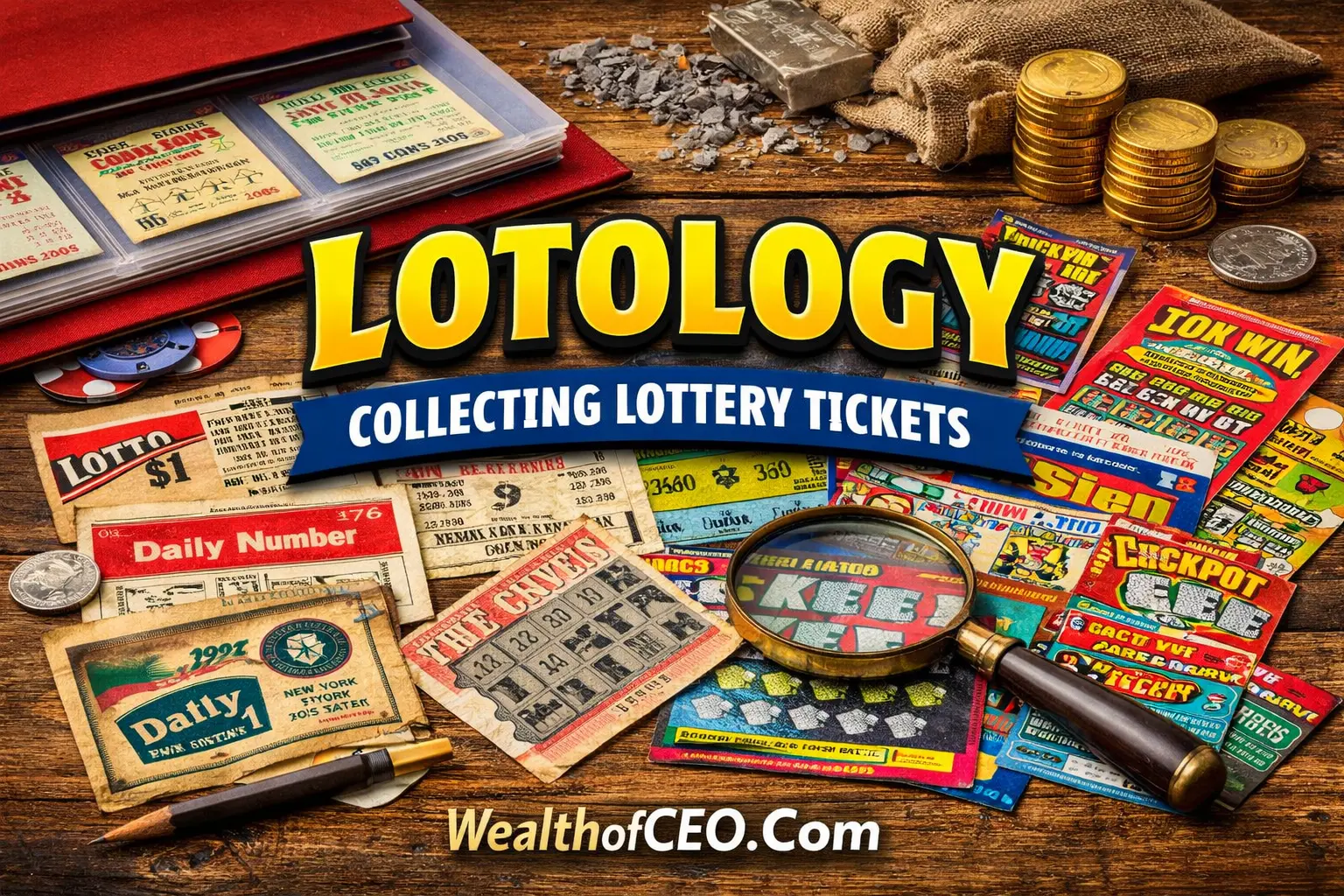
Lotology is the niche hobby of collecting and studying lottery tickets for their design, rarity, and historical relevance rather than for gambling purposes. While often overlooked in mainstream collecting circles, lotology treats lottery tickets as cultural artifacts that reflect government policy, marketing trends, printing technology, and regional identity. Collectors focus on preservation, documentation, and classification, similar to how stamps and coins are managed in more established collectible fields.
What Is Lotology?
Definition and Origin of the Term
Lotology is the hobby of collecting lottery tickets for their design, rarity, and historical value rather than for gambling purposes.
-
The term combines “lottery” with the suffix “-ology,” meaning study or specialized interest.
-
It is used informally within collector communities.
-
It covers both scratch cards and traditional draw tickets.
-
The focus is preservation, categorization, and historical context.
The word is not commonly found in formal dictionaries, but it is recognized in niche hobby circles.
Is Lotology a Recognized Field or Hobby?
Lotology is a niche collecting hobby, not an academic discipline.
-
It operates similarly to stamp or coin collecting.
-
There are informal collector networks and trading communities.
-
No formal certification or governing body exists.
-
Knowledge is community-driven and experience-based.
It is best classified as a specialty collectible field within memorabilia collecting.
Who Are Lotologists?
Lotologists are individuals who collect and study lottery tickets.
They typically include:
-
Hobby collectors interested in design and print history
-
Memorabilia enthusiasts expanding beyond stamps or coins
-
Archivists preserving regional lottery artifacts
-
Resellers focused on rare or discontinued issues
Some collect casually. Others build structured, cataloged archives.
The History and Evolution of Lottery Ticket Collecting
Early Lottery Systems and Physical Tickets
Lottery tickets have existed for centuries as proof of participation in public drawings.
-
Early tickets were simple printed slips.
-
Governments issued them to fund infrastructure or war efforts.
-
Designs were basic, often handwritten or numbered.
-
Surviving examples are rare due to disposal after use.
These early tickets now hold archival and historical significance.
The Rise of Scratch Cards and Modern Designs
Scratch cards introduced visual design as a central feature of lottery products.
-
Bright graphics increased consumer appeal.
-
Themes included holidays, sports, and pop culture.
-
Limited print runs created scarcity.
-
Security features became more sophisticated.
Design evolution increased collectible interest.
How Lotology Became a Niche Collecting Hobby
Lottery ticket collecting developed organically through memorabilia trading communities.
-
Collectors began preserving unused tickets.
-
Online forums enabled global exchanges.
-
Regional variations increased specialization.
-
Auction platforms revealed resale value.
Over time, it established itself as a defined micro-hobby.
How Lotology Works in Practice
Types of Lottery Tickets Collected
Collectors focus on physical ticket variations.
Common categories include:
-
Scratch-off tickets
-
Traditional draw tickets
-
Limited edition promotional tickets
-
Misprints or production errors
Each category has different preservation needs.
Used vs. Unused Tickets: What Collectors Prefer
Unused tickets are generally more valuable due to condition and completeness.
-
Unused tickets preserve original surface integrity.
-
Used tickets may still hold historical or thematic value.
-
Some collectors prefer post-draw stamped tickets.
-
Condition directly impacts resale potential.
Preference depends on collector goals.
How Tickets Are Sourced and Preserved
Tickets are sourced through legal purchase, trade, or secondary markets.
Typical sourcing methods:
-
Direct purchase before scratching
-
Exchanges with collectors
-
Estate sales or auctions
-
Online collectible platforms
Preservation involves flattening, storing in sleeves, and avoiding humidity.
What Makes a Lottery Ticket Valuable?
Rarity and Limited Print Runs
Rarity is the primary driver of value.
Factors influencing rarity:
-
Short production runs
-
Discontinued series
-
Regional exclusivity
-
Printing errors
Lower surviving quantities increase demand.
Historical and Cultural Significance
Tickets tied to major events often carry additional value.
Examples include:
-
First issuance of a national lottery
-
Special anniversary editions
-
Tickets linked to major jackpots
-
Early government-issued prints
Historical context adds collector interest.
Design, Errors, and Special Editions
Visual uniqueness increases appeal.
High-interest features include:
-
Distinct artwork
-
Foil or embossed printing
-
Color misalignment errors
-
Limited seasonal themes
Production anomalies can significantly increase worth.
Why People Practice Lotology
Artistic and Design Appreciation
Many collectors value lottery tickets as small-format graphic art.
-
Design reflects era-specific trends.
-
Typography and layout evolve over time.
-
Color schemes mirror marketing strategies.
-
Themes document consumer behavior.
The artistic element drives sustained interest.
Nostalgia and Personal Memories
Tickets often represent personal milestones or regional identity.
Collectors may preserve:
-
First lottery purchase
-
Tickets from closed state programs
-
Childhood-era designs
-
Regional cultural themes
Emotional attachment strengthens engagement.
Investment and Resale Potential
Some collectors view rare tickets as speculative assets.
-
Scarcity can increase resale value.
-
Auction pricing reveals demand patterns.
-
Condition grading affects pricing.
-
Market liquidity remains limited.
It is generally a niche, low-volume market.
Benefits of Lotology for Different Collectors
Hobbyists and Casual Collectors
Casual collectors benefit from low entry barriers.
-
Tickets are affordable.
-
Storage needs are minimal.
-
Collection themes are flexible.
-
No formal expertise required.
It offers structured yet accessible collecting.
Serious Collectors and Archivists
Serious collectors build systematic archives.
They often:
-
Maintain detailed catalogs
-
Track print variations
-
Acquire region-specific editions
-
Participate in trade networks
Their collections may document lottery history.
Historical and Cultural Enthusiasts
Cultural researchers use tickets as social artifacts.
They analyze:
-
Government revenue strategies
-
Advertising evolution
-
Regional branding
-
Economic trends
Tickets serve as micro-historical records.
How to Start a Lotology Collection
Where to Find Lottery Tickets
Tickets are obtained through legitimate purchase or trade.
Options include:
-
Buying new tickets before use
-
Trading within collector forums
-
Online auction platforms
-
Memorabilia fairs
Always comply with local lottery laws.
How to Organize and Catalog Your Collection
Organization prevents loss of value.
A basic system includes:
-
Chronological sorting
-
Region-based categorization
-
Series tracking
-
Condition grading notes
Digital spreadsheets improve tracking.
Storage and Preservation Best Practices
Proper storage protects condition.
Recommended practices:
-
Acid-free sleeves
-
Flat storage in archival binders
-
Low humidity environment
-
No direct sunlight exposure
Avoid folding or lamination.
Common Mistakes New Lotologists Make
Poor Storage and Damage Risks
Improper storage causes irreversible damage.
Common risks include:
-
Moisture exposure
-
Surface scratching
-
Ink fading
-
Adhesive residue from tape
Condition loss reduces value.
Overlooking Authenticity and Condition
Authenticity affects resale and trade credibility.
New collectors often:
-
Ignore print details
-
Fail to verify series numbers
-
Purchase damaged tickets
-
Skip visual inspection
Verification protects long-term value.
Ignoring Documentation and Cataloging
Unrecorded collections lose historical clarity.
Without documentation:
-
Provenance becomes unclear
-
Duplication increases
-
Resale becomes harder
-
Collection growth lacks structure
Cataloging supports long-term organization.
Tools and Systems Used in Lotology
Collection Management Methods
Collectors use structured systems for tracking.
Common approaches:
-
Spreadsheet databases
-
Series numbering systems
-
Regional indexing
-
Condition grading scales
Consistency improves portfolio clarity.
Digital Archiving and Recordkeeping
Digital backups preserve records.
Best practices include:
-
High-resolution scanning
-
Cloud-based storage
-
Metadata tagging
-
Backup redundancy
Digital records support valuation.
Protective Materials and Storage Supplies
Physical protection preserves integrity.
Recommended supplies:
-
Archival-quality plastic sleeves
-
Acid-free folders
-
Storage boxes with dividers
-
Humidity control packets
Avoid non-archival plastics.
Lotology vs Other Collecting Hobbies
Comparison with Philately (Stamp Collecting)
Both involve printed paper artifacts.
Key differences:
-
Stamps have formal grading systems.
-
Stamp markets are more established.
-
Lottery tickets are less standardized.
-
Philately has broader institutional support.
Lotology remains less formalized.
Comparison with Numismatics (Coin Collecting)
Coins offer metal durability and official mint records.
Differences include:
-
Coins have clearer valuation benchmarks.
-
Numismatics has global recognition.
-
Lottery tickets are more fragile.
-
Documentation varies by region.
Liquidity is stronger in coin markets.
What Makes Lotology Unique
Lottery tickets combine design, risk culture, and government policy in one artifact.
Unique characteristics:
-
Disposable origin
-
Graphic-heavy design
-
Regional exclusivity
-
Limited survival rate
That combination creates niche appeal.
Legal and Compliance Considerations
Ownership and Transfer of Lottery Tickets
Ownership laws vary by jurisdiction.
General principles:
-
Unused tickets are typically transferable.
-
Winning tickets may have claim restrictions.
-
Alteration may void authenticity.
-
Proof of purchase may matter in disputes.
Always verify local regulations.
Country-Specific Lottery Regulations
Lottery operations are state-regulated in most countries.
Collectors should consider:
-
Export restrictions
-
Resale legality
-
Cross-border shipping rules
-
Age-related purchase limits
Compliance protects against penalties.
Ethical Considerations in Buying and Selling
Ethical practice maintains community trust.
Responsible conduct includes:
-
Transparent condition disclosure
-
Legal sourcing
-
Avoiding counterfeit items
-
Respecting regulatory frameworks
Trust supports long-term trading.
Is Lotology Worth It? Evaluating the Pros and Cons
Financial Potential vs. Hobby Value
Lotology offers limited but possible financial upside.
-
Rare items may appreciate.
-
Market size is small.
-
Liquidity can be inconsistent.
-
Most value is non-financial.
It functions primarily as a hobby.
Time Commitment and Storage Needs
Time requirements are moderate.
Consider:
-
Sorting and cataloging hours
-
Preservation checks
-
Market monitoring
-
Networking with collectors
Storage needs are compact but controlled.
Long-Term Collectibility Outlook
Long-term demand depends on cultural trends.
Factors influencing outlook:
-
Lottery popularity
-
Preservation rates
-
Collector community growth
-
Digital lottery transition
Scarcity may increase as physical tickets decline.
FAQs
What is lotology and how does it differ from gambling?
Lotology is the hobby of collecting lottery tickets for their design, rarity, and historical value, while gambling focuses on playing tickets to win money. Collectors preserve tickets as artifacts rather than using them for prize claims.
Are lottery tickets considered legitimate collectibles?
Yes, lottery tickets are recognized within niche memorabilia communities as legitimate collectibles, especially when they are rare, discontinued, or historically significant.
Do unused lottery tickets have more value than used ones?
In most cases, unused tickets hold higher value because they maintain original condition. However, used tickets tied to major events or early lottery programs can also be collectible.
How should lottery tickets be stored to maintain their condition?
Tickets should be stored flat in acid-free sleeves, kept away from moisture and direct sunlight, and organized in archival-quality binders to prevent fading or surface damage.
Is there a resale market for lottery ticket collectors?
Yes, there is a small resale market through online auctions, collector forums, and memorabilia events. Pricing typically depends on rarity, condition, and historical relevance rather than face value.