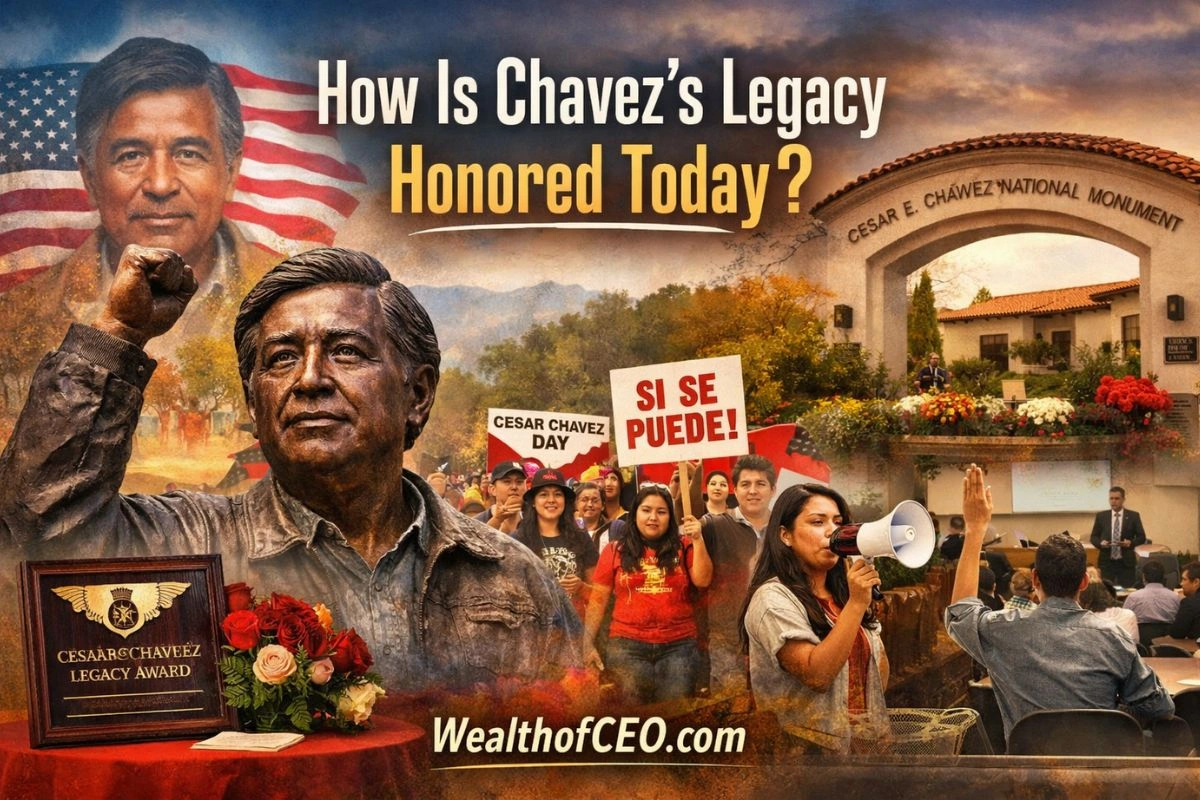
César Chávez remains one of the most influential labor and civil rights leaders in U.S. history, and interest in how is Chavez’s legacy honored today reflects a broader effort to understand how his values continue to shape society. Rather than being limited to history books, his impact is visible in public policy, education, labor organizing, and community action across the country.
Today, his legacy is honored through official observances, public monuments, educational programs, awards, and grassroots movements that connect past struggles to present-day labor and social justice issues. These modern forms of recognition show how Chávez’s principles of nonviolence, worker dignity, and collective action remain active and relevant in contemporary civic life.
Understanding César Chávez’s Legacy
Who Was César Chávez and What Did He Stand For?
César Chávez was a labor leader and civil rights activist who organized farmworkers to demand fair wages, safe working conditions, and dignity through nonviolent action.
He focused on collective bargaining, worker solidarity, and peaceful protest as tools for systemic change.
-
Co-founded the United Farm Workers (UFW)
-
Advocated for migrant and seasonal farmworkers
-
Used strikes, boycotts, and marches instead of violence
Core Values That Define His Legacy Today
Chávez’s legacy is defined by nonviolence, worker empowerment, and social justice.
These values continue to guide labor, civil rights, and community organizations.
-
Peaceful protest as a strategic approach
-
Respect for human dignity regardless of job or status
-
Collective action over individual gain
Why His Legacy Remains Relevant in the Modern Era
His legacy remains relevant because labor exploitation and worker inequality still exist.
Modern labor debates often mirror the same issues Chávez addressed decades ago.
-
Ongoing discussions around fair wages
-
Workplace safety and health protections
-
Rights of immigrant and temporary workers
How Chávez’s Legacy Is Honored Today
National, State, and Local Forms of Recognition
Chávez’s legacy is honored through formal holidays, public programs, and civic recognition at multiple government levels.
These recognitions reinforce his role in American labor history.
-
Federal proclamations
-
State-recognized holidays
-
Local commemorative events
Government-Led vs Community-Led Honors
Government-led honors focus on formal observances, while community-led honors emphasize participation and education.
Both approaches serve different but complementary roles.
-
Government: official days, monuments, curricula
-
Community: marches, workshops, volunteer events
How These Honors Have Evolved Over Time
Honors have shifted from remembrance toward active engagement.
Modern recognition often connects Chávez’s values to current social issues.
-
Early focus on memorials
-
Later emphasis on education and advocacy
-
Increased youth involvement
César Chávez Day and Official Observances
What Is César Chávez Day?
César Chávez Day is observed annually on March 31 to recognize César Chávez’s contributions to labor and civil rights.
It recognizes his contributions to labor rights and social justice.
-
Observed annually
-
Recognized by several U.S. states
-
Marked by public and educational events
States and Institutions That Officially Observe It
Several states and public institutions formally observe the day.
Schools, universities, and government offices often participate.
-
California and other states
-
Public school systems
-
Colleges and universities
Typical Activities and Commemorations Held
Observances focus on education, service, and reflection.
Many events are designed to connect history with current issues.
-
Educational assemblies
-
Community service projects
-
Public lectures and panels
Public Monuments, Memorials, and Named Spaces
César E. Chávez National Monument
The national monument preserves key sites linked to Chávez’s life and work.
It serves as both a memorial and educational space.
-
Managed by the National Park Service
-
Includes exhibits and guided programs
-
Focuses on labor history
Streets, Schools, and Public Buildings Named After Him
Many public spaces carry his name to keep his legacy visible.
These namings often result from community advocacy.
-
Schools and libraries
-
Streets and plazas
-
Civic buildings
Murals, Art Installations, and Cultural Symbols
Public art plays a major role in honoring Chávez.
Visual symbols make his legacy accessible beyond textbooks.
-
Murals in urban and rural areas
-
Community art projects
-
Cultural festivals
Educational Institutions Honoring Chávez
University and College-Led Commemorations
Higher education institutions host structured events tied to Chávez’s legacy.
These programs often involve students and faculty.
-
Annual lecture series
-
Research symposiums
-
Campus-wide observances
Chávez’s Legacy in School Curricula
His work is included in history and civics education.
Lessons often focus on nonviolent organizing and labor rights.
-
K–12 history standards
-
Social studies programs
-
Ethnic studies courses
Scholarships and Academic Programs in His Name
Scholarships support students aligned with Chávez’s values.
Programs often prioritize service and community leadership.
-
Merit and need-based awards
-
Leadership-focused programs
-
Community engagement requirements
Awards and Recognitions Inspired by Chávez
César Chávez Legacy Awards
Legacy awards recognize individuals who advance social justice and labor rights.
They reflect Chávez’s emphasis on service and leadership.
-
National and regional awards
-
Focus on long-term impact
-
Often tied to nonprofit work
Community and Labor Rights Awards
Local organizations issue awards in Chávez’s name.
These honors spotlight grassroots leadership.
-
Farmworker advocates
-
Union organizers
-
Community leaders
Who Typically Receives These Honors Today
Recipients are usually active changemakers rather than public figures.
The emphasis is on real-world impact.
-
Labor organizers
-
Educators and advocates
-
Nonprofit leaders
Community Events and Grassroots Movements
Marches, Rallies, and Annual Walks
Public demonstrations remain a key way Chávez is honored.
These events echo his original organizing methods.
-
Peaceful marches
-
Annual remembrance walks
-
Public rallies
Farmworker and Labor-Focused Events
Events often center directly on worker issues.
They provide education and practical support.
-
Worker rights workshops
-
Health and safety outreach
-
Legal aid clinics
Youth and Volunteer Participation
Youth involvement is central to modern commemorations.
Many programs aim to pass values to the next generation.
-
Student-led events
-
Volunteer service days
-
Leadership training
Role of Labor and Civil Rights Organizations
United Farm Workers and Its Ongoing Influence
The UFW continues to operate based on Chávez’s principles.
It remains active in labor advocacy and organizing.
-
Collective bargaining efforts
-
Worker education programs
-
Policy advocacy
Nonprofits Continuing Chávez’s Mission
Many nonprofits align their work with his legacy.
They focus on labor, immigration, and social equity.
-
Worker advocacy groups
-
Civil rights organizations
-
Community development nonprofits
Advocacy Campaigns Linked to His Legacy
Campaigns often reference Chávez to frame modern issues.
His legacy provides moral and historical grounding.
-
Fair labor standards
-
Immigration reform
-
Workplace protections
Why Honoring Chávez Still Matters Today
Connection to Modern Labor Rights Issues
Current labor challenges closely resemble those Chávez addressed.
His strategies remain applicable.
-
Wage inequality
-
Worker safety
-
Collective bargaining rights
Relevance to Immigration and Social Justice
Many farmworkers today are immigrants.
Chávez’s work intersects directly with immigration policy debates.
-
Worker protections regardless of status
-
Anti-exploitation efforts
-
Community integration
Cultural and Historical Importance in the U.S.
Chávez represents a major chapter in U.S. civil rights history.
His legacy expands the traditional narrative beyond well-known movements.
-
Latino civil rights
-
Labor organizing history
-
Nonviolent activism
How Chávez’s Legacy Is Honored Internationally
Recognition Outside the United States
Chávez is recognized in global labor discussions.
His methods influence international organizing.
-
Academic references
-
Labor conferences
-
Human rights forums
Global Labor and Human Rights Influence
His nonviolent approach is studied worldwide.
Organizers apply similar strategies across industries.
-
Peaceful protest models
-
Worker solidarity frameworks
-
Rights-based advocacy
International Educational and Cultural Tributes
Educational institutions outside the U.S. reference his work.
Cultural programs highlight his impact.
-
University courses
-
Documentaries and exhibitions
-
Cultural exchanges
Common Misconceptions About Chávez’s Legacy
Is His Legacy Only About Farmworkers?
No, his legacy extends beyond agriculture.
It applies broadly to labor and civil rights.
-
Worker dignity across industries
-
Community-based organizing
-
Social justice advocacy
Misunderstandings Around Nonviolent Activism
Some assume nonviolence lacks impact.
Chávez demonstrated the opposite.
-
Strategic economic pressure
-
Public awareness campaigns
-
Long-term systemic change
How His Impact Is Sometimes Oversimplified
Chávez’s work is often reduced to a single movement.
In reality, it spanned decades and issues.
-
Labor rights
-
Civil rights
-
Community empowerment
How Individuals Can Honor Chávez’s Legacy Today
Community Involvement and Volunteering
People can honor his legacy through local action.
Service reflects his emphasis on collective effort.
-
Volunteering with worker organizations
-
Supporting community programs
-
Participating in service days
Educational and Advocacy Actions
Education remains a key tool.
Advocacy connects learning with action.
-
Teaching labor history
-
Participating in awareness campaigns
-
Supporting policy reform
Supporting Causes Aligned With His Values
Support can be financial or participatory.
The focus is alignment, not branding.
-
Labor rights nonprofits
-
Immigrant support organizations
-
Social justice initiatives
Chávez’s Legacy in Modern Media and Culture
Films, Books, and Documentaries
Media continues to document Chávez’s life and impact.
These works reach new audiences.
-
Biographical films
-
Historical documentaries
-
Scholarly and popular books
Social Media and Digital Commemorations
Digital platforms play a growing role.
They amplify awareness quickly.
-
Online campaigns
-
Virtual events
-
Educational content sharing
How Popular Culture Keeps His Story Alive
Popular culture reinforces recognition beyond academia.
It helps normalize his role in history.
-
References in music and art
-
Cultural festivals
-
Public storytelling
FAQs
How is César Chávez remembered in the United States today?
He is remembered through official observances, public monuments, educational programs, and ongoing labor and civil rights advocacy that reflect his values.
How is Chavez’s legacy honored today?
Chávez’s legacy is honored today through César Chávez Day, national and local memorials, school curricula, awards, and community-led labor and social justice initiatives.
Why is César Chávez considered important to labor rights history?
He helped secure collective bargaining rights for farmworkers and demonstrated that nonviolent organizing could lead to lasting labor reforms.
What role do schools and universities play in honoring César Chávez?
Educational institutions honor him by including his work in history courses, hosting annual commemorations, and offering scholarships linked to social justice and service.
Are there organizations that continue César Chávez’s work today?
Yes, labor unions, nonprofits, and civil rights organizations continue his mission by advocating for fair labor standards, immigrant rights, and worker protections.