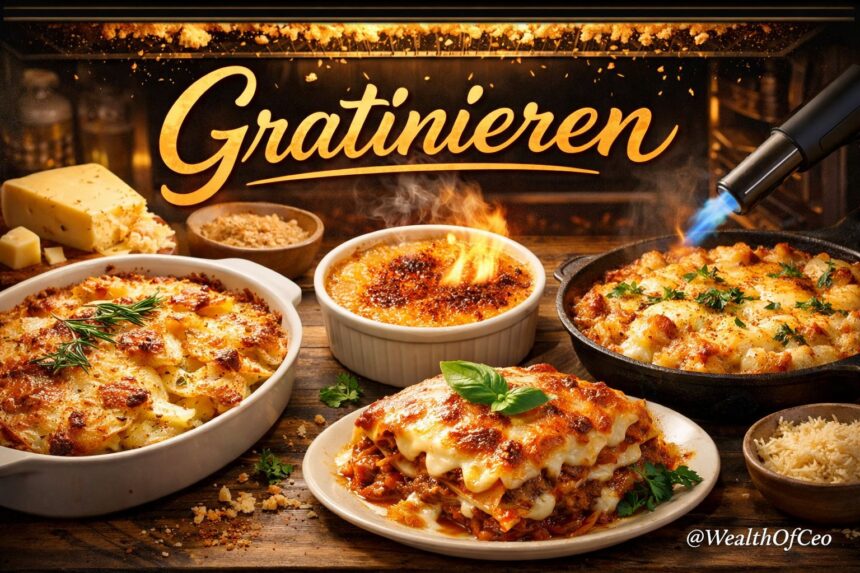
Gratinieren is a classic cooking technique used to create a golden, crisp surface on food by applying high heat from above. It is commonly seen in European-style dishes where texture and visual appeal play an important role in the final result. While often associated with cheese-based recipes, the method extends beyond that and includes breadcrumbs, sugar, and fats that react to heat.
Understanding how gratinieren works helps you control both flavor and texture. It is not just about browning the surface. It involves moisture control, heat timing, and ingredient choice. When used correctly, it enhances contrast between a soft interior and a crisp top, which is why it remains widely used in both home kitchens and professional settings.
What does gratinieren actually mean in cooking?
Gratinieren refers to finishing a dish under high top heat to form a browned or lightly crisp crust. This effect comes from reactions like caramelization and protein browning, which develop flavor and texture. The technique is usually applied at the final stage of cooking rather than throughout the entire process.
In practice, this means placing a prepared dish under a grill or broiler for a short period. The goal is not to cook the food fully but to enhance its surface. For example, a baked dish may already be hot and cooked through before it is gratinated to improve presentation and taste.
The technique is flexible and not limited to one cuisine. It appears in baked vegetables, pasta dishes, and desserts. Even without cheese, ingredients like butter, cream, or sugar can create the desired effect when exposed to high heat.
A key detail is timing. Leaving the dish too long under heat can quickly turn a golden surface into a burnt one. This is why attention and control matter more than equipment or recipe complexity.
When should you use this technique?
Gratinieren is most useful when a dish benefits from a contrast between textures. Soft or creamy foods often feel more complete with a crisp or slightly firm top layer. This is especially true for dishes that might otherwise feel uniform in texture.
You should consider using this technique near the end of cooking, once the interior is fully prepared. It is not meant for raw ingredients because the high heat targets only the surface. Applying it too early can result in a burnt exterior and undercooked interior.
It is also helpful when presentation matters. A golden crust signals that a dish is finished and appealing. This visual cue often influences how people perceive flavor before even tasting the food.
However, not every dish needs it. Light or delicate meals may lose their intended character if exposed to intense heat. Choosing whether to use gratinieren depends on the dish’s structure and desired outcome.
How is it done properly at home?
Gratinieren at home is typically done using an oven’s top heat setting or a grill function. The dish should be placed close to the heat source so the surface reacts quickly without overcooking the inside. Preheating the oven ensures consistent results.
Before applying heat, a topping is usually added. This can include cheese, breadcrumbs, butter, or sugar depending on the dish. The topping should be evenly distributed to avoid uneven browning, which can affect both taste and texture.
The process is short and requires attention. Most dishes only need a few minutes under high heat. It is important to monitor closely because the difference between golden and burnt can happen quickly.
Using the right dish also matters. Heat-resistant materials like ceramic or metal help distribute heat evenly. Thin or uneven containers may cause inconsistent results, especially when working with high temperatures.
What are common mistakes to avoid?
One of the most common mistakes is applying gratinieren too early. This often leads to a surface that burns before the inside is properly cooked. The technique should always be reserved for the final stage of preparation.
Another issue is using too much topping. While it may seem that more cheese or breadcrumbs will improve the result, excess can prevent proper browning or create an oily, heavy layer. Balance is important for both texture and flavor.
Many people also underestimate the intensity of top heat. Leaving the dish unattended can quickly ruin the surface. Unlike slow cooking methods, gratinieren requires constant attention and quick action.
Lastly, uneven layering can lead to inconsistent results. If some areas are thicker than others, they will brown at different rates. Taking a moment to spread toppings evenly makes a noticeable difference in the final outcome.
How do you decide if it improves your dish?
Gratinieren improves a dish when it adds contrast without overpowering the original flavors. If the base of the dish is soft, creamy, or moist, a crisp top layer can create a more balanced eating experience.
You should also consider the role of flavor. Browning adds depth through mild caramelization, which can enhance otherwise simple ingredients. However, if the dish relies on freshness or subtle flavors, this technique may not be suitable.
Think about the overall structure of the meal. Heavier dishes often benefit more from this finishing step, while lighter dishes may not need it. The goal is to complement the dish rather than change its identity.
In practical terms, the decision comes down to intent. If you want added texture, visual appeal, and a slightly richer finish, gratinieren is a useful tool. If not, the dish may be better served without it.
Conclusion
Gratinieren is a focused finishing technique that enhances texture, appearance, and flavor through controlled high heat. It is not limited to specific recipes and can be adapted to a wide range of dishes when used with purpose.
Understanding when and how to apply it makes a clear difference in results. By paying attention to timing, heat, and balance, you can use this method to refine dishes rather than complicate them. When used thoughtfully, it becomes a reliable way to elevate everyday cooking without adding unnecessary complexity.
FAQs
What is gratinieren in cooking?
Gratinieren is a technique where food is finished under high heat to create a golden, crispy top layer. It enhances texture and adds a slightly toasted flavor.
Which foods are best suited for this method?
Dishes with soft or creamy textures like pasta, vegetables, or casseroles work well. They benefit from the contrast between a crisp top and tender interior.
Do you always need cheese for this process?
No, cheese is common but not required for good results. Breadcrumbs, butter, or sugar can also create a browned surface.
How long should food stay under top heat?
It usually takes only a few minutes depending on the heat level. Close monitoring is important to avoid burning the surface.
Can you do this without an oven grill setting?
Yes, you can use a very hot oven or a kitchen torch for similar results. The key is applying strong heat from above for a short time.