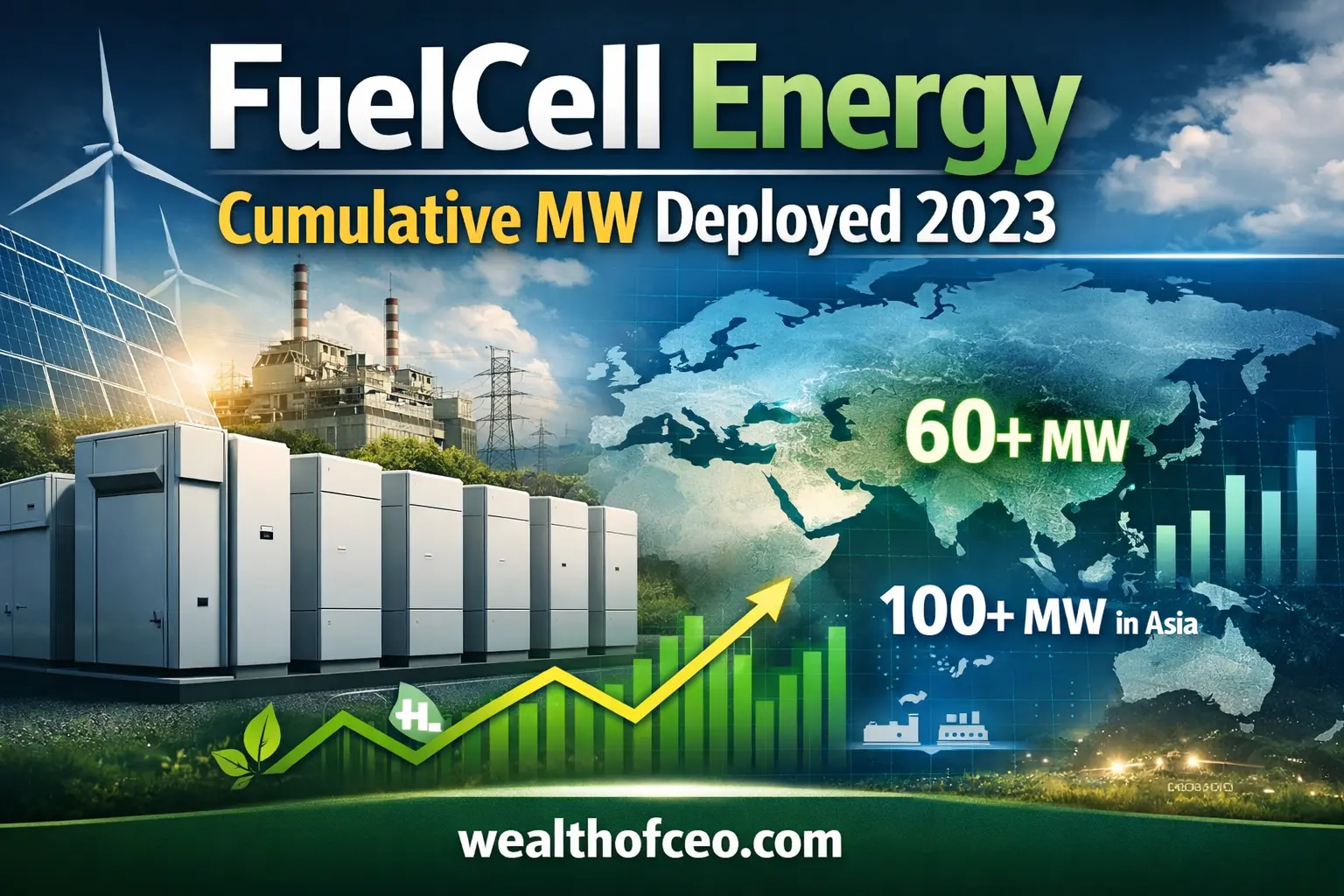
FuelCell Energy cumulative MW deployed 2023 reflects the total operational capacity and technology footprint achieved by the company in that year. This figure highlights the scope of FuelCell Energy’s stationary fuel cell installations, including both assets it directly operates and systems deployed under partner agreements. Understanding these numbers provides insight into the company’s market presence and its contribution to low‑emission, distributed energy generation.
Tracking cumulative MW deployed is critical for assessing growth, performance, and competitive positioning within the stationary fuel cell industry. In 2023, FuelCell Energy expanded its portfolio across the U.S. and international markets, including Korea, reinforcing its role in supporting renewable energy targets and providing reliable, on-site power solutions for industrial and utility applications.
Understanding FuelCell Energy and Its Technology
What is FuelCell Energy?
FuelCell Energy is a U.S.‑based company that designs, manufactures, installs, operates, and services stationary fuel cell power systems for distributed energy and hydrogen production. Its platforms produce electricity with low emissions and are used by utilities, industrial customers, and municipalities.
-
Provides utility‑scale and on‑site generation systems
-
Technologies support hydrogen production, carbon capture, and energy storage
-
Operates global fuel cell projects with recurring service revenue
Key Technologies and Platforms in Use
FuelCell Energy uses multiple fuel cell technologies with different use cases and power outputs.
-
SureSource Platforms: Series of carbonate fuel cell systems ranging from small kW to multi‑MW capacity
-
Tri‑Gen Systems: Produce electricity, heat, and hydrogen for industrial use
-
Solid Oxide Platforms: Higher‑efficiency, low‑rare‑earth material systems under development
-
Platforms can operate on natural gas, hydrogen, biogas, or blends depending on site requirements
Differentiation from Other Fuel Cell Manufacturers
FuelCell Energy differentiates based on scale, integration, and service model.
-
Focuses on stationary, grid‑connected, and industrial installations vs. automotive or portable use
-
Integrated project delivery (design through operations)
-
Long‑term service and maintenance agreements for installed projects
-
Technology designed for combined heat and power applications
Defining Cumulative MW Deployed
Operational Capacity vs. Technology Deployment
Operational capacity refers to megawatts recognized on the company’s balance sheet as functioning generating assets. Technology deployment includes systems installed by partners that use FuelCell Energy designs.
-
Operational MW: Systems owned/operated by the company
-
Technology deployed MW: Installations using FuelCell Energy technology but serviced or owned by partners
How Cumulative MW is Calculated in Energy Projects
Cumulative deployed MW is the sum of all operational capacity installed across projects up to a given date.
-
Add MW from all commissioned systems
-
Exclude projects pending commissioning or not yet recognized in operating portfolio
-
Include partner deployments only when under company service or revenue arrangements
FuelCell Energy’s 2023 Deployment Overview
Total MW Deployed Globally
FuelCell Energy reported its generation operating portfolio reached over 60 MW by the end of its fiscal year on October 31, 2023.
-
Reflects MW capacity of assets officially recognized as operating
-
Represents the core generation fleet contributing to recurring revenue
Regional Deployment Breakdown (U.S., Korea, Other Markets)
Deployments in 2023 included capacity in North America and technology platforms overseas.
-
U.S. deployments: Multiple utility‑scale projects including a new generation park in Connecticut
-
Korea: Fuel cell platforms deployed at six sites totaling more than 100 MW using company technology, though not all counted on FuelCell’s own operating books
-
Other markets may include pilot and service agreements in development
Project Highlights and Milestones
2023 saw key projects reach service milestones and new agreements.
-
New generation park opened in Derby, Connecticut
-
Long‑term service agreement executed for a 20 MW plant in Korea
-
University and municipality projects awarded to build additional small MW systems
How Fuel Cell Deployment Works
From Manufacturing to Site Installation
Deployment starts with manufacturing components and assembling fuel cell systems.
-
Components produced at Torrington, CT facility
-
Systems delivered to sites with civil and electrical infrastructure prepared
-
Installation includes connecting fuel supply and interfaces with grid or load systems
Grid Integration and Power Output Monitoring
Once installed, systems must interface with local distribution or generation networks.
-
Interconnection equipment ensures compatibility with grid codes
-
Output meters and telemetry track power production and system health
-
Contracts often include requirements for power quality and reliability
Maintenance and Performance Verification
Fuel cell systems require ongoing maintenance to sustain output and longevity.
-
Scheduled module replacements drive service economics
-
Performance data reviewed to anticipate issues and optimize operation
-
Extended service agreements can reduce outages and lifecycle costs
Key Roles and Stakeholders in Deployment
FuelCell Energy Project Teams
Internal teams coordinate deployment from design through commissioning.
-
Engineering and project management
-
Field installation and commissioning crews
-
Operations and maintenance specialists
-
Back office support for contracts and reporting
Partners, Contractors, and Technology Licensees
External stakeholders support installation and long‑term service.
-
System integrators and construction firms
-
Licensed technology operators in regions like Korea
-
Independent service providers under long‑term agreements
Regulatory and Utility Stakeholders
Regulators and utilities influence deployment timelines and interconnection.
-
Utility grid operators set standards for interconnection
-
Permitting authorities set environmental and safety requirements
-
Energy policy bodies support renewable or clean energy incentives
Why Cumulative MW Matters to the Industry
Market Share and Competitive Positioning
Cumulative deployed MW indicates a company’s footprint relative to peers.
-
Higher installed capacity can signal market traction
-
Investors use MW totals to benchmark growth potential
-
MW figures reflect adoption of specific fuel cell technologies
Impact on Renewable Energy Goals
Fuel cell deployments contribute low‑emission generation capacity.
-
Helps utilities and governments meet clean energy targets
-
Provides baseload solutions where intermittent renewables dominate
-
Supports decarbonization strategies in industrial sectors
Significance for Investors and Analysts
MW deployed is a quantitative measure used in financial and operational analysis.
-
Influences revenue forecasts for service and performance contracts
-
Used to assess manufacturing capacity utilization
-
Impacts long‑term valuation models in cleantech portfolios
Benefits of FuelCell Energy Deployments
Environmental and Sustainability Advantages
Fuel cell systems reduce emissions compared to combustion generators.
-
Low‑particulate and low‑NOx emissions
-
Can use biogas or hydrogen to further reduce carbon footprint
-
Quiet operations suitable for urban environments
Economic and Operational Benefits for Partners
Deployments deliver financial and reliability advantages.
-
Combined heat and power can reduce energy costs
-
Service contracts provide predictable maintenance expenses
-
Distributed generation reduces transmission losses
Reliability and Energy Security Contributions
Fuel cells offer resilient power delivery.
-
On‑site generation can provide backup power
-
Stable output supports critical infrastructure
-
Reduces dependence on central grid during outages
Best Practices for Tracking and Reporting MW Deployment
Standard Metrics and Reporting Methods
Use consistent measures to report deployed MW.
-
Distinguish between commissioned and planned capacity
-
Report operational output versus nameplate capacity
-
Use third‑party verification where available
Lessons from Successful Deployments
Track performance against expectations to improve accuracy.
-
Benchmark similar projects for expected output
-
Adjust forecasts based on real operation data
-
Document commissioning dates and service start dates
Avoiding Data Misrepresentation
Be clear on what constitutes deployed capacity.
-
Do not count uncommissioned systems
-
Separate partner‑installed technology from contracted operating assets
-
Clarify whether deployment includes observed or rated output
Compliance and Regulatory Considerations
Environmental Permitting and Safety Requirements
Deployments must comply with local and national regulations.
-
Air quality permits often required
-
Safety plans for hydrogen handling and fuel storage
-
Site‑specific environmental impact assessments
Grid and Utility Interconnection Standards
Generators must meet interconnection requirements.
-
Voltage, frequency, and protection criteria set by utilities
-
Certification of equipment may be required
-
Agreements define responsibilities for outages and faults
International Deployment Guidelines
Cross‑border projects require adherence to multiple regimes.
-
Import/export rules for power equipment
-
Local committee approvals for generation sources
-
International standards for safety and performance
Common Challenges and Risks in Deployment
Technical and Operational Challenges
Fuel cell deployments face complex integration issues.
-
Precision manufacturing to ensure system reliability
-
Site‑specific installation obstacles
-
Commissioning and tuning for optimal output
Financial and Market Risks
Economic factors can slow deployment.
-
Capital intensity and financing complexity
-
Policy changes affecting incentives
-
Market competition from other energy sources
Risk Mitigation Strategies
Mitigate risks with careful planning and partnerships.
-
Secure long‑term service agreements
-
Use phased deployment to manage cash flow
-
Engage experienced integrators and utilities
Tools, Systems, and Technologies Supporting Deployment
Monitoring Software and Performance Analytics
Digital tools track and optimize deployed systems.
-
Remote telemetry for power and temperature data
-
Alerts for maintenance needs
-
Analytics to predict performance trends
Manufacturing and Installation Tools
Specialized equipment ensures quality and efficiency.
-
Precision fabrication tools in manufacturing facilities
-
Rigging and installation tools for site assembly
-
Calibrated instruments for testing and commissioning
Industry Partnerships and Platforms
Collaborative tools extend deployment reach.
-
Partner networks for local installation and service
-
Platforms that share best practices and data
-
Standards bodies promoting interoperability
Actionable Deployment Checklist for Energy Professionals
Pre-Deployment Planning Steps
Start with clear objectives and compliance checks.
-
Define capacity targets and site requirements
-
Confirm permits and interconnection agreements
-
Line up contractors and logistics
Site Installation and Commissioning
Ensure installation is systematic and documented.
-
Verify civil and electrical infrastructure
-
Test fuel supply and safety systems
-
Perform commissioning tests for power stability
Post-Deployment Monitoring and Reporting
Track performance from day one.
-
Regular data collection on output and efficiency
-
Schedule maintenance based on performance trends
-
Report operational capacity to stakeholders
Comparison with Other Fuel Cell Manufacturers
MW Deployment Metrics Across Competitors
Fuel cell peers vary in scale and application.
-
Some specialize in smaller distributed systems
-
Others focus on heavy industrial hydrogen production
-
Comparisons should use consistent MW measures across markets
Technology and Market Differentiators
Different manufacturers have different strengths.
-
Some excel in mobile or transportation markets
-
Stationary fuel cells like FuelCell Energy focus on baseload power
-
Materials and stack design impact efficiency and cost
Regional Deployment Strategies
Deployment varies by region based on policy and infrastructure.
-
North America may focus on grid resilience
-
Asia and Europe may emphasize decarbonization goals
-
Incentives drive adoption in some markets more than others
FAQs
What is the total cumulative MW deployed by FuelCell Energy in 2023?
The total operational capacity reported by FuelCell Energy in 2023 reached over 60 MW, including both directly operated assets and partner-deployed systems in regions like Korea.
How does FuelCell Energy calculate deployed MW?
Deployed MW includes all commissioned and operational fuel cell systems recognized in the company’s portfolio. Systems installed by partners may be counted once under service or revenue agreements.
What regions saw the highest fuel cell deployments in 2023?
The United States led in utility-scale deployments, while Korea accounted for significant partner-deployed MW using FuelCell Energy technology. Other regions include pilot projects and smaller commercial installations.
What are the benefits of tracking cumulative MW deployed for energy projects?
Tracking deployed MW helps evaluate market share, operational efficiency, and environmental impact. It also informs investment decisions and supports compliance with renewable energy standards.
How does FuelCell Energy compare to other fuel cell manufacturers?
FuelCell Energy focuses on stationary, distributed power systems with multi-MW capacity, distinguishing it from competitors that may prioritize smaller systems, transport applications, or specialized industrial use.